

Every piece of art, from a masterpiece painting to a Saturday morning cartoon, has a hidden layer. It’s the process—the brush strokes, the corrections, the rough edges—that the viewer is never meant to see. But those unseen edges often reveal the truest nature of the work.
Recently, some of the original animation artwork for the classic 1980s cartoon, M.A.S.K. (Mobile Armored Strike Kommand), went up for auction. This show was always about dual identities: regular people called out of their daily jobs to wear superpowered helmets and pilot transforming vehicles, fighting against the villainous V.E.N.O.M.
The artwork offers a fascinating, literal look at this core theme: What is the truth under the mask?
The illusion of the screen: the perfect mask
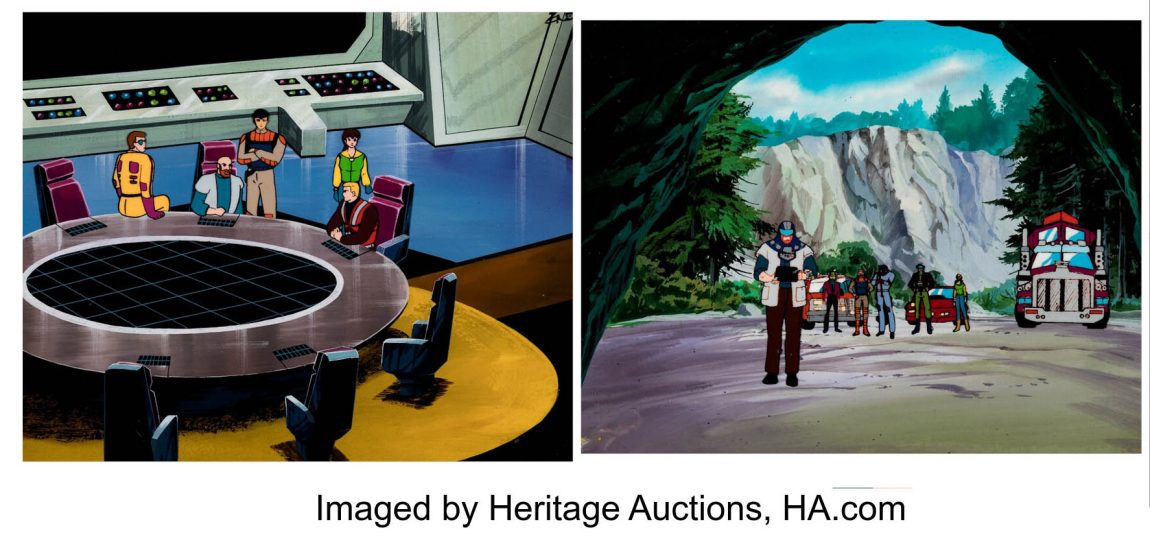
When we look at the cropped version of the original production art, it looks exactly as we remember the show: crisp lines, flat colors, and a perfectly framed scene. This is the polished, final product, optimized for the television screen, where the edges of the artwork are cropped out by the camera’s frame and the TV’s bezel.
- Image 1 (left): The M.A.S.K. team around the large, circular command table, balanced and centered in their control room.
- Image 2 (right): The team standing outside a cave entrance, with the iconic semi-truck, Thunderhawk, parked nearby, all framed to emphasize the scale.
This cropped view is the “mask”—the flawless, controlled image the creators intended for the world to see.
The painter’s hand: the power of the margins
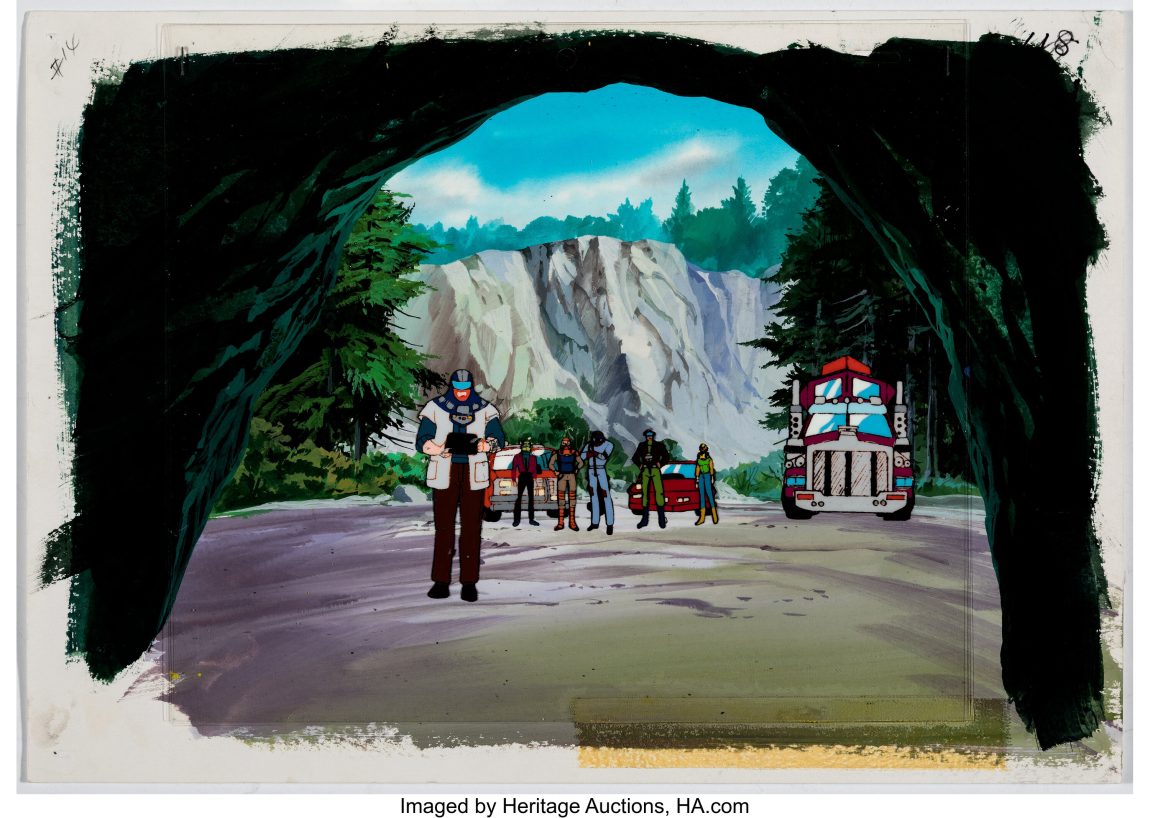
The real revelation comes when we see the photos of the uncropped margins that show the true, raw qualities of the original artwork.
Take a look at the uncropped versions. The clean, defined world of M.A.S.K. suddenly breaks down into something far more painterly and abstract outside the intended frame.
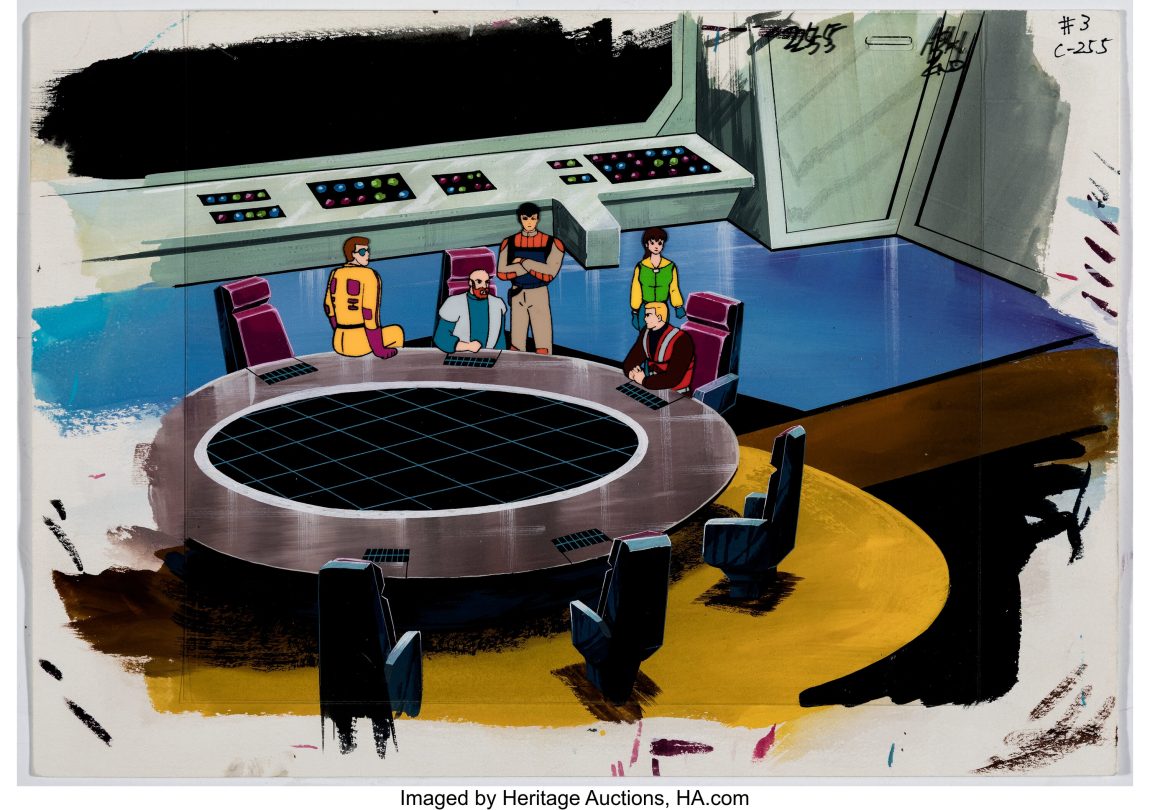
- Messy brush strokes: Outside the controlled lines, you can clearly see the broad, dynamic brush strokes used to apply the background paint. The colors bleed, mix, and smudge—it’s a messy, organic process that contrasts sharply with the precise final result.
- The intentional blur: The artists weren’t trying to make the entire canvas perfect. They focused their detail and precision only on the area that would be filmed. The rough border areas—the visible paint marks and excess of the process—are the artistic equivalent of the M.A.S.K. team’s secret identity. They are the raw truth of the labor.
- Production notes: In the uncropped command center image, you can even spot faint production codes like “#3 C-255.” These are artifacts of the studio workflow, never meant to be seen by the viewer, but invaluable reminders that this flawless cartoon was built piece by piece, by human hands.
These original pieces remind us that even the most mass-produced media ultimately stem from countless hours of human artistry. Just like Matt Trakker’s heroic identity lies beneath the mask of a casual businessman, the true, messy, and beautiful nature of the artwork lies just outside the frame. The messy edges are where the magic truly began!