

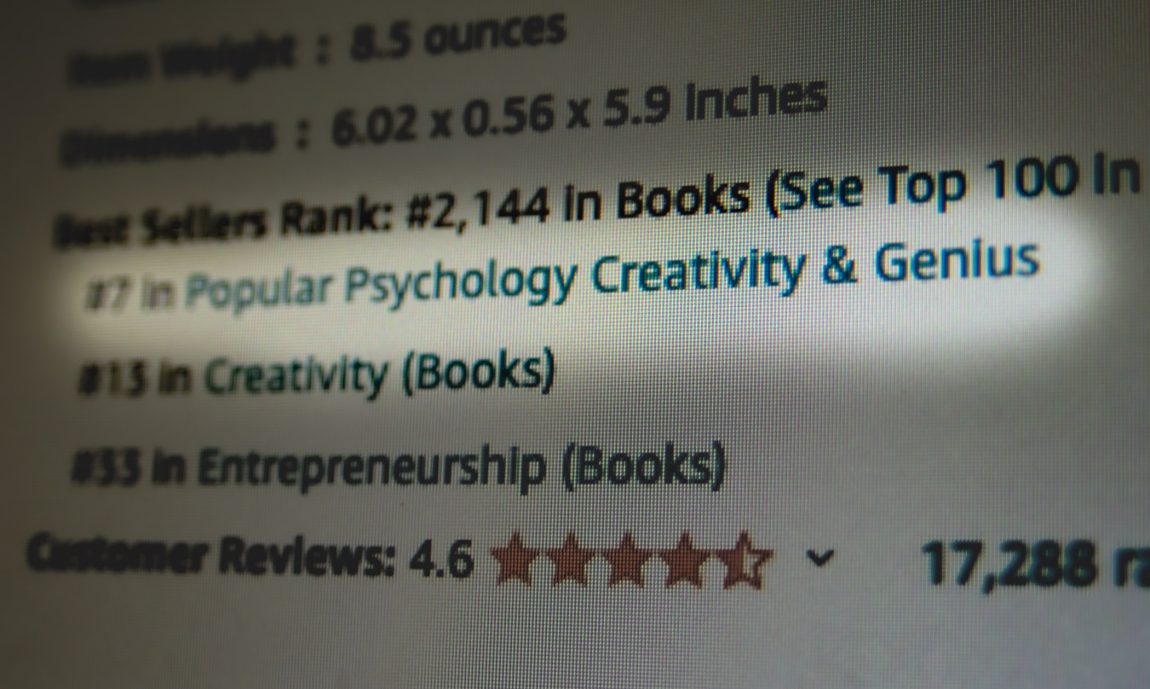
There is an Amazon book category called “Popular Psychology Creativity & Genius“
That sounds, um, kinda crazy. I don’t think Amazon is endorsing the ‘mad genius’ stereotype. But the naming of this category strikes me as a little bit odd.
Back in college, our Senior Seminar focused on debunking the myth of artists as ‘mad geniuses.’ The idea that an artist must be somewhat unhinged to be genuinely creative is not only widespread but also entirely untrue. We were taught to recognize and challenge this stereotype.
So, encountering a book category like “Popular Psychology Creativity & Genius” is a bit peculiar. It seems to link creativity and genius, suggesting that one might need to be a genius to be creative. However, I firmly believe creativity is a universal trait, not limited to geniuses.
Certainly, putting creativity and genius in the same title doesn’t imply that the two are forever linked together. But I’m sorry, my mind just immediately goes there, because I know we aren’t supposed to make the two absolutely connected.
Maybe the title might just imply that some of these books are about Creativity. Some are about Genius. But if that’s the case, then why not have two separate categories? One category for Creativity. Another category for Genius? Or would it be too weird to have a category for “how to be a genius”. Maybe they toss in creativity to soften the awkwardness of having a Genius category.
Then, there is the notion of putting “popular” at the front. Like, what is that about? Does that imply that this is for the masses? That would be cool. Available to anyone. Sure.
But “popular” makes it seem like, “well, this is the consensus of what people think.” Like, the mass opinion dictates what genius is. That would be the exact thing we were warned about in college. That society sees artists as crazy, so they have to be crazy. Popular opinions, especially about something as complex and nuanced as creativity or the nature of genius, can oversimplify or misrepresent these concepts.
It’s important to remember that you don’t have to fit the ‘mad genius’ stereotype to be an artist. This stereotype, which often romanticizes mental illness and personal dysfunction, is misleading and potentially harmful. It narrows our view of what an artist can be. In reality, artists come from all walks of life, with various experiences and mental states. Creativity flourishes in many environments, not just in turmoil or suffering.
Curious about what books fall under this category? Here’s a list of the top 30 books in “Popular Psychology Creativity & Genius”. (Note: These are affiliate links, so I earn a small commission at no extra cost to you)
- The Creative Act: A Way of Being by Rick Rubin
- The Artist’s Way: 30th Anniversary Edition by Julia Cameron
- The War of Art: Break Through the Blocks and Win Your Inner Creative Battles by Steven Pressfield
- The Artist’s Way: 25th Anniversary Edition by Julia Cameron
- Big Magic: Creative Living Beyond Fear by Elizabeth Gilbert
- Stolen Focus: Why You Can’t Pay Attention—and How to Think Deeply Again by Johann Hari
- Steal Like an Artist: 10 Things Nobody Told You About Being Creative by Austin Kleon
- Attention Span: A Groundbreaking Way to Restore Balance, Happiness and Productivity by Gloria Mark
- The Artist’s Way: 30th Anniversary Edition by Julia Cameron
- Guided Art Therapy Card Deck: 75 Activities to Explore Your Feelings and Manage Your Emotional Well-Being by Emily Sharp LCAT
- Drawing on the Right Side of the Brain: The Definitive, 4th Edition by Betty Edwards
- Stolen Focus: Why You Can’t Pay Attention–and How to Think Deeply Again by Johann Hari
- Stolen Focus: Why You Can’t Pay Attention–and How to Think Deeply Again by Johann Hari
- Burn Book: “It’s So Fetch” Blank Lined Journal Gift Idea – 120 Pages (6″ x 9″) Movie Inspired by So Fetch
- The Talent Code: Greatness Isn’t Born. It’s Grown. Here’s How. by Daniel Coyle
- The 4 Pillars of Critical Thinking: 103 Techniques & Hacks to Improve Your Work and Personal Life by Mastering Mental Skills. Analyze Situations Better and Reason Well by Detecting Logical Fallacies by Patrik Meyer
- To Sell Is Human: The Surprising Truth About Moving Others by Daniel H. Pink
- Stolen Focus: Why You Can’t Pay Attention–and How to Think Deeply Again by Johann Hari
- Drawing on the Right Side of the Brain Workbook: The Definitive, Updated 2nd Edition by Betty Edwards
- Keep Going: 10 Ways to Stay Creative in Good Times and Bad (Austin Kleon) by Austin Kleon
- Finish What You Start: The Art of Following Through, Taking Action, Executing, & Self-Discipline by Peter Hollins
- The Creative Habit: Learn It and Use It for Life (Learn In and Use It for Life) by Twyla Tharp
- Play: How it Shapes the Brain, Opens the Imagination, and Invigorates the Soul by Stuart Brown
- A Year in Practice: Seasonal Rituals and Prompts to Awaken Cycles of Creative Expression by Jacqueline Suskin
- Do the Work by Steven Pressfield
- Uncertain: The Wisdom and Wonder of Being Unsure by Maggie Jackson
- Stealing Fire: How Silicon Valley, the Navy SEALs, and Maverick Scientists Are Revolutionizing the Way We Live and Work by Steven Kotler
- A Whole New Mind: Why Right-Brainers Will Rule the Future by Daniel H. Pink
- 250 Brief, Creative & Practical Art Therapy Techniques: A Guide for Clinicians and Clients by Susan I Buchalter
- Turning Pro: Tap Your Inner Power and Create Your Life’s Work by Steven Pressfield
Fortunately, these books seem well-grounded and not reflective of the ‘crazy-town’ stereotype.
This category caught my eye while exploring “Steal Like an Artist: 10 Things Nobody Told You About Being Creative” by Austin Kleon, who ranks #7 on this list.