

Giving an urban icon a second life, then watching that life quietly fade.
One of the few buildings to survive the Great Chicago Fire, the Chicago Water Tower still stands on Michigan Avenue. It’s part of the identity of Chicago. You see it and immediately know where you are.
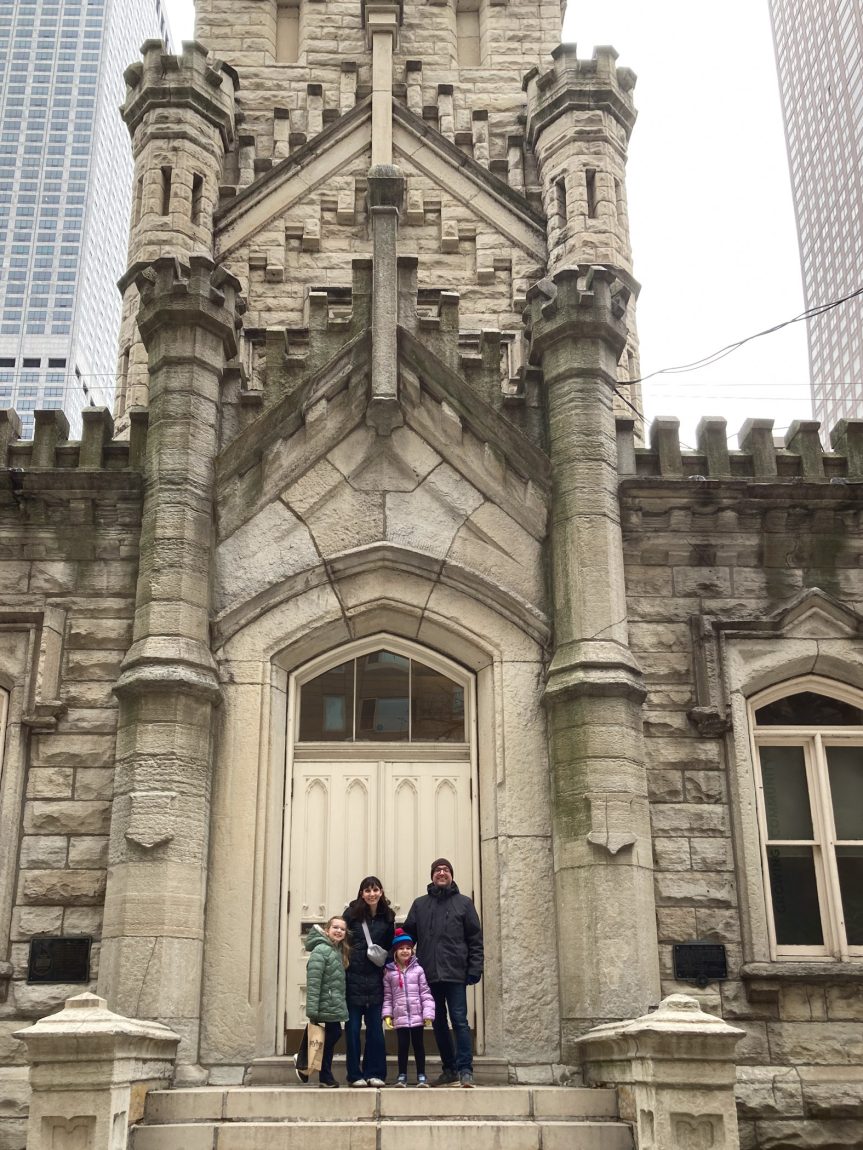
For a stretch of time, roughly 1999 to 2017, the inside of the tower operated as the City Gallery. It was small, able to hold about 20 to 40 works. But the size almost made it better. You weren’t just looking at art. You were inside the Water Tower, moving through a space that is usually sealed off.
There’s something amazing about being in a city and unexpectedly encountering artwork. A mural on a building. A sticker on a train station handrail. A small object someone leaves behind in a planter among flowers. These moments interrupt the flow of the city for a second. You notice something you weren’t looking for, and the pace changes.
That’s how I felt about the City Gallery in Chicago’s historic Water Tower. It was a small gallery inside a limestone landmark. A place you could step into directly from Michigan Avenue, leaving behind traffic and tourists for a few minutes of quiet observation.
Stepping inside this gallery was like entering a warp zone. There was no lobby area. No check-in. No ticket counter. Entering this gallery was an immediate action. As soon as you step through the antique wooden doors, BAM, you are IN the gallery.
The room was white, compact, and arranged in a square. You moved around the perimeter, looking at the work, with no clear beginning or end point to the space.
Then you turned around, walked back through the same wooden doors, and stepped immediately into the noise of the city again.
These brief pauses inspired me to create artwork in public spaces. And continues to inspire me today. This gallery was like a work of art set in the urban environment. A sort of jewel you find lying right there on the sidewalk.
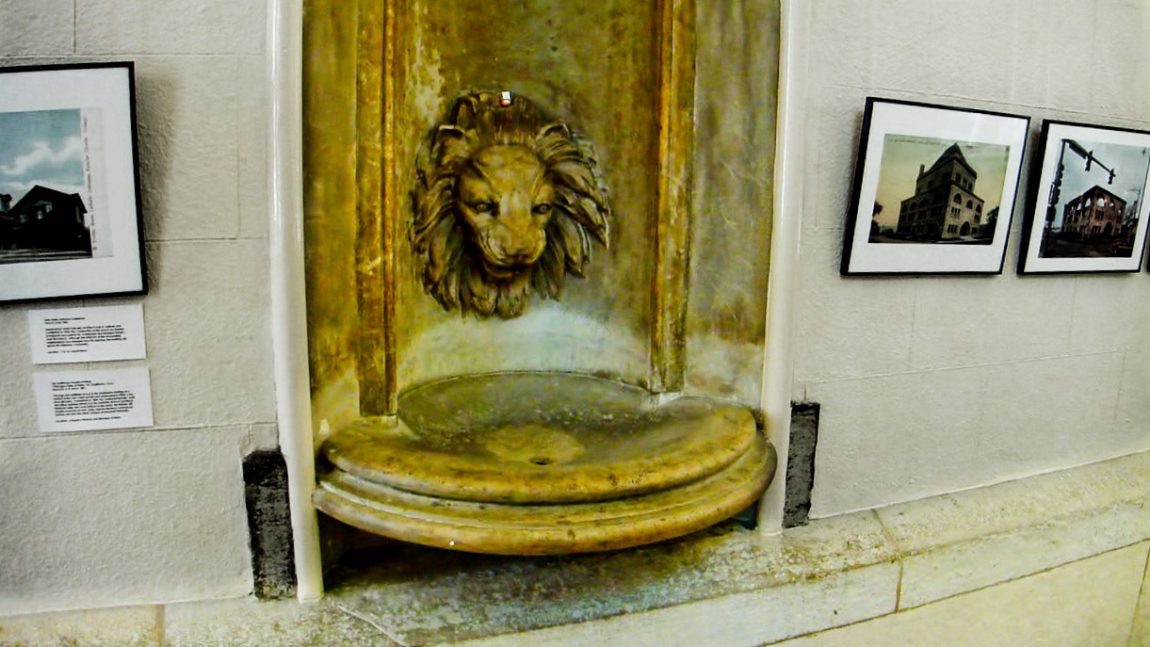
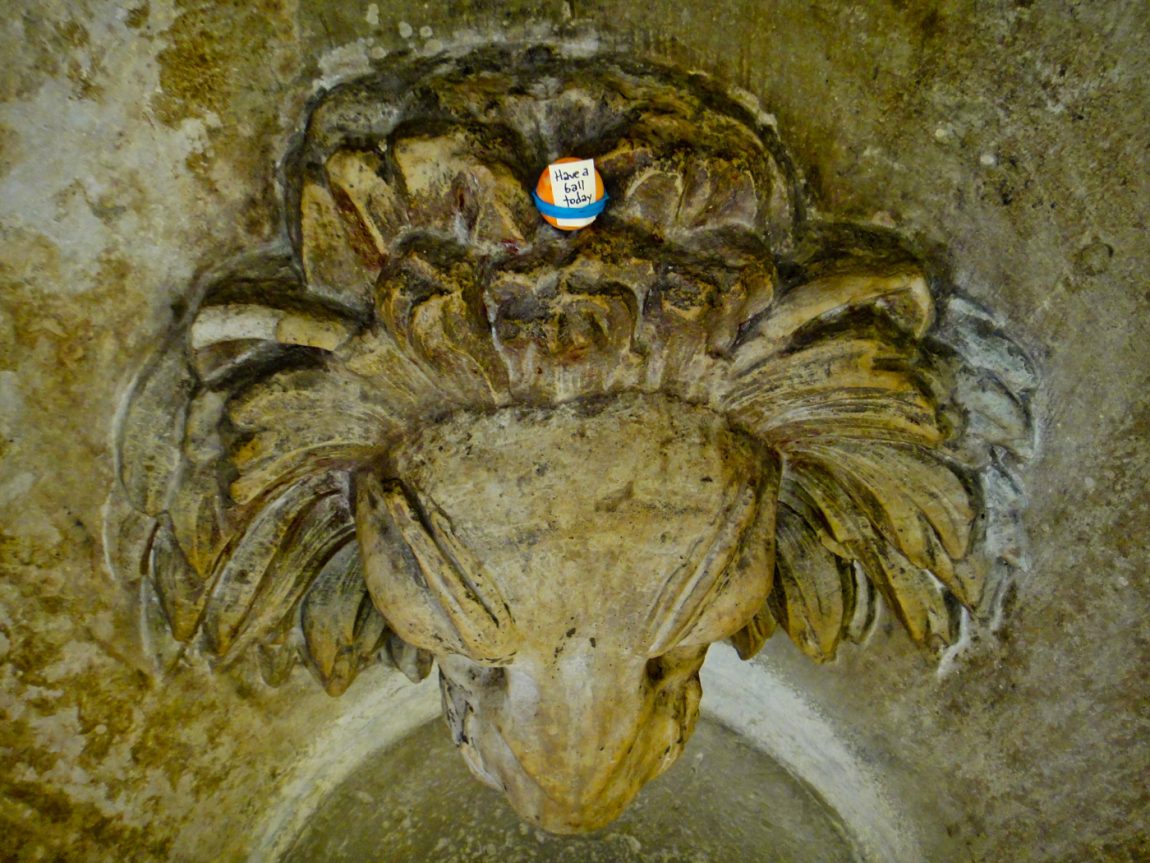
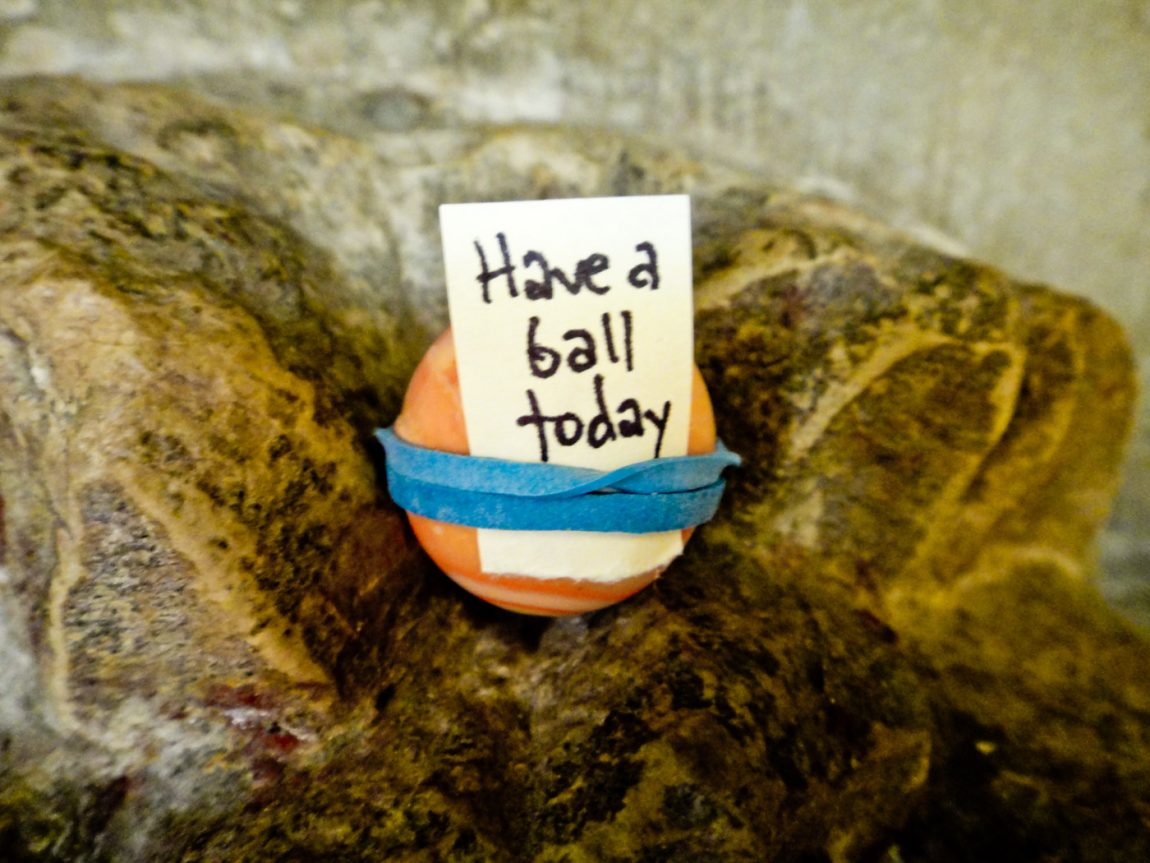
I wish I had documented City Gallery more carefully. I have no full walkthrough. Just a few photos and a short video. In one of those moments, I placed a piece of my street art on top of a lion relief inside the tower. The intention wasn’t to be ironic or disruptive. It was to add something human to the space—something that might catch a person off guard in a good way.
There’s also a walk-through someone else captured of the “Charlie Trotter: Chef, Artist, Thinker” exhibit that shows more of the interior.
Is the City Gallery at Water Tower still showing exhibitions?
I tried to get into the gallery about a month ago. The doors were locked. Peering through the windows, I didn’t see anything on display.
From what I can find, the exhibition schedule seems to end around 2017:
| Exhibit title | Date |
|---|---|
| Maria Pinto: 25 Years | September 10, 2016 – January 8, 2017 |
| For The Common Good: Cards Against Humanity | January 20 – September 4, 2016 |
| Assaf Evron: Athens and Oraibi | October 3, 2015 – January 3, 2016 |
| Charlie Trotter: Chef, Artist, Thinker | May 15 – September 27, 2015 |
| For the Common Good: Meet The Remediators | November 8, 2014 – April 5, 2015 |
| Jason Reblando: New Deal Utopias | April 26 – November 2, 2014 |
| Regina Mamou: Unfortunately, It was Paradise | October 11, 2013 – January 19, 2014 |
| Julie Murphy: Escape into Absurdity | January 25 – April 20, 2014 |
| Nailed: Handwork | June 22 – September 29, 2013 |
| Animal Kingdom | March 9 – June 3, 2013 |
| Martin Creed: Half the Air in a Given Space | Sometime 2012 |
| Colleen Plumb: Animals Are Outside Today | February 12 – April 26, 2009 |
The oldest exhibit in City Gallery I could find online is from 2009; however, the gallery dates back to 1999. The City of Chicago’s tourism site in 2011 states:
Established March 20, 1999, the City Gallery is a program of the Chicago Department of Cultural Affairs’ Public Art Program. The gallery features several exhibitions per year, all free and open to the public.
A small space, but a real one
It wasn’t a major destination, but it was always worth a visit. You could walk in off Michigan Avenue, spend a few minutes with the work, and step back out into the city.
There aren’t many places like that. Especially not inside a structure as recognizable as the Water Tower.
What’s left
The building is still there, still photographed, still doing its job as a landmark. But the interior feels like it’s gone quiet again. And it’s hard not to wonder if that stretch—those years when you could just walk inside and see something new—was a short chapter that’s already over.
Speaking of exhibits and art, the Leica Store & Gallery has its grand opening tomorrow. The store is located just a smidge west of the Water Tower.
Looking at their calendar, they have so many interesting events lined up. Man. I really wish I still live in the city.
The photowalk event… I wonder if that’s where people go together on a route and take photos. Or if it’s just a talk about things this artist has photographed. If it’s a photowalk where people take photos, what if someone doesn’t use a Leica camera. Do they throw and smash your little “cheap” camera on the ground and say, “this is not expensive enough! Leicas only!”