

In the grand rotunda of Chicago’s Griffin Museum of Science and Industry stands a remarkable holiday tradition that began in 1942 with a single Christmas tree. Today, this tradition has grown into “Christmas Around the World and Holidays of Light,” featuring more than 50 trees representing different cultures and countries. Among them, the Estonian tree tells a rich story of cultural heritage through its carefully chosen ornaments.
The Exhibition’s Origins: From War Memorial to Cultural Celebration
What started as a wartime tribute—a single tree decorated daily to honor Allied nations during World War II—has evolved into one of Chicago’s most beloved holiday traditions. The exhibit represents more than just holiday decorations; it embodies the idea that cultural traditions can bring people together, showcasing the diversity of holiday celebrations worldwide.
The Estonian Tree: A Cultural Narrative in Ornaments
Each ornament on the Estonian tree, decorated by the Aavik-Dawson family, serves as a window into Estonian culture and traditions.
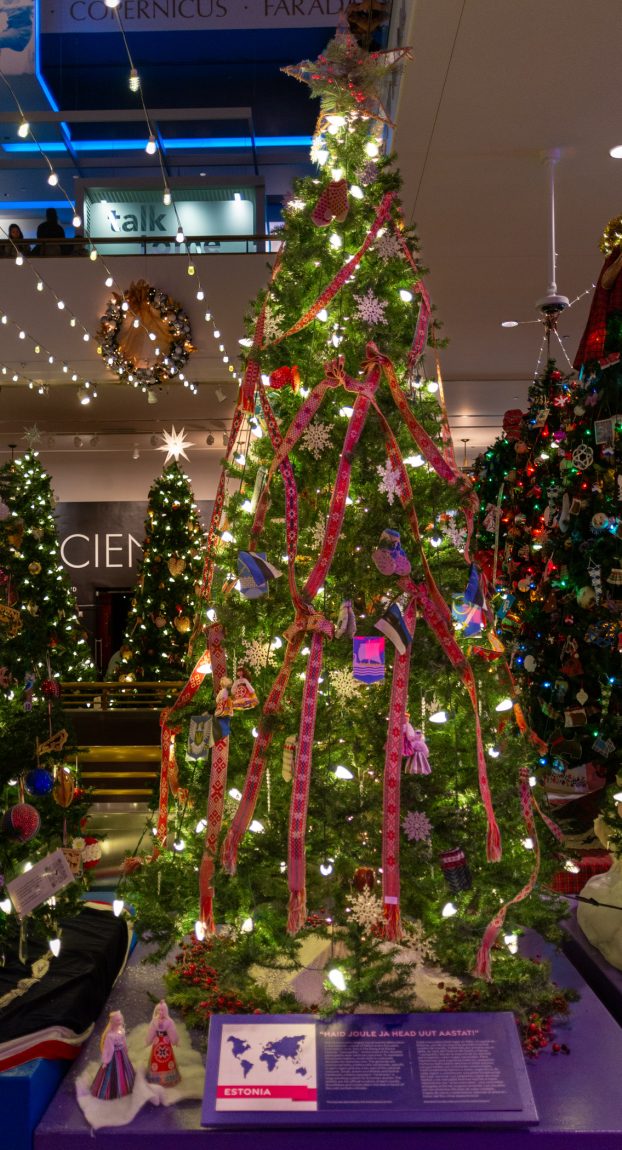
Here’s what makes this tree uniquely Estonian:
National Costume Dolls and the Laulupidu Connection
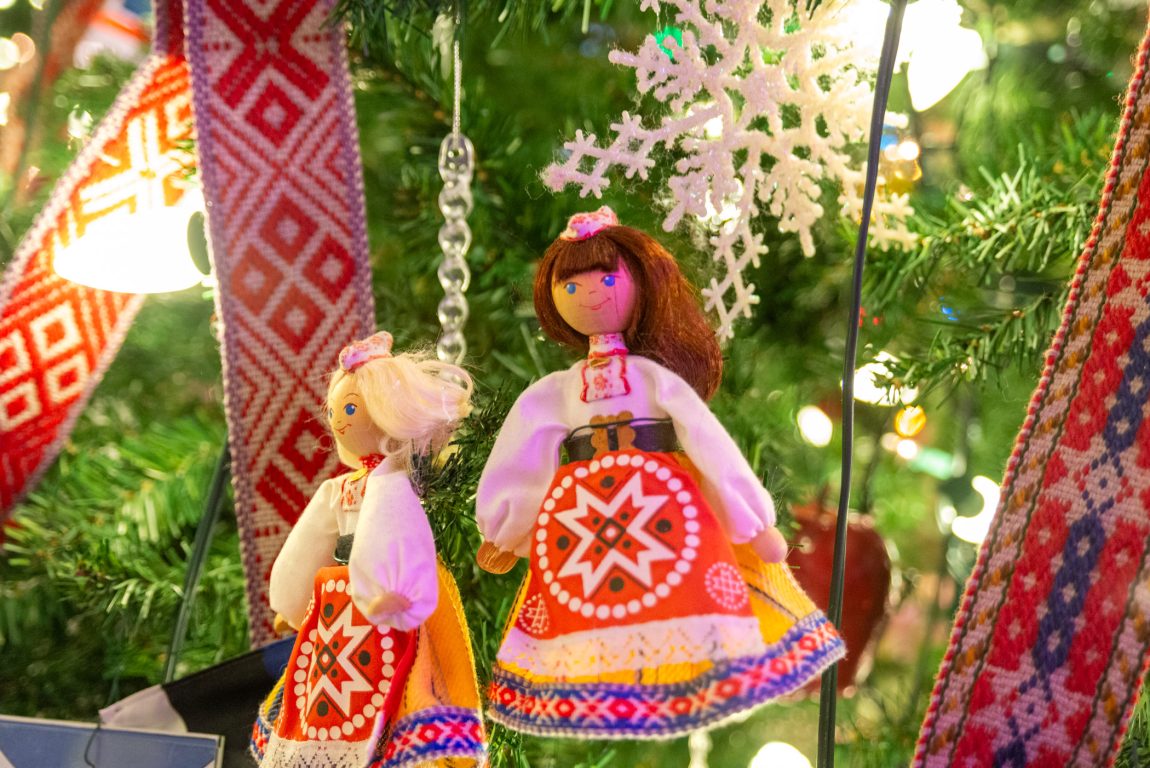
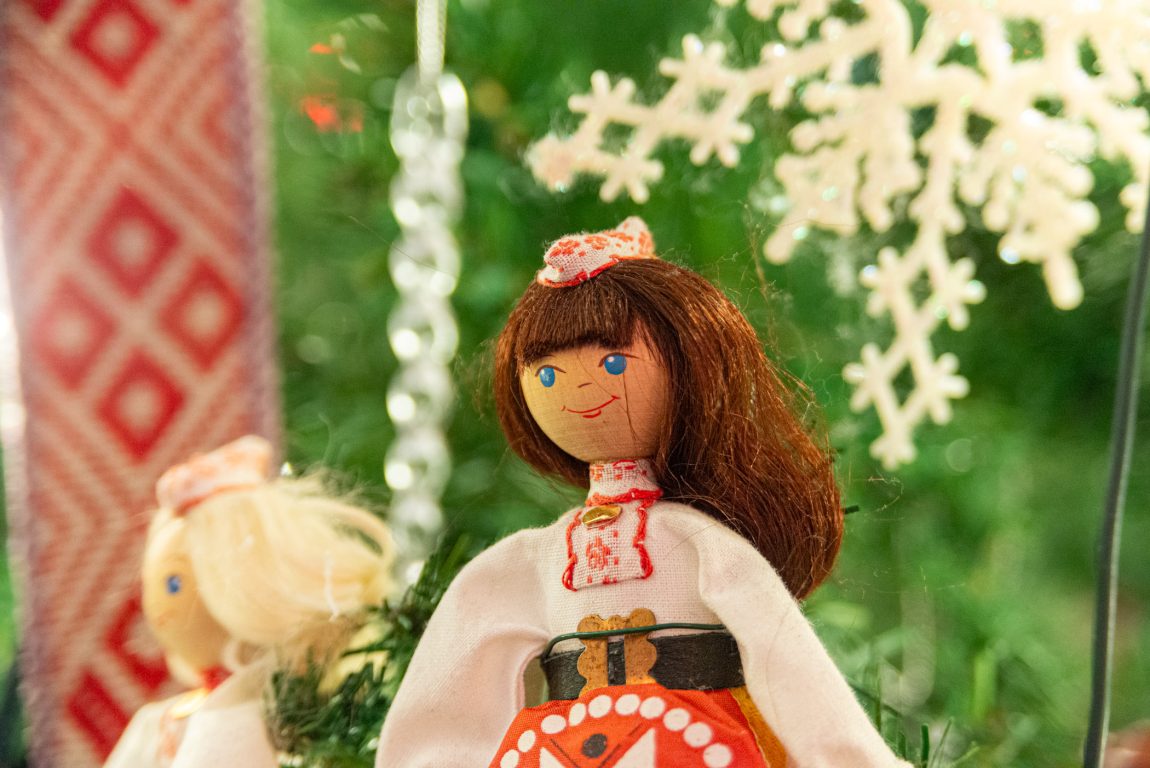
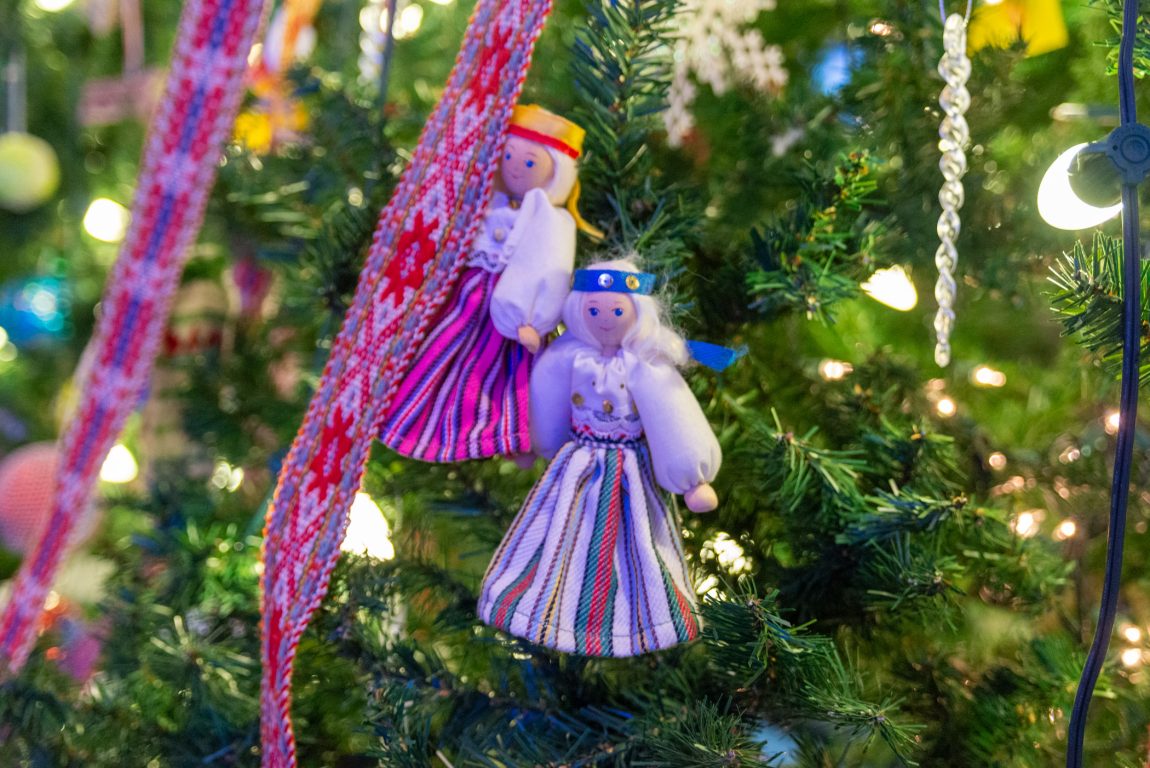
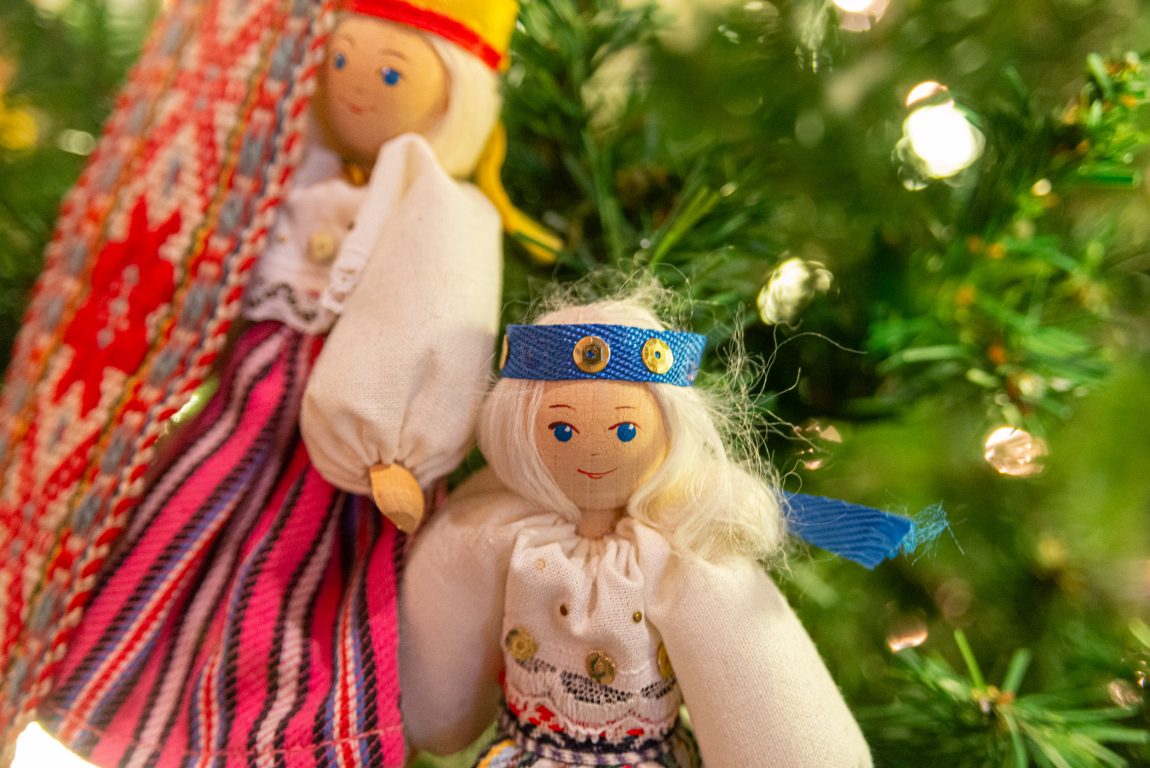
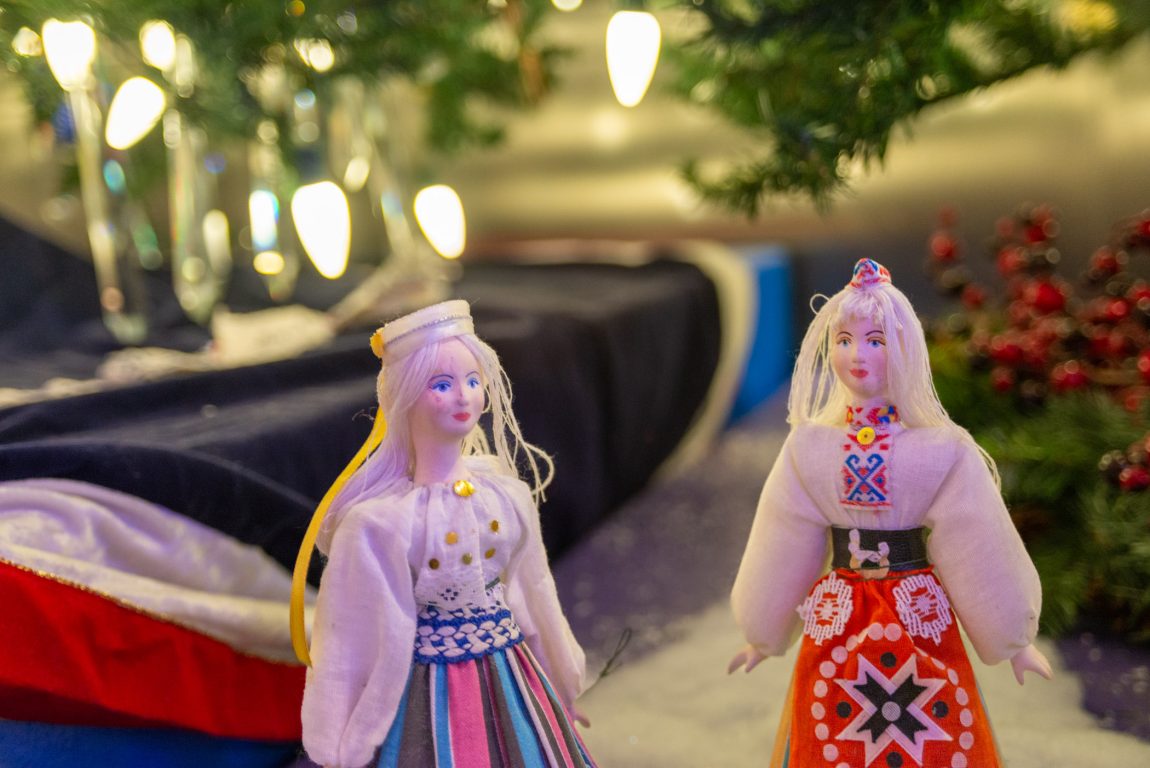
The small dolls adorning the tree wear traditional Estonian folk costumes, but their significance goes beyond mere decoration. They represent participants in “Laulupidu,” Estonia’s massive Song and Dance Festival held every five years in Tallinn. This festival, first held in 1869, brings together 40,000 participants in national dress, making it one of the world’s largest choral events. Through these dolls, the tree connects visitors to a living tradition that has helped preserve Estonian culture for over 150 years.
Regional Identity in Woven Garlands
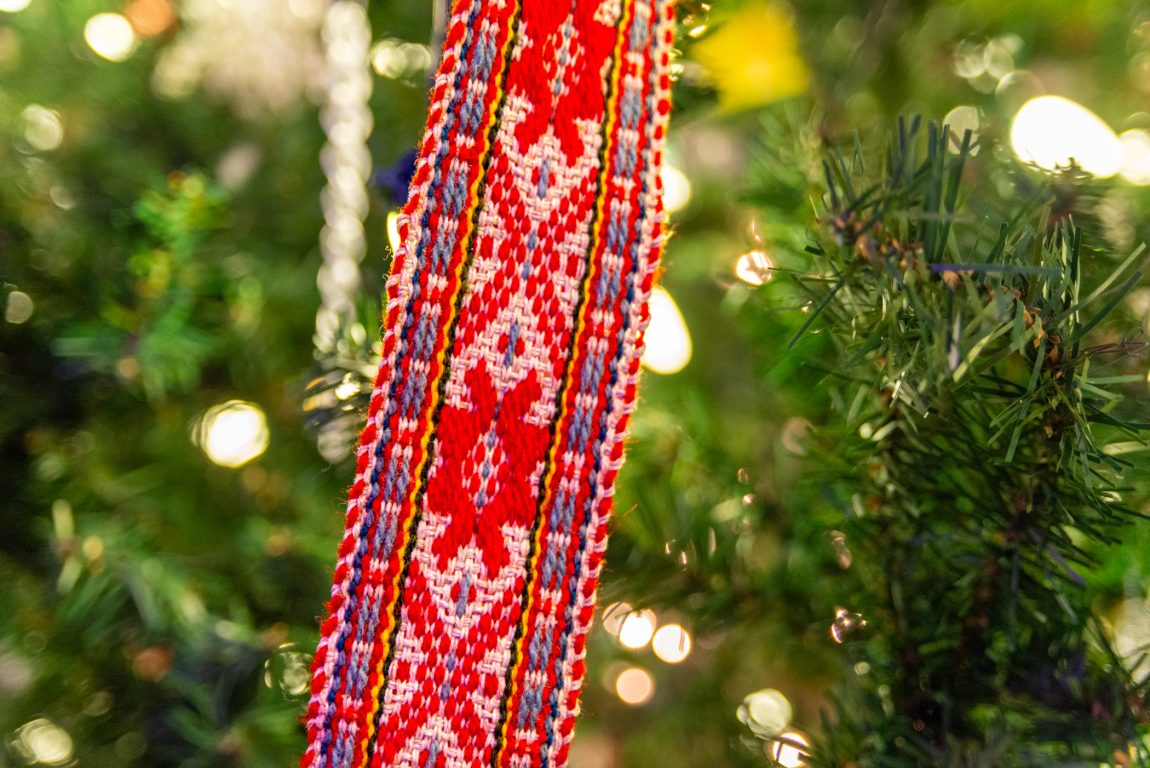
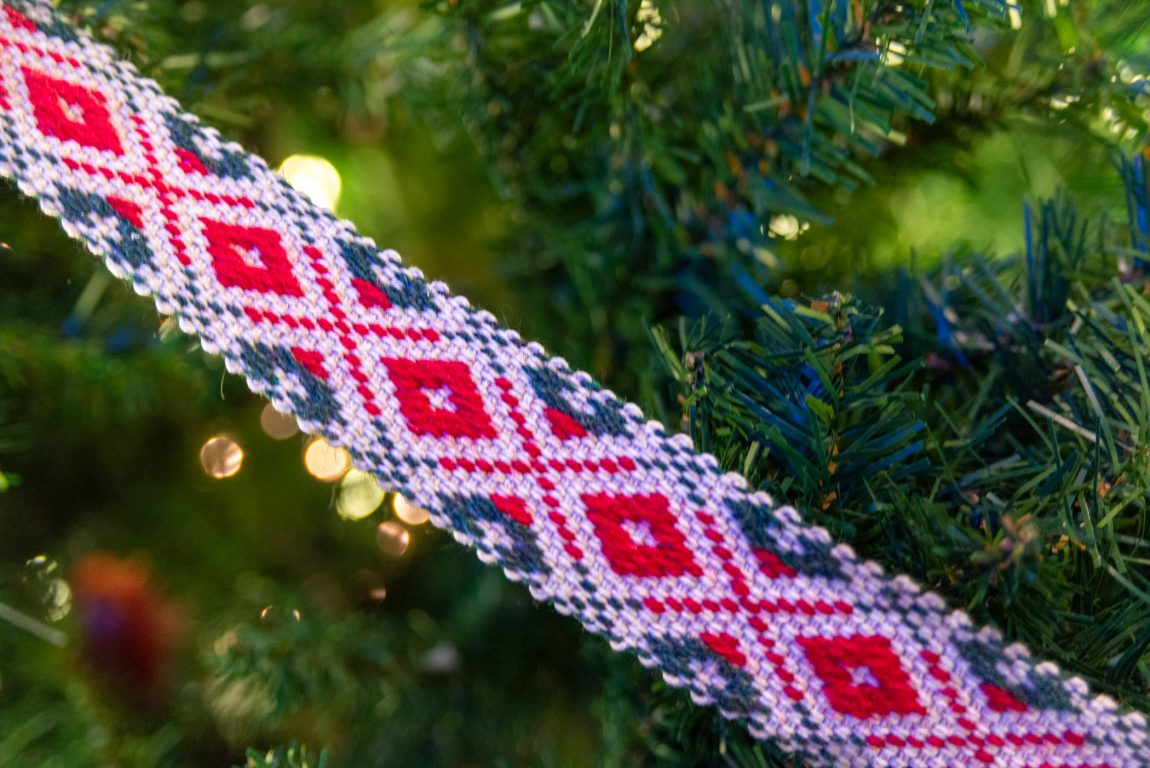
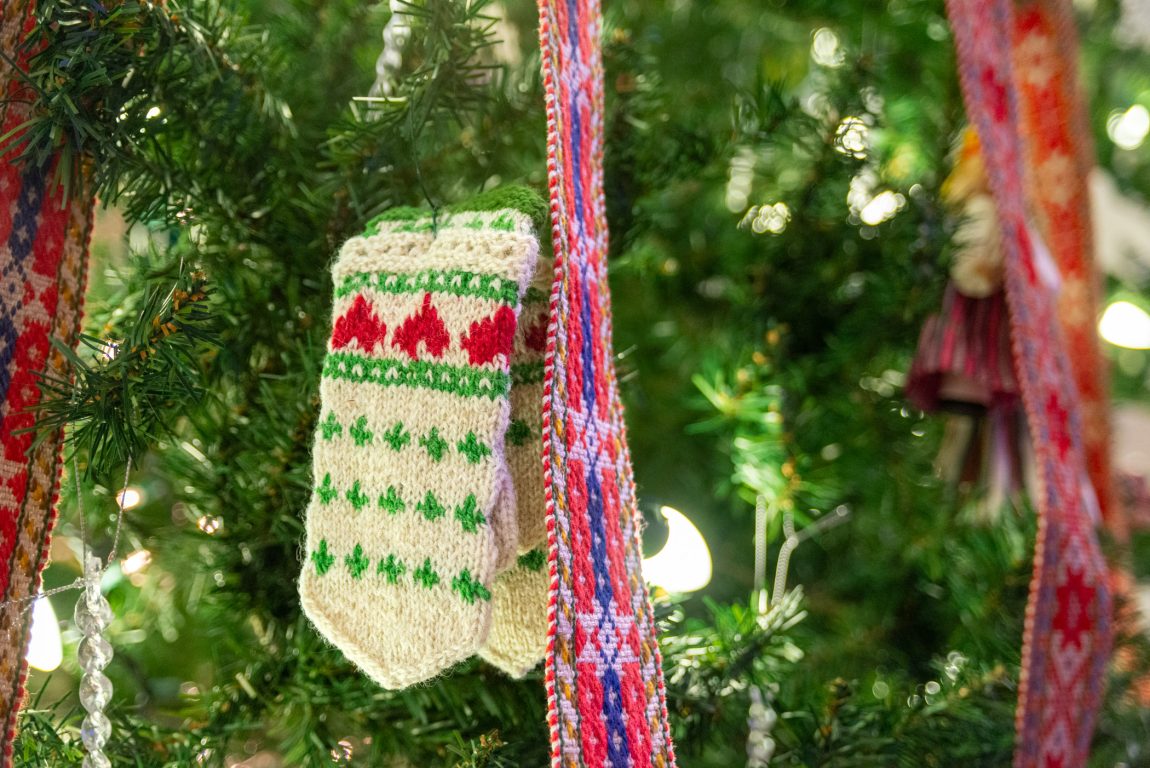
The garlands wrapped around the tree aren’t ordinary Christmas decorations—they’re representations of ceremonial belts traditional to different Estonian regions. In Estonian culture, these belts are more than accessories; they’re identity markers, with patterns and designs specific to different areas of Estonia. Each belt tells a story of local craftsmanship and regional pride.
Handcrafted Elements: Mittens and Snowflakes
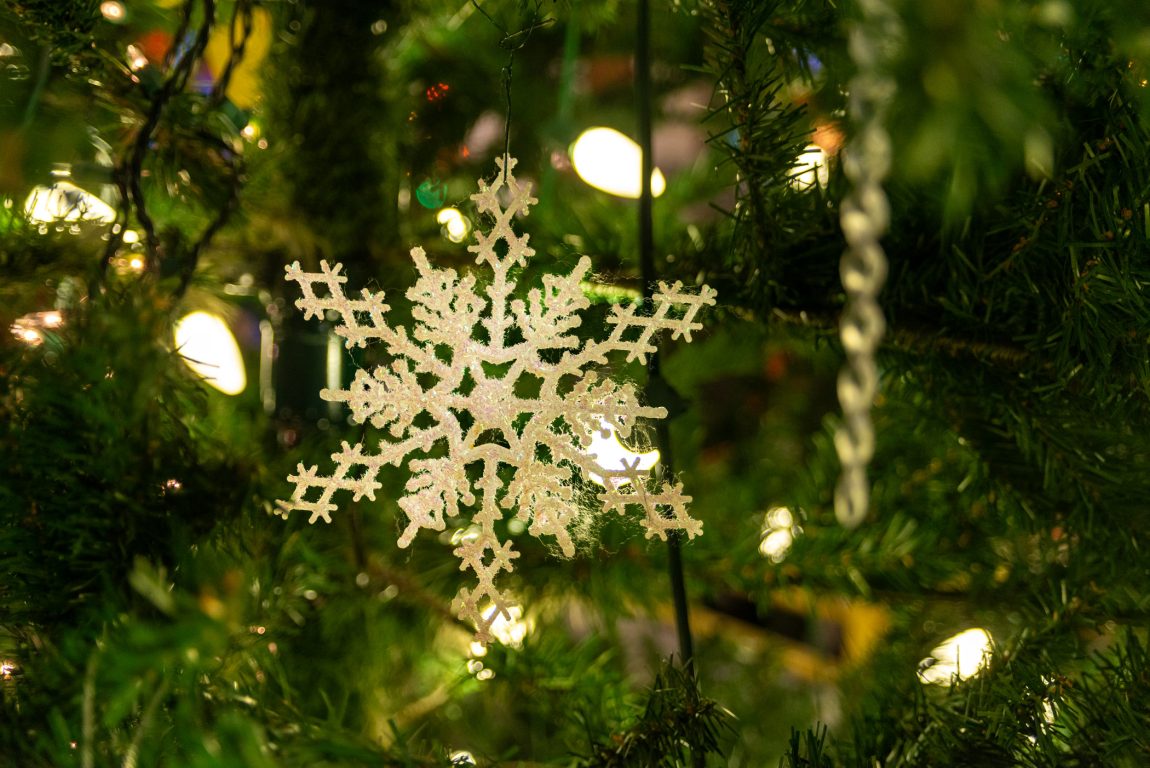
The handmade mittens and woven snowflakes on the tree represent “käsitöö” (hand arts), a vital aspect of Estonian cultural heritage. Traditionally, Estonian women would spend the long winter evenings creating intricate handicrafts, including mittens with regional patterns. These ornaments honor this continuing tradition of Estonian handicraft.
County Shields: Administrative Heritage
The tree features shields representing Estonia’s counties, each with its own distinct symbol. These shields showcase Estonia’s administrative divisions and their unique identities, adding a layer of civic pride to the cultural display.

Winter Elements: Celebrating the Northern Climate
The addition of snowflakes and icicles to the tree isn’t just for holiday atmosphere—it’s a nod to Estonia’s northern location and climate. These decorations reflect the reality of Estonian winters and how the climate has shaped the country’s culture and traditions.
The Museum of Science and Industry plaque for Estonia
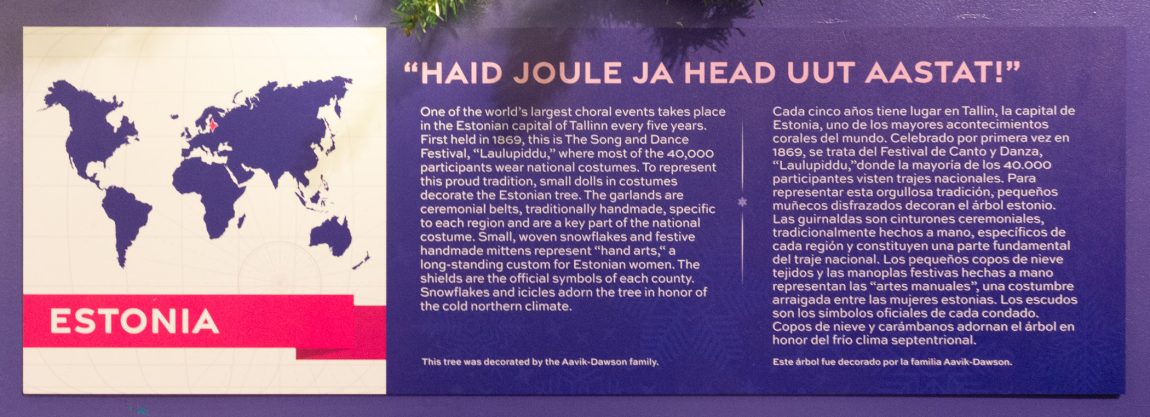
If the text in the image is too small to read, here’s what it says:
“HAID JOULE JA HEAD UUT AASTAT!”
One of the world’s largest choral events takes place in the Estonian capital of Tallinn every five years. First held in 1869, this is The Song and Dance Festival, “Laulupidu,” where most of the 40,000 participants wear national costumes. To represent this proud tradition, small dolls in costumes decorate the Estonian tree. The garlands are ceremonial belts, traditionally handmade, specific to each region and are a key part of the national costume. Small, woven snowflakes and festive handmade mittens represent “hand arts,” a long-standing custom for Estonian women. The shields are the official symbols of each county. Snowflakes and icicles adorn the tree in honor of the cold northern climate.
This tree was decorated by the Aavik-Dawson family.
Cultural Preservation Through Holiday Traditions
The Estonian tree at MSI does more than participate in a holiday display—it serves as a miniature cultural museum, educating visitors about Estonian traditions, craftsmanship, and cultural identity. Each ornament contributes to telling the story of a nation that has preserved its cultural heritage through song, dance, handicrafts, and community celebrations.
In the spirit of the exhibition’s original purpose—bringing people together through cultural understanding—the Estonian tree continues to share its story with Chicago visitors, demonstrating how holiday traditions can serve as a bridge between cultures and generations.