

A pine cone open on one side, and closed on the other. Why?
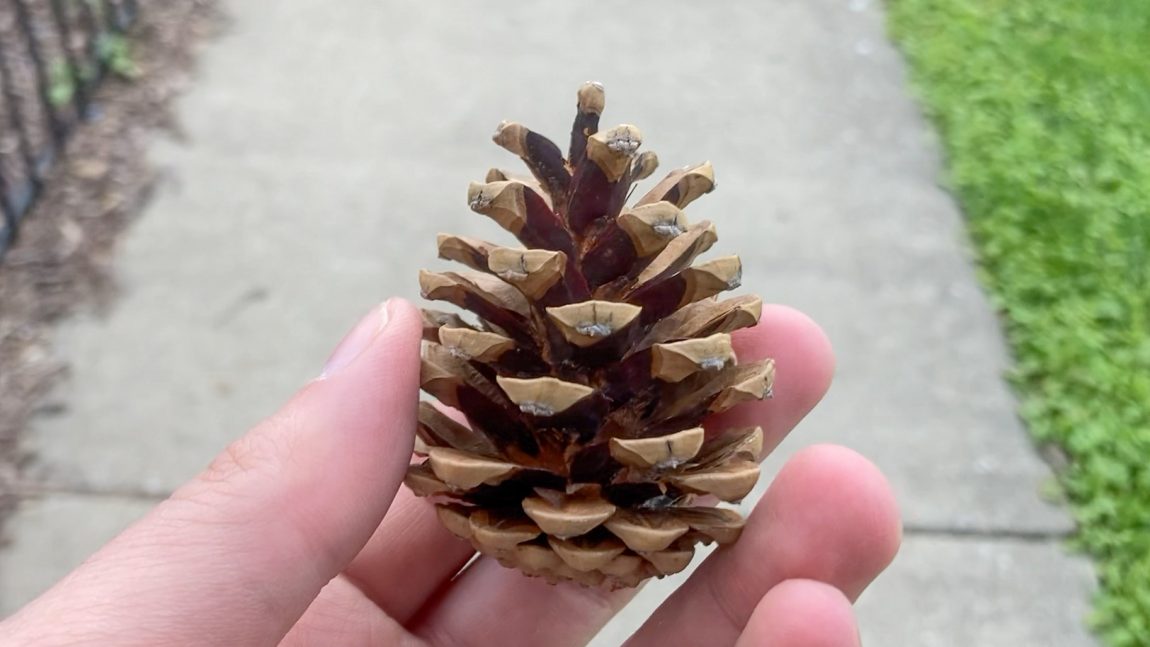
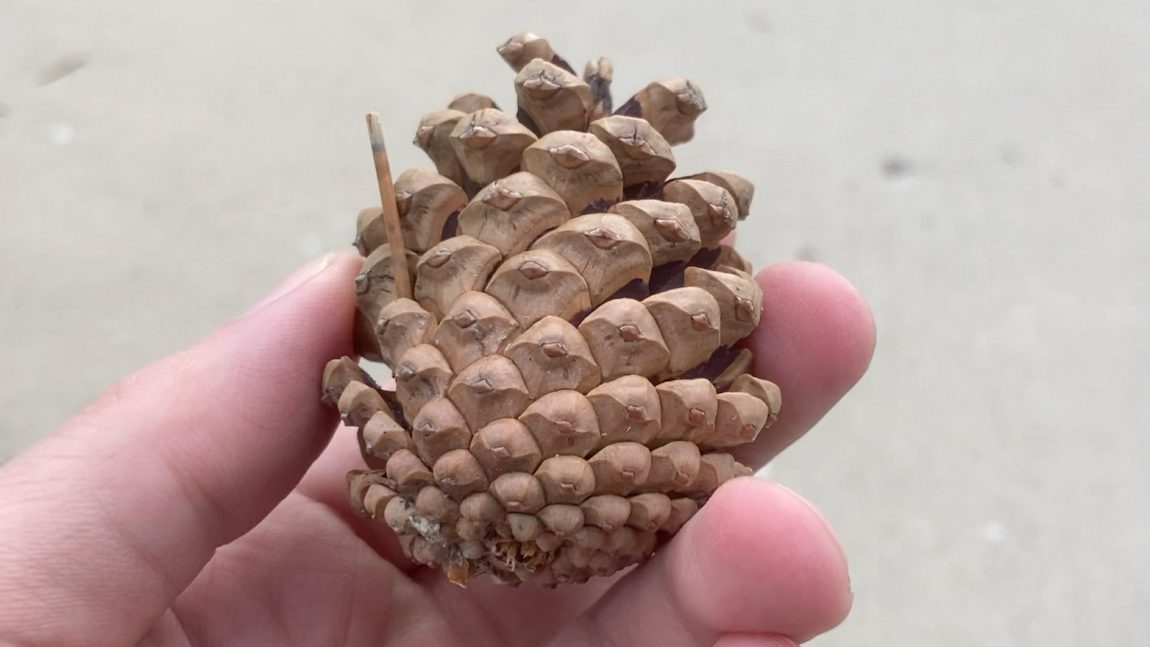
While walking to school to pick up Evelyn, an evergreen tree on my block dropped a bunch of pine cones. I picked one up, because I like holding something from nature on a walk. Plus, it gives me something to investigate while waiting for her to come out.
When I plucked this pine cone from the grass, the side facing up was open. But flipping it over, the side that had been facing the ground was closed. (nine-second video)
Pine cones open and close based on moisture. When the air is dry and warm, they open up. When it’s damp or cold, they close. Try it sometime — put a pine cone in your fridge (especially the fruit crisper where there is more humidity), and it’ll close right up. Take it back out, and it opens again. The cells inside are actually dead, so it happens entirely on its own, a purely mechanical response to moisture.
Today was the first warm, dry day in a couple of weeks, reaching 80 degrees with only 28% humidity, so the pine cone opened up in the dry air. But the ground still held the cold and dampness of the past few weeks. So the side of the pine cone facing the wet grass stayed closed, while the side facing the sky opened wide.
Cold below, warmth above. That little pine cone was carrying both at once.
Why would pine cones do this at all?
The pine cones we all recognize are female pine cones. They open when it’s warm and dry so their seeds can be carried away by the wind — conditions perfect for germination. When it’s wet, they close back up to protect the seeds inside.
The male pine cones are much smaller and softer — not the big woody kind at all. They look like tiny ears of corn, only half an inch to two inches long. Their job is to release pollen into the wind. In spring, as things dry out and warm up, the female cones open to receive that drifting pollen.
After fertilization, it takes about two or three years for the seeds inside to fully develop. Eventually, they loosen and fall — and if conditions are right, a new evergreen tree begins.
In winter, the pine cones close. In summer, they open. And sometimes, on the first warm day after a cold spell, a single pine cone on the ground tells you both stories at once.