

The Art Institute of Chicago just migrated, updated, and reissued their Monet digital publication. It comes with insanely high-res zoom on every painting. I’ve been falling down a rabbit hole in it all afternoon.
Josh Andrews (Web Product Manager for the Art Institute of Chicago) posted about it, calling it “a beast of a catalogue, and an authoritative guide to AIC’s Monet collection”:

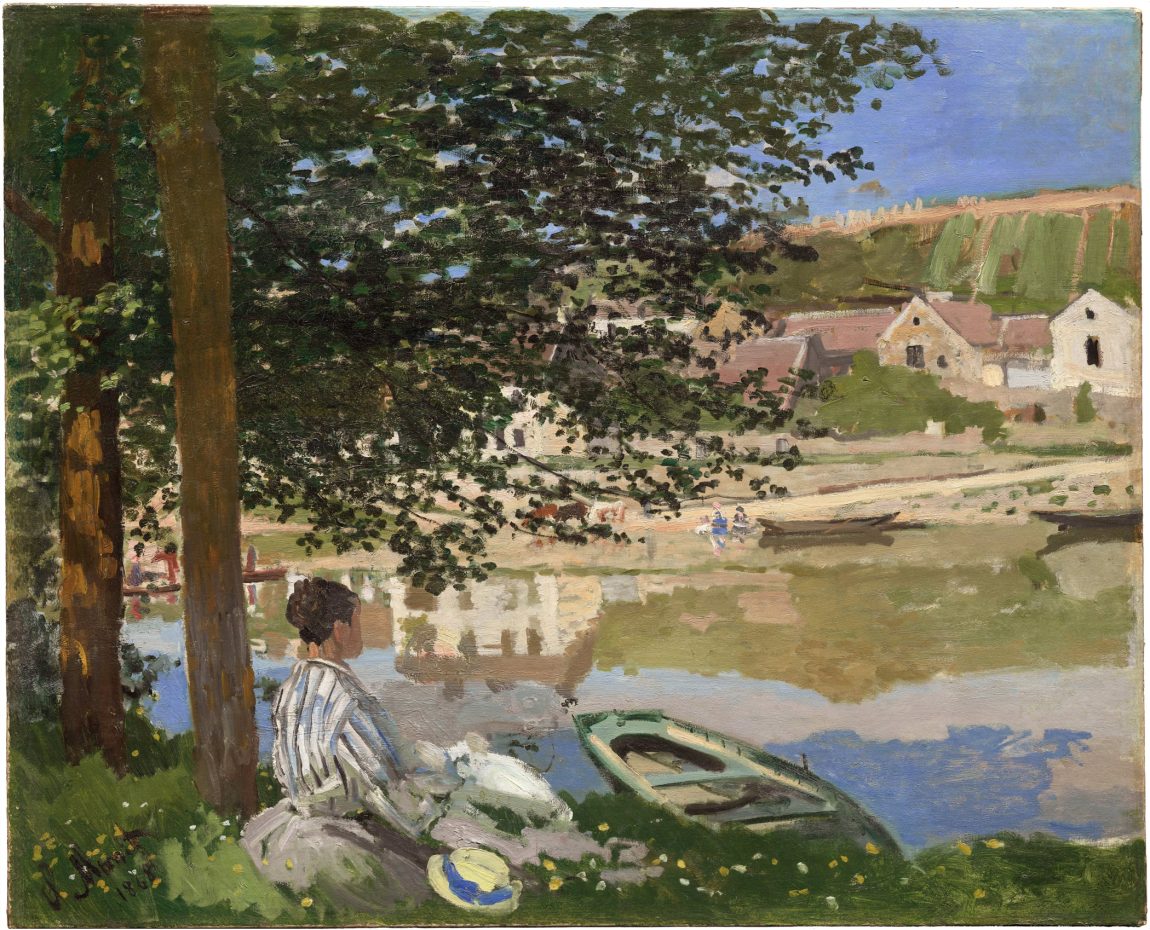
Take one of my favorite Monet paintings, On the Bank of the Seine, Bennecourt (direct link in the catalog).
It’s a favorite of mine partly because if you search for “Banksy” on the Art Institute’s site, this exact painting turns up (a small, weird connection between a 19th-century Impressionist and a 21st-century street artist that I’ve written about separately).
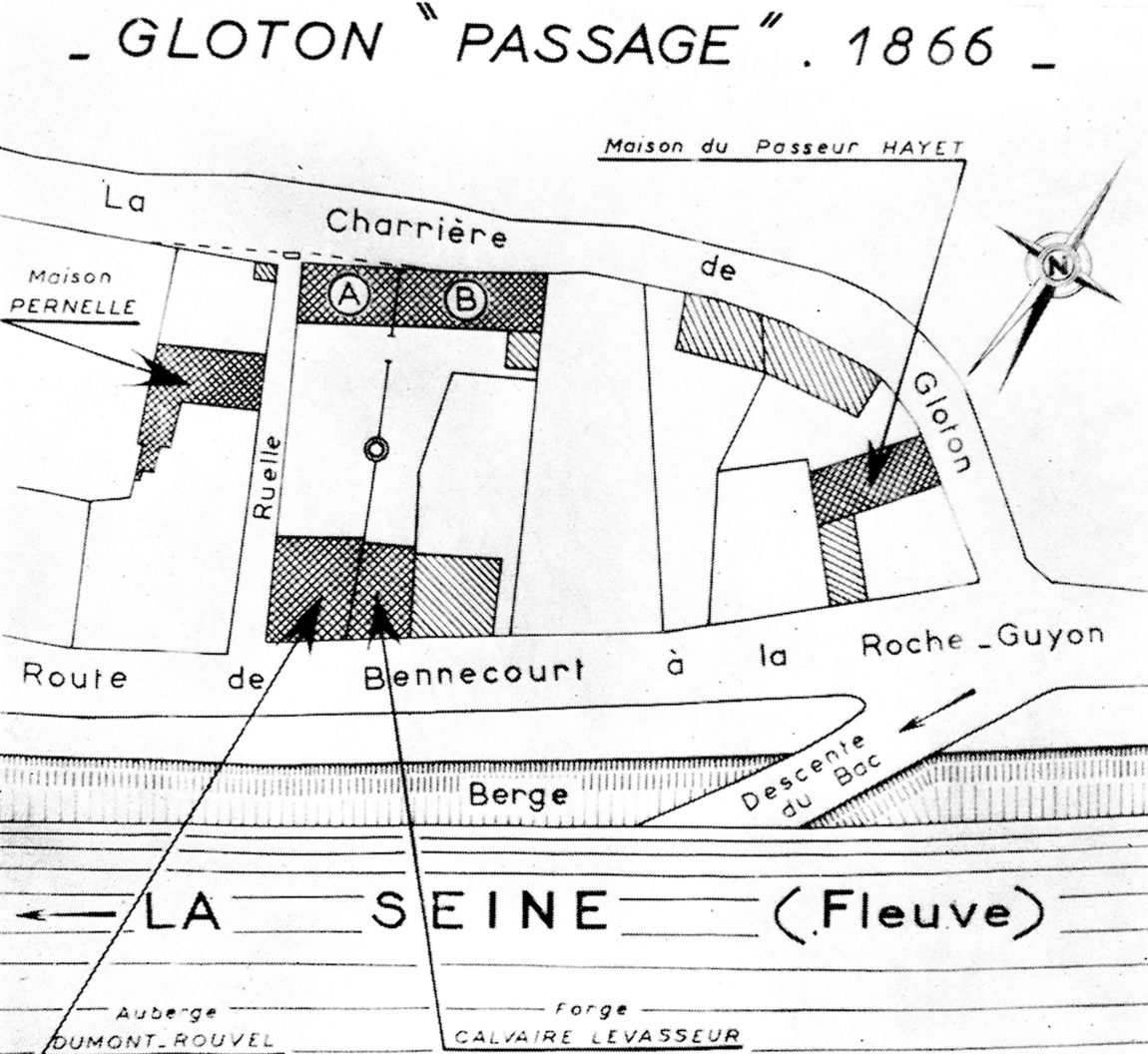
The online catalog gives all sorts of details about this painting, even the actual map of the setting.
And it gives you zoomed-in crops, like the details in her dress.
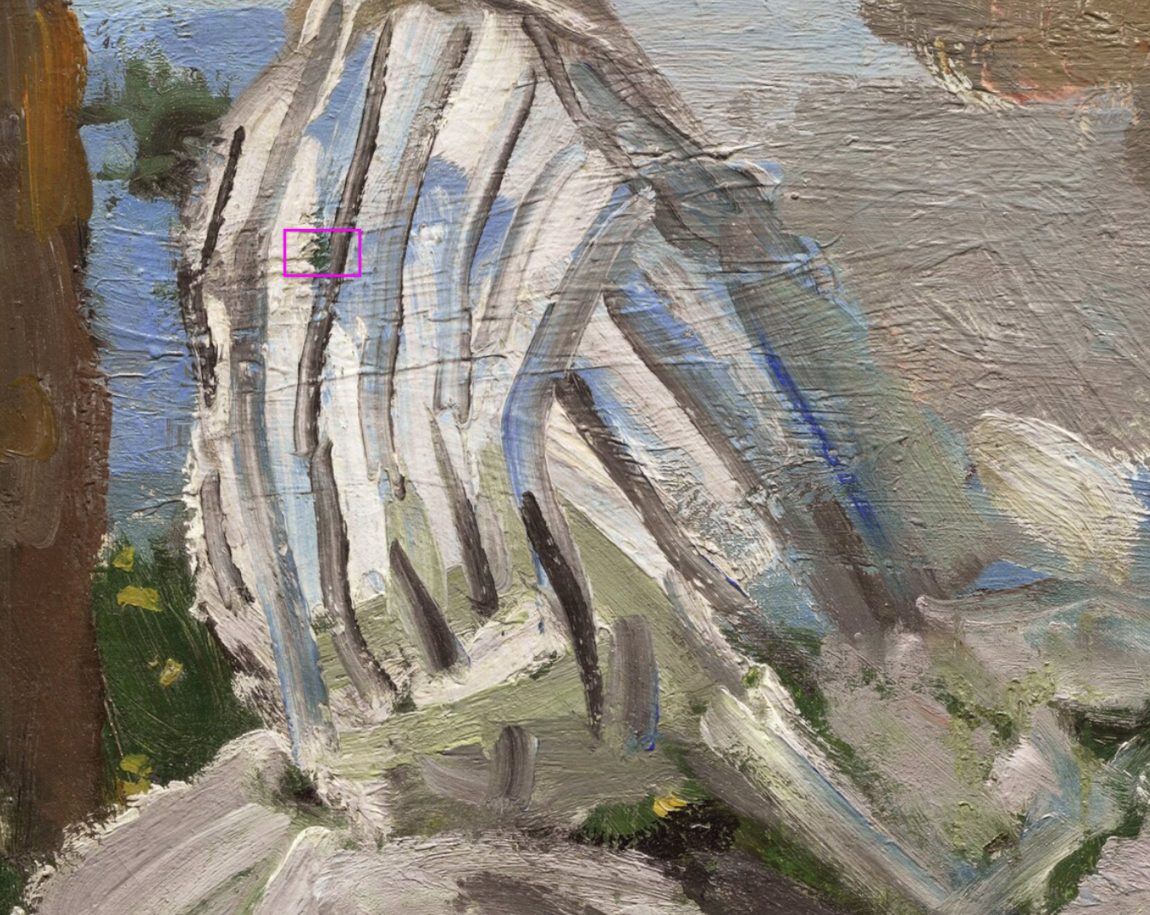
Detail of Monet’s On the Bank of the Seine, Bennecourt (1868) showing breaks in Camille’s bodice through which the blue of the river is visible. The Art Institute of Chicago, 1922.427. (via catalog)
As if that wasn’t close enough, they zoom in microscopically on that tiny area marked by the magenta box.
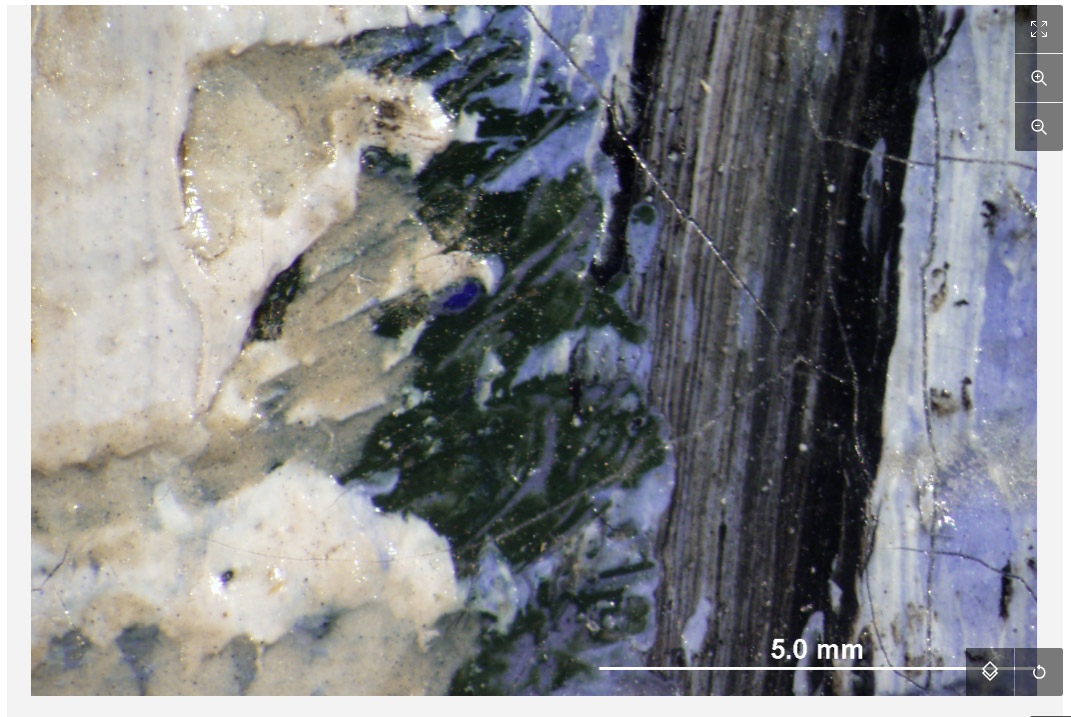
Photomicrograph of Monet’s On the Bank of the Seine, Bennecourt (1868) showing green related to an earlier stage of the composition showing through Camille’s bodice. The Art Institute of Chicago, 1922.427. (via catalog)
At this magnification you can actually watch Monet change his mind. Look at what’s happening in layers, right under her dress:
River? No. Slops paint over.
Grass? Nope. Slops paint over.
Figure? Sure. That’s cool.
The catalog puts it more elegantly than I just did:
Despite her pictorial importance, she is messily handled with a wet-on-wet paint application, a result of the artist working through several compositional ideas. Her blue-and-white-striped bodice includes breaks through which one can see the blue of the river that was laid in first (fig. 14.9). Also intruding are dashes of dark green, remnants of either the earlier extended grassy bank or overhanging leaves (fig. 14.10). The streaks of blue in her dress appear at times accidental, but in some instances Monet deliberately worked them into the final composition, giving their random presence a new visual purpose.
So those “accidental” blue streaks in her dress? Half accident, half Monet deciding he liked the accident and running with it. That’s the kind of thing you might not notice standing in front of the actual canvas, but it’s right there once you can zoom in like this.
This is a tremendous and fun resource. Go dive into the Monet catalog by the Art Institute of Chicago.