

Fireworks grand finales are exciting in person, but through the camera lens, they transform into something entirely otherworldly. When photographing the grand finale, there are so many fireworks bursting simultaneously that everything gets layered over and over—especially when using a longer exposure. The result? Pure cosmic chaos.
If you crop a photo of a grand finale fireworks to include just the center, the photo ends up looking like a planet exploding. The overlapping bursts create dense, swirling patterns of light that mirror the violent beauty of stellar destruction. Streaks of gold, red, and white spiral outward like superheated gases escaping a dying world. The long exposure captures every spark’s journey, creating layers of luminous trails that build into something that looks pulled straight from a science fiction film.
The resemblance is uncanny—those radiating lines of light become the shockwaves of a planetary explosion, while the bright central core mimics the intense heat and energy of a celestial catastrophe. What started as a celebration in a suburban park becomes a glimpse into the dramatic forces that shape the universe.
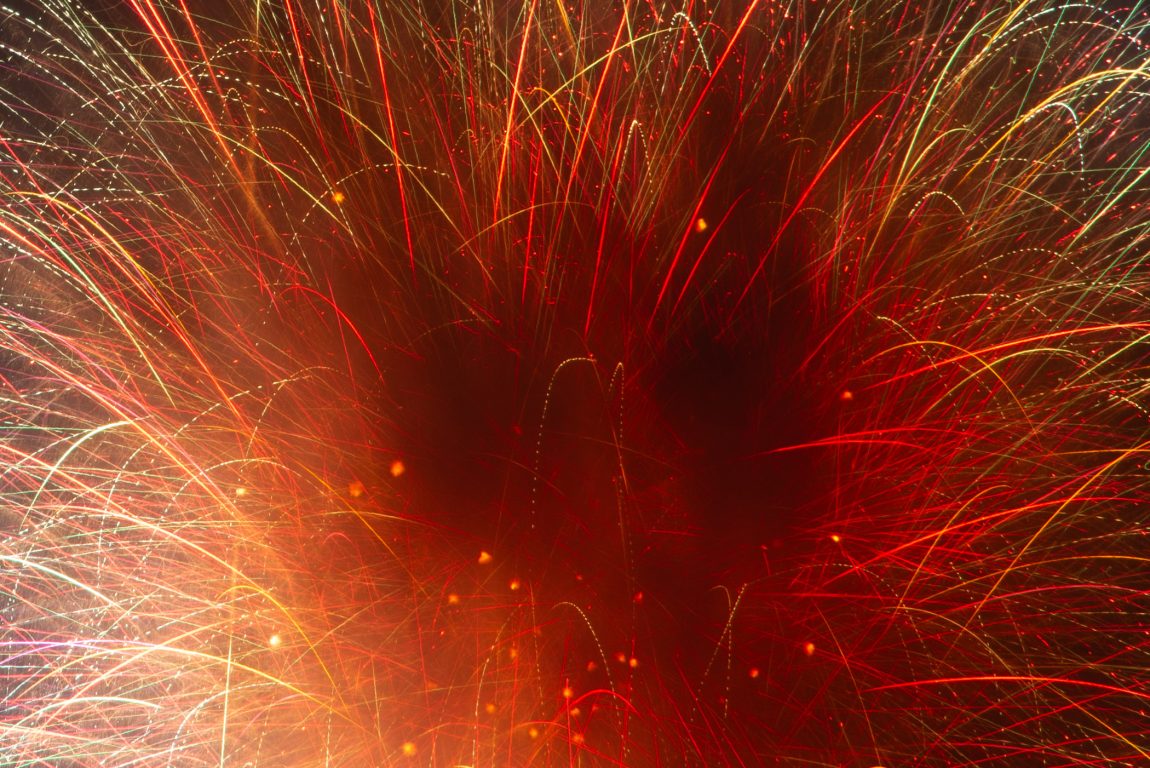
2025
ISO 100, 14.0 seconds at ƒ/18, 300mm
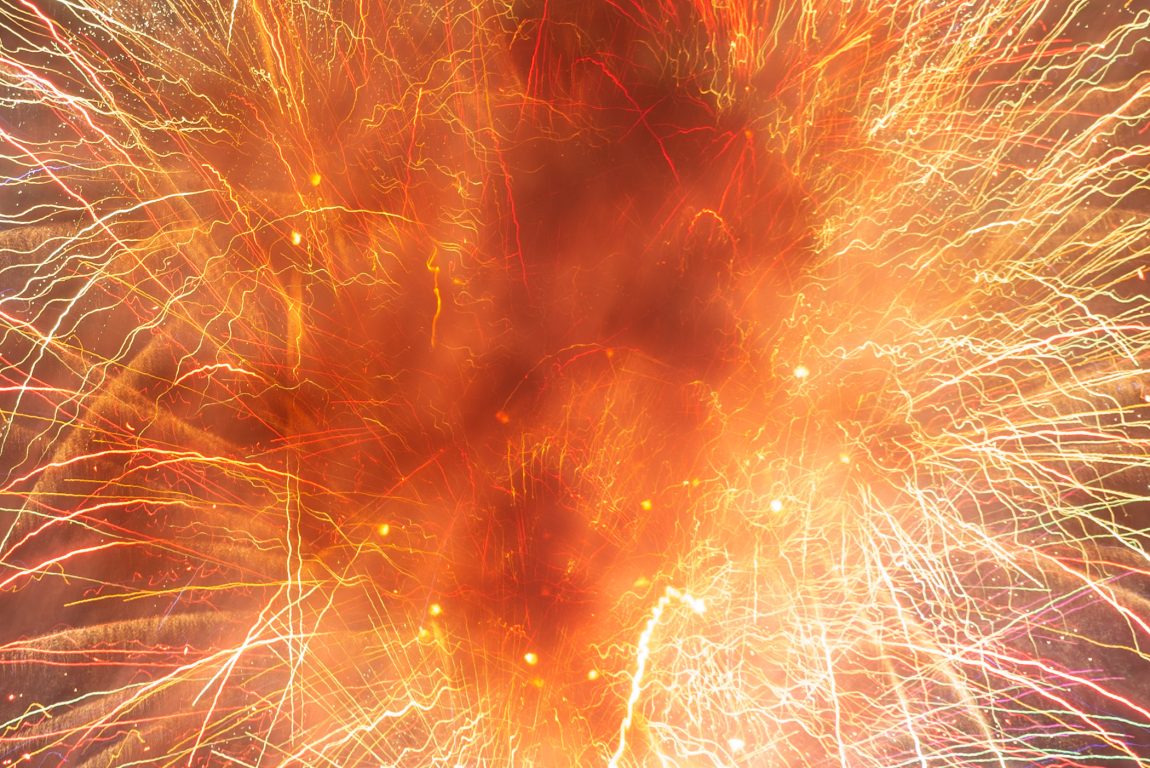
2023
ISO 100, 5.0 seconds at ƒ/8.0, 300mm
The technique is surprisingly simple: use a longer exposure to capture many fireworks, then crop tight to focus on that explosive center. The camera becomes a time machine, compressing seconds of celebration into a single frame that captures the essence of cosmic destruction. The Fourth of July fireworks gives us a window into the violent beauty of the universe.