

Who are the top artists of today? If we’re talking about well-known active artists who became famous after 2000 (leaving out older artists like Jeff Koons, Keith Haring, and Damien Hirst), most people would probably say Banksy.
Does the Art Institute of Chicago own any artworks by Banksy?
Nope. They don’t. But what you get when you search “Banksy” on their website is pretty funny.
The search shows 494 results—none of which are actually by Banksy.
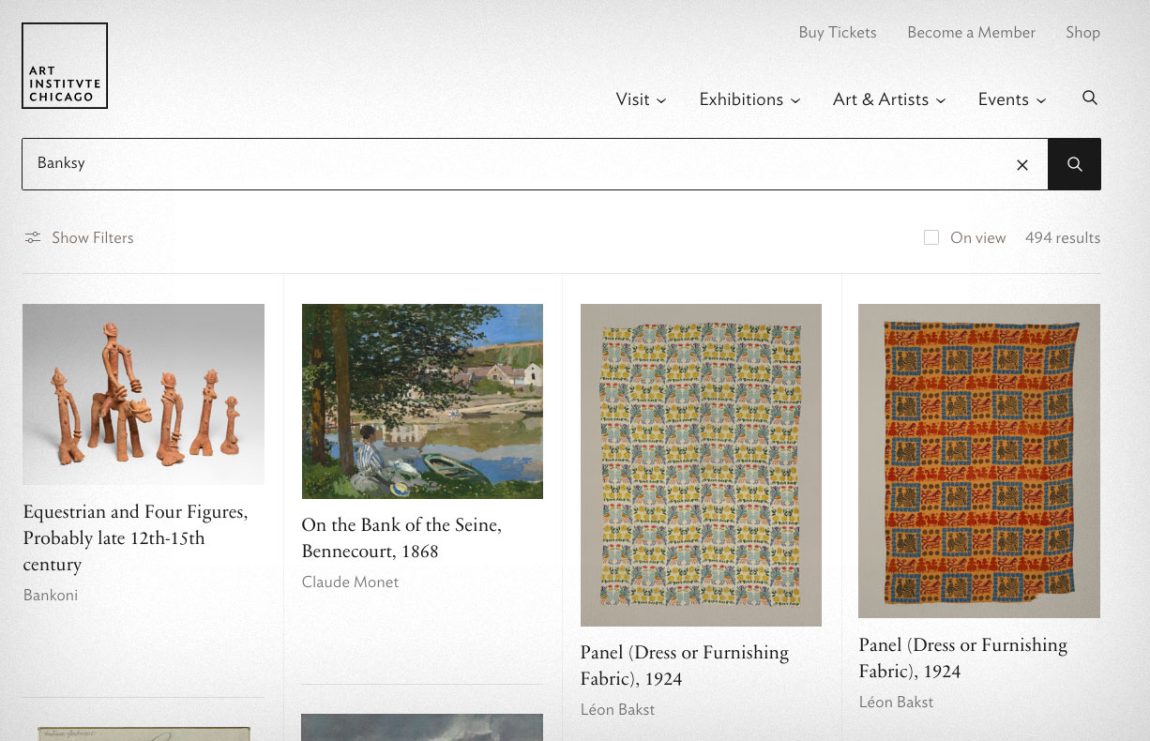
Instead, we get works with names that happen to contain parts of “Banksy.” Let’s look at these accidental matches.
Bankoni: ancient art with a street edge
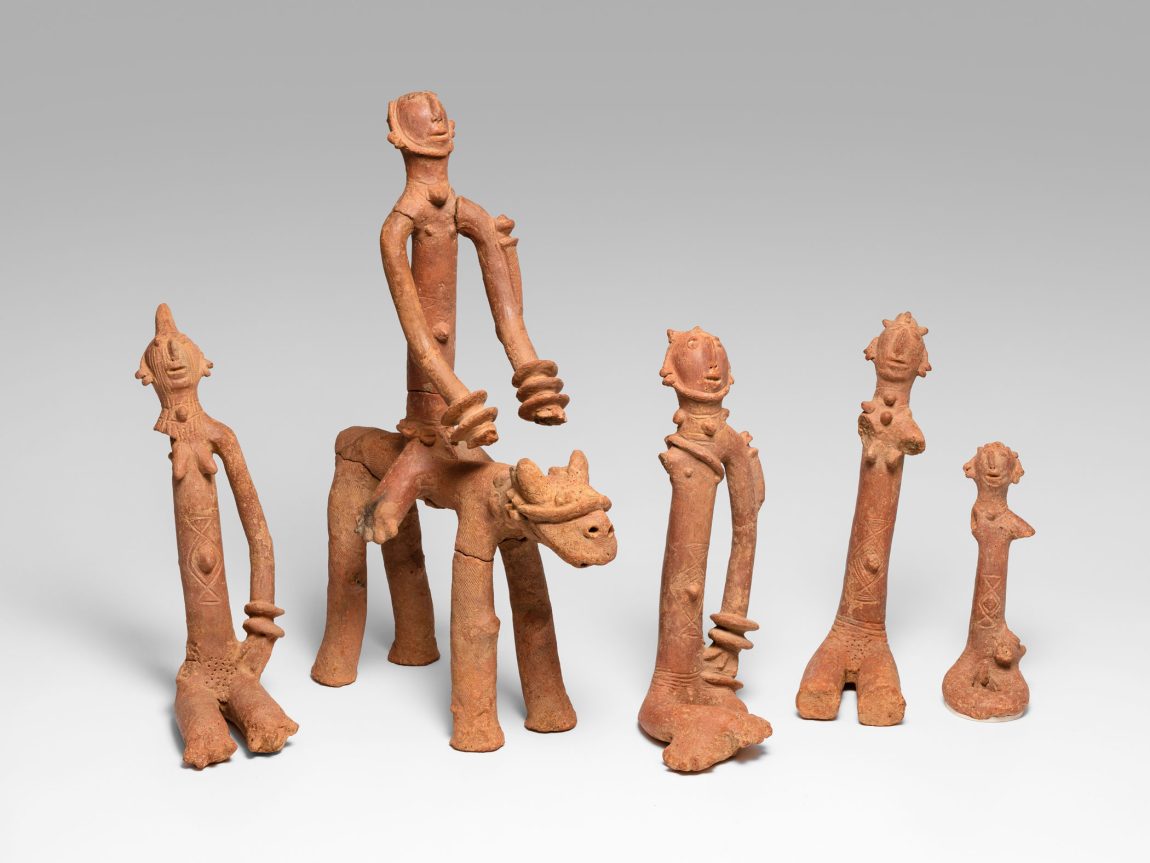
The top search result is “Equestrian and Four Figures” by Bankoni, from the 12th-15th century, from Northern Africa. It’s on display in the Arts of Africa gallery.
The name “Bankoni” comes from the village where similar objects were found starting in the 1950s. This ancient sculpture has nothing to do with Banksy, but there are some surprising similarities.
The weathered clay figures with their long, simple forms look a bit like Banksy’s stencils. Just as Banksy reduces people to simple outlines, these sculptures communicate a lot with minimal detail.
The main figure riding a horse even suggests the kind of power relationships that Banksy often comments on in his work—though these sculptures weren’t making political statements like Banksy does.
Monet on the bank: Impressionism meets street art
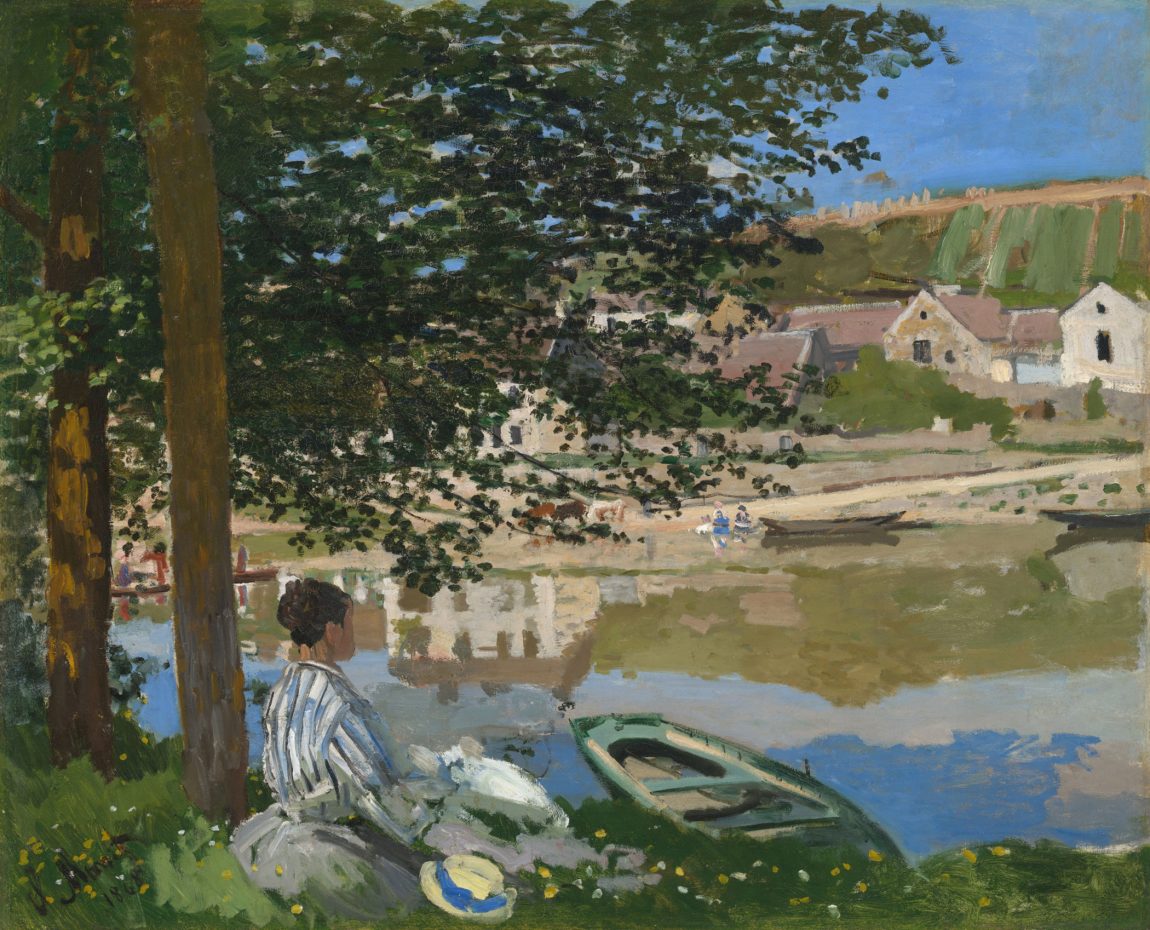
Next is Claude Monet’s “On the Bank of the Seine, Bennecourt” from 1868.
This painting shows up only because “Bank” is in the title. The irony is perfect—Banksy often criticizes the art market, while Monet’s paintings now sell for millions.
Looking at the peaceful scene of someone sitting by the river, I can imagine Banksy adding something unexpected—maybe a stenciled factory polluting the water, or a price tag floating downstream. Monet’s quiet riverside would be the perfect background for Banksy’s commentary on how we’ve commercialized both nature and art.
Léon Bakst: textile patterns with Banksy potential
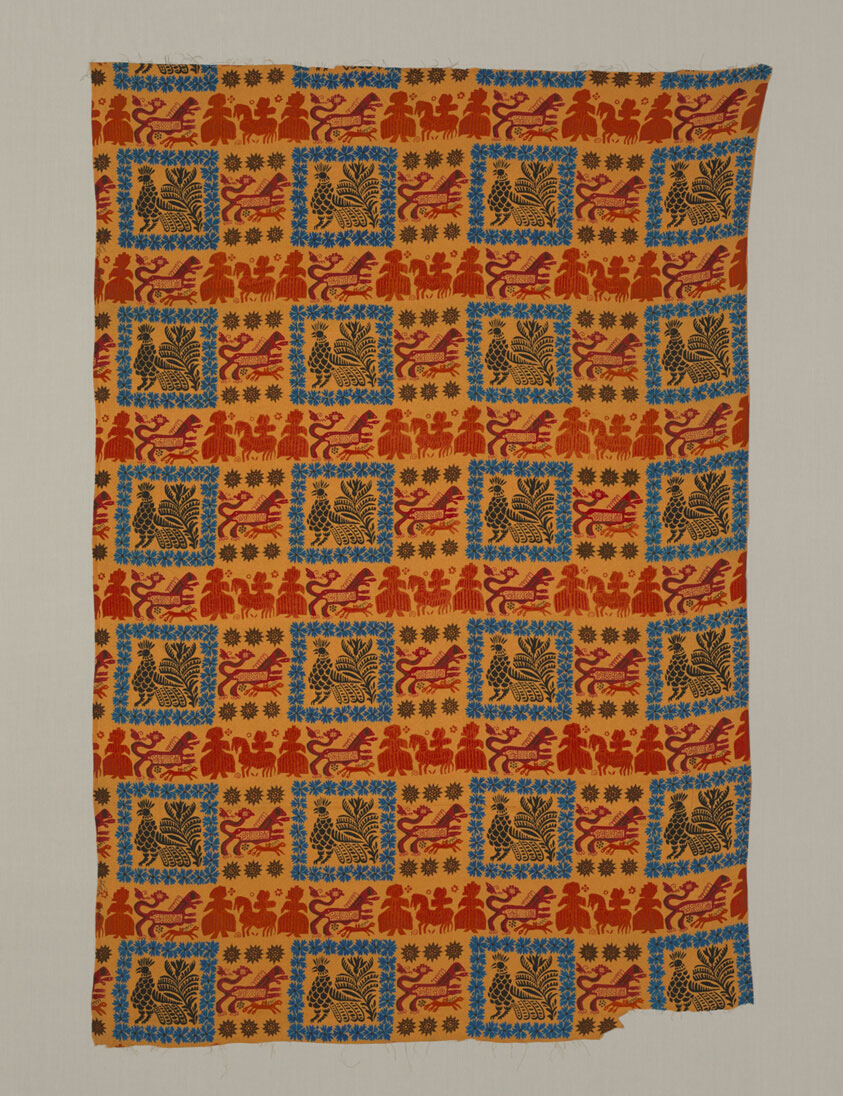
The search also finds “Panel (Dress or Furnishing Fabric)” by Léon Bakst from 1924.
These bright orange fabrics with repeating patterns of animals and geometric shapes seem nothing like Banksy’s street art. They show up just because “Bakst” sounds a bit like “Banksy.”
But the bold, graphic quality of these designs does share something with street art. The way Bakst repeats silhouetted figures in a pattern isn’t too different from how Banksy uses repetition in works like his “Monkey Parliament.”
If Banksy redid these textiles, he might add modern symbols—like surveillance cameras or drones—into the decorative patterns, making a statement about how technology has taken over our lives.
Banksy’s ghost in the search engine
All these connections are completely random, which is what makes them so entertaining. It’s like Banksy—famous for showing up where you least expect him—is hiding in the Art Institute’s search algorithm.
There’s something fitting about a digital search for a street artist who has built his career on appearing unexpectedly and disappearing just as quickly.
If Banksy heard about these search results, I could imagine him making a new work called “Bankoni on the Banks of Bakst“—mixing ancient African sculpture, Impressionist riverscapes, and Art Deco fabrics into one big joke about art history and digital searches.
Until then, the Art Institute of Chicago offers these “Banksy” works that aren’t by Banksy at all—maybe the perfect tribute to an artist who specializes in irony and misdirection.