

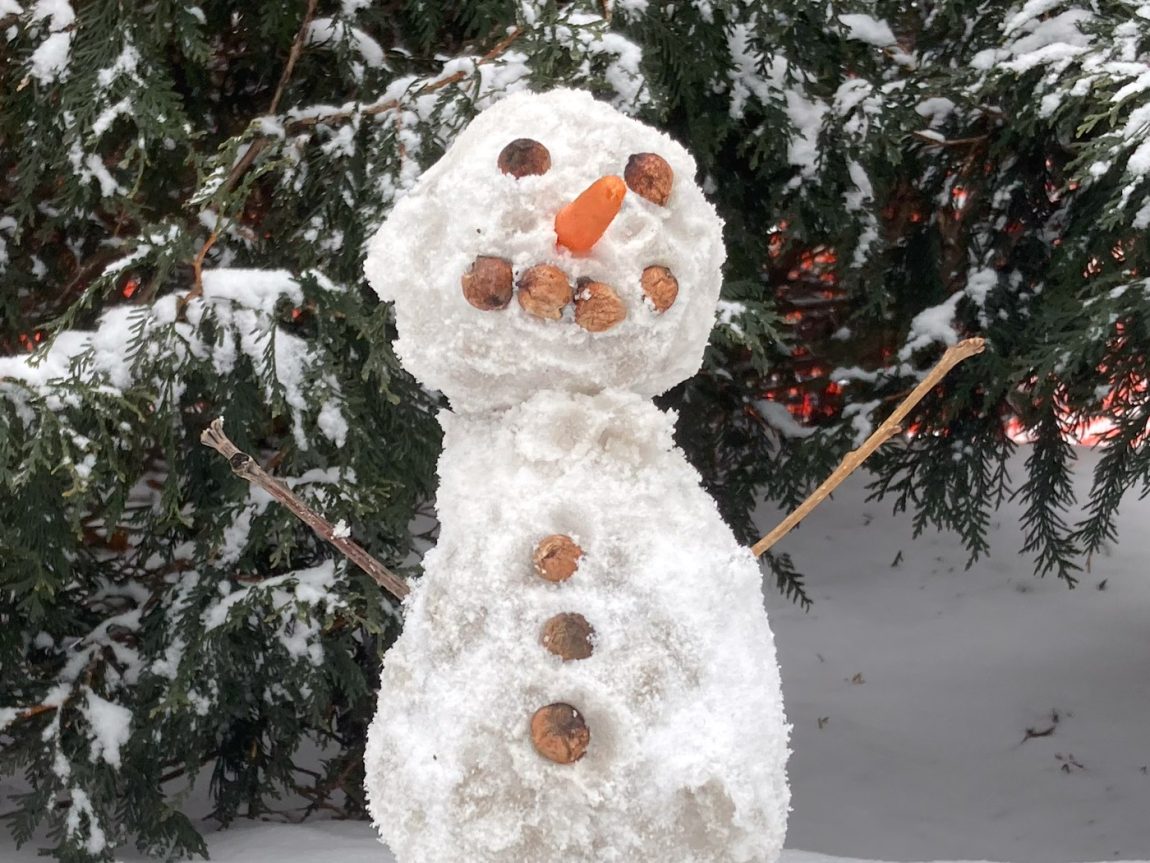
When making a tiny snowman, it’s nice to use natural materials. When the snow melts, you don’t leave a mess behind. Plus, the snowman just looks more natural. And the snowman is more connected with the area—it’s literally made from the same materials that are right there.
Only, sometimes those materials can be what you aren’t expecting.
Recently, I made a snowman at my daughter’s school, and several places in our village downtown. The next location for a tiny snowman— our local park district. There’s a rock ledge that, for years, I wanted to make into my gallery. A place to showcase random little pieces of artwork for people to discover on their walk to the park.
However, the snow kept falling apart. It was wet enough to make a loose snowball. But they would collapse right away. When the snow is too powdery, the next best thing is to look around for snow chunks. Ideally, ones made by a snowplow.
The parking lot at the park district had just the snow pile, right around the corner from this rock. Hooray! I selected out a few nice pieces and arranged them on the rock.
Along with the snow pile was a collection of large branches. This would be perfect for making the arms. Ideally, I don’t like breaking branches off live trees. It’s much better to find existing broken branches on the ground.
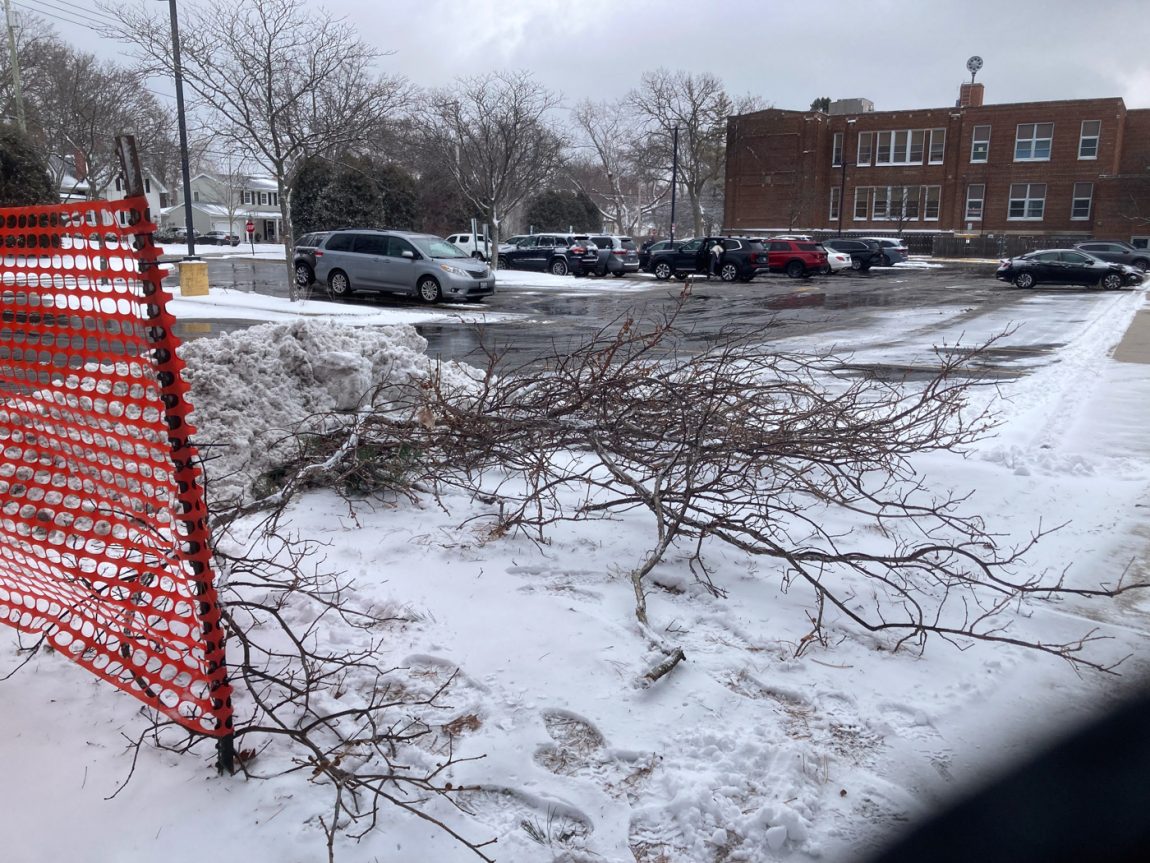
But this pile of tree branches had a special surprise. Some weird, round, nut-shaped things on them. They looked a bit like acorns, but without the hat—just the body.
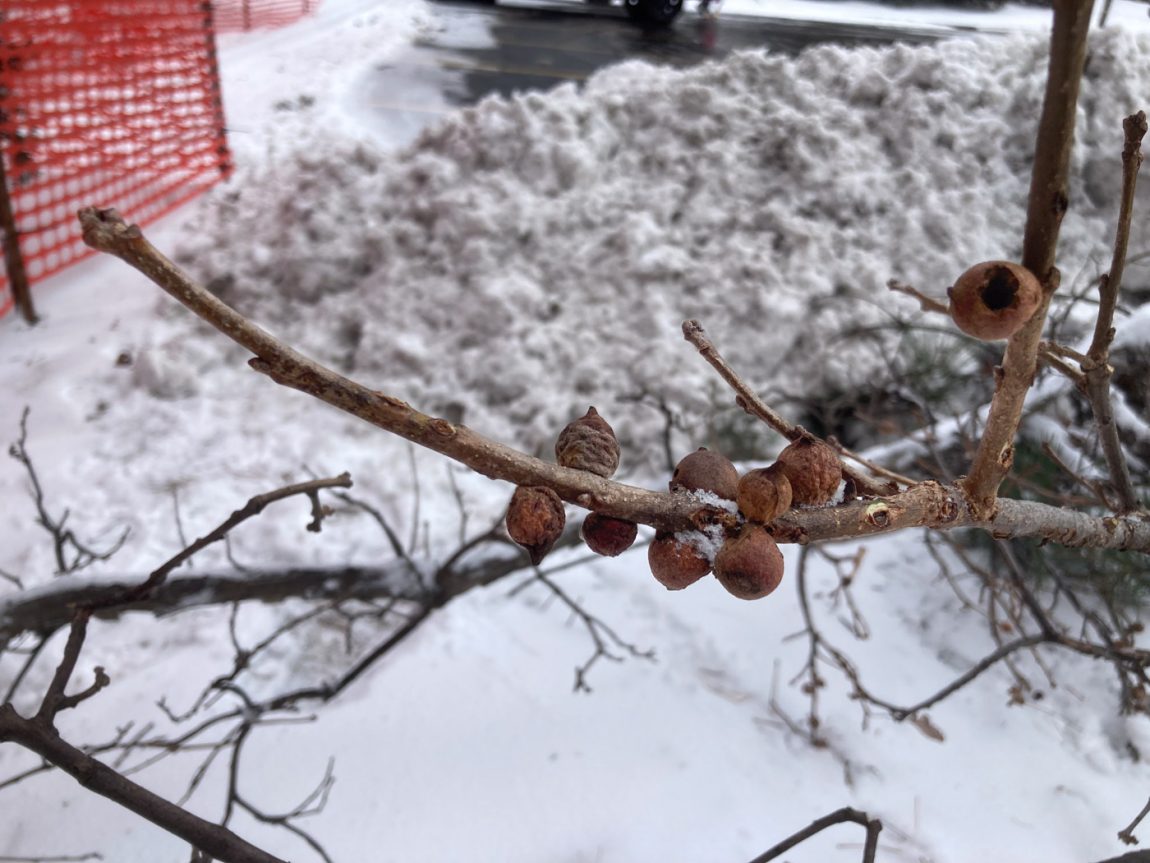
PERFECT! I popped them off, and used them for the eyes, mouth, and buttons. (and of course, for the nose, I have a bag of carrots in my pocket.)
The snowman was cute. A nice personality with a tall, lanky body.
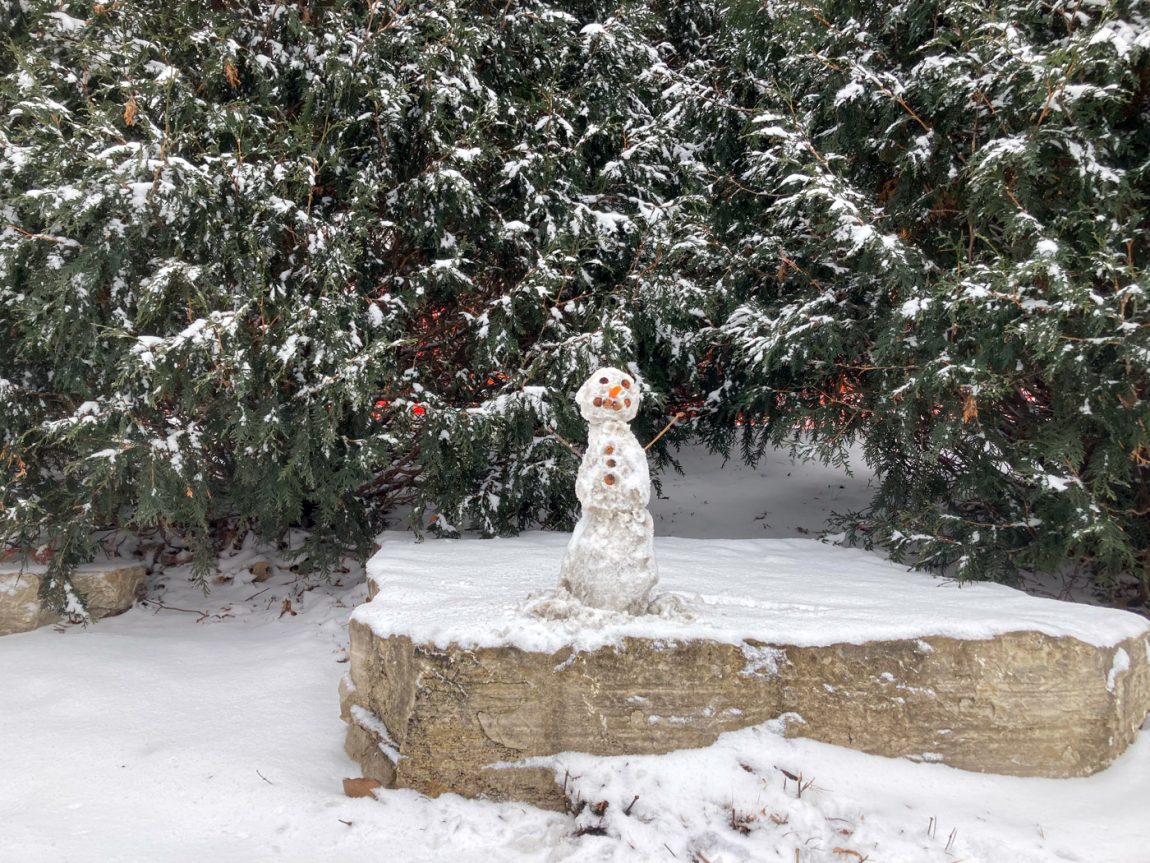
That’s one of the great things about using snow chunks: you get all these interesting shapes you wouldn’t normally think of making by hand.
When I got home, those weird nuts stuck in my head. What were they, after all?
I uploaded a photo to Gemini.
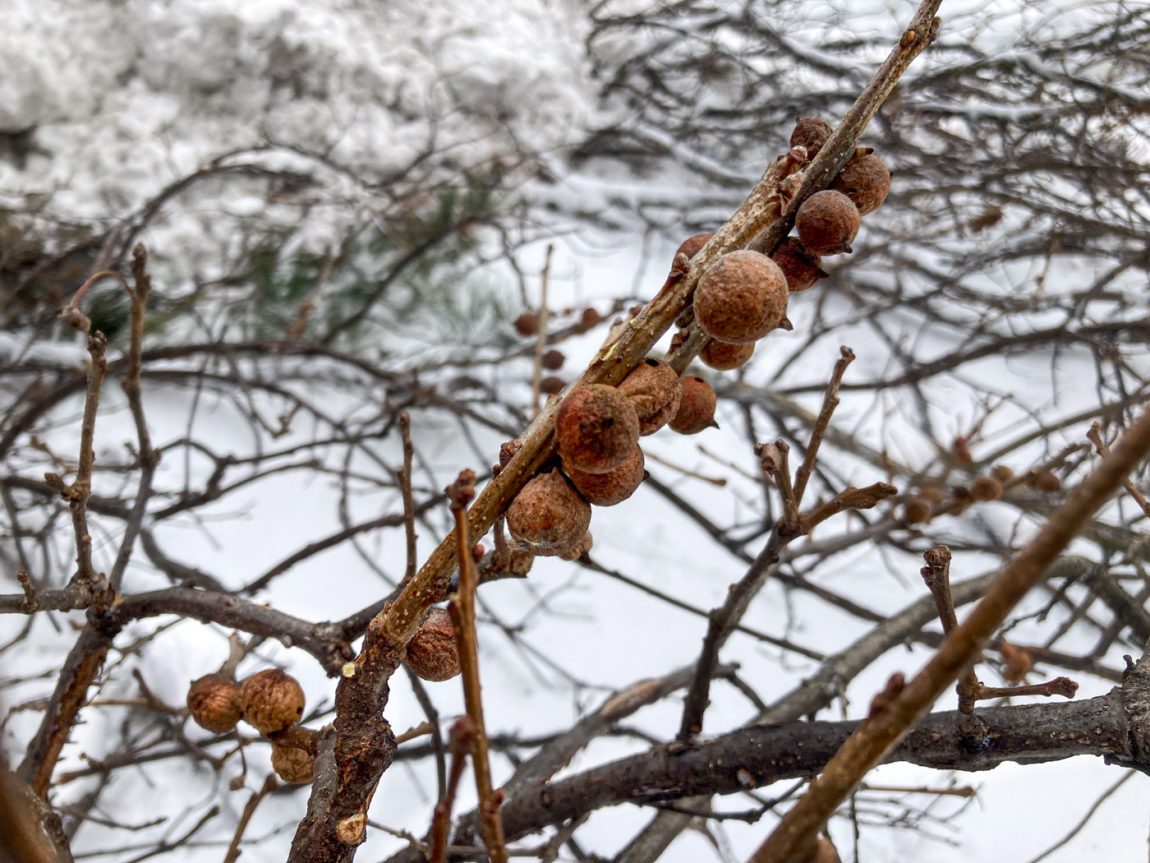
Gemini identified the weird nuts:
Based on the photo, those “nut-things” are Oak Bullet Galls.
While they look like fruit or nuts, they are actually a fascinating biological interaction between a tree and an insect. Here is a breakdown of what’s happening on that branch:
What are they?
- The Cause: These galls are created by tiny, non-stinging wasps (often from the genus Disholcaspis).
- The Process: In late summer or fall, a female wasp lays an egg in the developing twig. The tree reacts to the wasp’s chemicals by growing this abnormal tissue “ball” around the larva.
- The Purpose: The gall provides the developing wasp larva with both a high-nutrient food source and a protective home against the winter elements.
Key Features in Your Photo
- The Holes: If you look closely at some of the spheres, you might see tiny, perfectly round exit holes. This means the adult wasp has already finished its development and chewed its way out.
- Appearance: They are woody, hard, and usually start out green or reddish before turning that tan/brown “bullet” color as they mature and dry out.
- The Tree: These are almost exclusively found on Oak trees (likely a Bur Oak or White Oak, given the twig structure).
Are they harmful?
For a healthy, mature tree, these galls are mostly cosmetic. They don’t usually kill the branch, though a very heavy infestation can sometimes cause a bit of “dieback” or slow the growth of that specific twig.
Fun Fact: These galls are often rich in nectar while they are growing, which attracts ants and other insects that actually help protect the wasp larva from birds!
LOL. So…. I used wasp larvae nests on my snowman?
Nature is so amazing. These wasps lay an egg on a tree twig. Then the tree senses that egg and grows a tissue ball around the larva. I mean, really. The tree itself literally makes the tiny wasp nest around the larva! Then the larva grows up into a wasp.
Do I have tiny larvae on my gloves and fingers?
I asked Gemini, “What time of year do they chew their way out?“
It depends on the specific “generation” of the wasp, but for the hard, brown ones in your photo, the main exit window is late autumn.
Here is the timeline of how they chew their way out:
1. The Fall Exit (Main Generation)
The large, woody galls you see are created by a “female-only” generation.
- When they leave: Most adults chew their way out in late October or early November.
- The Exit Sign: If you see a small, perfectly circular hole (about the size of a pencil lead) in the side of the gall, the tenant has already moved out.
- Where they go: These females immediately crawl to the tree’s buds and lay eggs for the next stage of their life cycle before the winter fully sets in.
2. The “Empty House” Phase
By the time you took this photo in January, most of those galls are likely empty. The hard woody shells often stay attached to the tree for years after the wasp is gone, turning darker and more weathered over time.
Oh, so the larva grows into a wasp inside the gall. Then it chews its way out. Hence the hole.
Yup. You can see those little tiny perfectly circular holes.
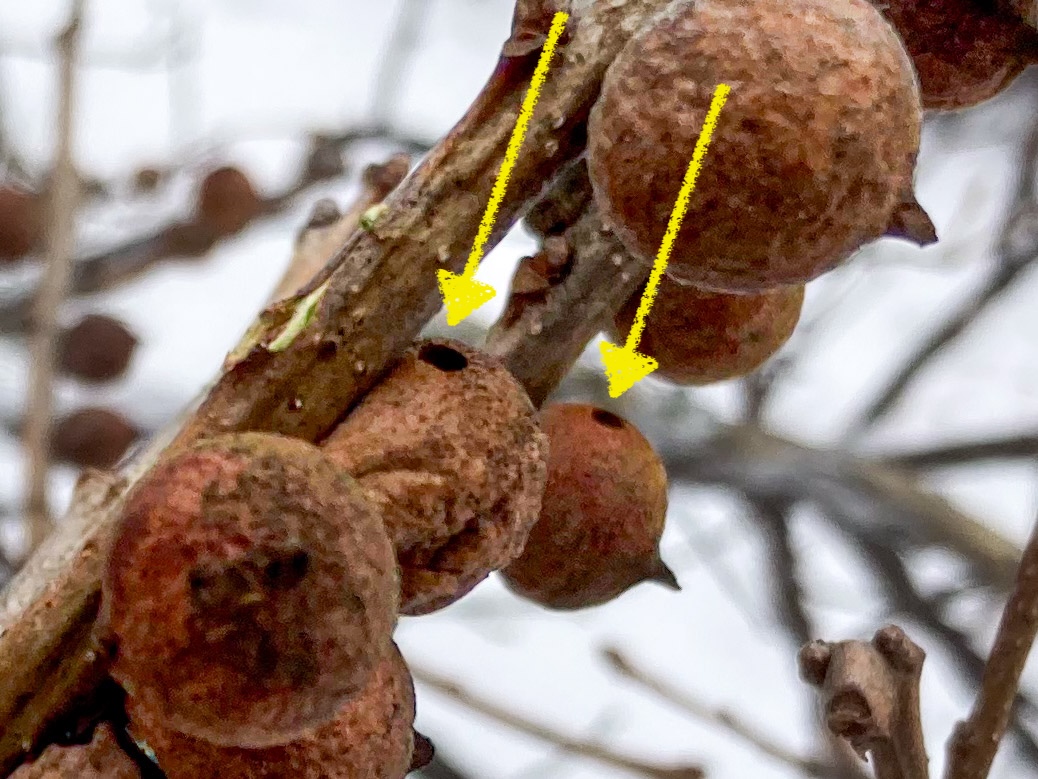
Wasp larvae galls make for great snowman eyeballs
I totally did not see those holes when placing them into the snowman. My goodness. If I did see them, I would have positioned them so the circles would appear outward for the eyes. So they would look like an iris. That is so rad!
It makes me want to go back and collect more them—and keep them safely outside. Any chance of wasp larvae in the house? No thanks. I would make sure to collect only the galls with holes in them. Those galls without holes… there might be a wasp inside!
Great snowman, I really like how it looks :3
Thank you! It was a lot of fun to put together.
Do you ever think they’ll hatch or anything?
From what I saw, the nests had those tiny circular holes, so that means these larvae nests are no longer inhabited—I hope.