

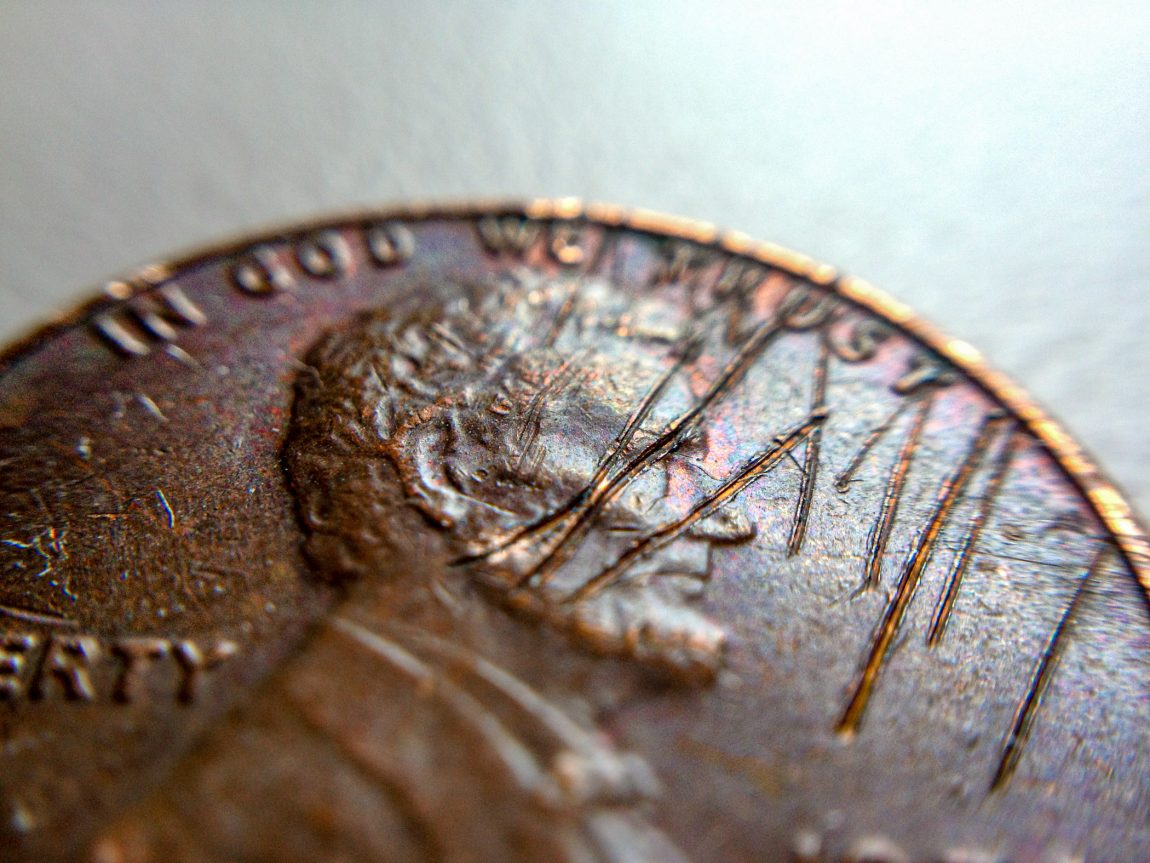
I love the penny. Call me old-fashioned, but there’s something fundamental about that little copper/zinc coin. It’s adorable, it keeps transactions honest, and it represents true value down to the last cent.
So while everyone else celebrates its demise, I’m doing the math on what we’re actually losing. And the numbers are alarming.
What penny elimination really means for your wallet
Without pennies, every price must round to the nearest 5 cents. Here’s how it’s supposed to work:
Fair rounding to the nearest nickel:
- Item costs $4.98 → Rounds UP to $5.00 (+2¢)
- Item costs $4.96 → Rounds DOWN to $4.95 (-1¢)
- Item costs $4.91 → Rounds DOWN to $4.90 (-1¢)
But here’s what will likely happen in reality:
- Item costs $4.98 → Rounds UP to $5.00 (+2¢)
- Item costs $4.96 → “Rounds UP” to $5.00 (+4¢)
- Item costs $4.91 → “Rounds UP” to $4.95 (+4¢)
When have you ever seen a business voluntarily charge you less?
The Starbucks test
Picture this: Your daily coffee costs $4.96. Under fair rounding, you’d pay $4.95—saving a penny. But if Starbucks decides to “simplify” by always rounding up, you now pay $5.00.
That’s 4 cents extra per coffee. Multiply by your 250 workday coffees per year, and you’re paying an extra $10 annually—just on coffee. Now multiply that across every small purchase you make.
The math
Here’s the shocking reality:
What the government saves: $56 million per year by not producing pennies
What consumers pay extra: $1.4 billion per year if businesses always round up
I believe people don’t really know the huge difference between a million and a billion. The millions and billions cloud the numbers. Let’s set both numbers in terms of millions.
$56 million vs $1,400 million
Everyone runs around exclaiming, “We are wasting $56 million per year on these pennies!” People love to point out how we spend 3.7 cents to make one cent. On face value, that seems very wasteful. And people love to immediately associate waste with the government.
But the penny serves a function beyond its face value. The penny keeps us honest. The penny makes something worth exactly what it’s worth. The penny forces businesses to not round up and charge you more. Without the penny, consumers pay an extra $1,400 million per year. We need the penny to keep businesses honest.
Eliminating the penny is a 25-to-1 cost shift from government spending to consumers. The government saves pocket change while consumers pay real money.
Why is the penny being eliminated? Once again, the millionaire owners of businesses are being favored over people.
The calculation:
- Americans make 140 billion transactions annually¹
- 40% of prices end in 1¢, 2¢, 3¢, or 4¢ (the amounts that get rounded)
- If these always round UP, consumers pay an average of 2.5¢ extra per affected transaction
- 56 billion affected transactions × 2.5¢ = $1.4 billion annually
Who pays the price?
This hidden tax hits hardest where it hurts most:
- Low-income households who rely more on cash and make frequent small purchases
- Coffee shop regulars and convenience store shoppers
- Anyone buying gas, snacks, or everyday items
The bottom line
Eliminating the penny makes sense—but only with fair rounding rules. Without them, we’re not creating efficiency; we’re creating a massive transfer of wealth from consumers to businesses.
The trade-off: Government saves $85 million, consumers potentially pay $1.4 billion more.
Before we toss our pennies in the trash, we need guarantees that businesses will round fairly—not just pocket the difference. Otherwise, the only winners are the companies at checkout counters across America.
The devil, as always, is in the details—or in this case, the final digit.
Footnotes
1. 140 billion transactions / year
The figure of approximately 140 billion transactions per year is derived from data provided by the Federal Reserve’s Survey and Diary of Consumer Payment Choice (SDCPC).
According to the 2024 SDCPC report, U.S. consumers reported making an average of 45.6 payments per month in 2023. With an estimated adult population of around 260 million, this translates to approximately 142.5 billion consumer payments annually:
45.6 payments/month × 12 months × 260 million adults = 142.5 billion payments/year
2. We lose more money on nickels
CNN wrote an article about how whenever the lowest coin is eliminated, countries produce more of the lowest denomination coin. For America, we’ll be making more nickels.
We lose even more money on the nickel. With increased nickel production, we will end up spending more money producing nickels, way more, than what it costs to make pennies. It’s comical.
It costs 13.8 cents to make one 5-cent nickel.
In 2023, we made 1.4 billion nickels (we lost $17 million)
In 2024, we made 202 million nickels (we lost $123 million)
Since we cut the penny, if we go back to the 2023 levels of nickel production, we will lose an extra $105 million/year. Reminder: it costs us $56 million/year to produce pennies. So by eliminating the penny, we are actually paying TWICE as much to produce more nickels.