

Giving fish some fine art to enjoy
While searching my Google Photos for vocabulary.com’s word of the day “brackish” (meaning unpleasant and harsh, like over-steeped coffee or muddy pond water), I stumbled upon some fascinating photos from five years ago. They transported me back to an unusual pet-sitting adventure that turned into an impromptu art experiment.
It all started when my brother’s family needed someone to watch their goldfish during vacation. In a feat that still puzzles me, they managed to transport an entire aquarium—water and all—to my house by car without spilling a drop.
During my stint as a fish-sitter, I had an idea: why not give my temporary aquatic guest something interesting to look at? I began placing different artworks behind the tank each day, creating unexpected juxtapositions between fine art and our finned friend.
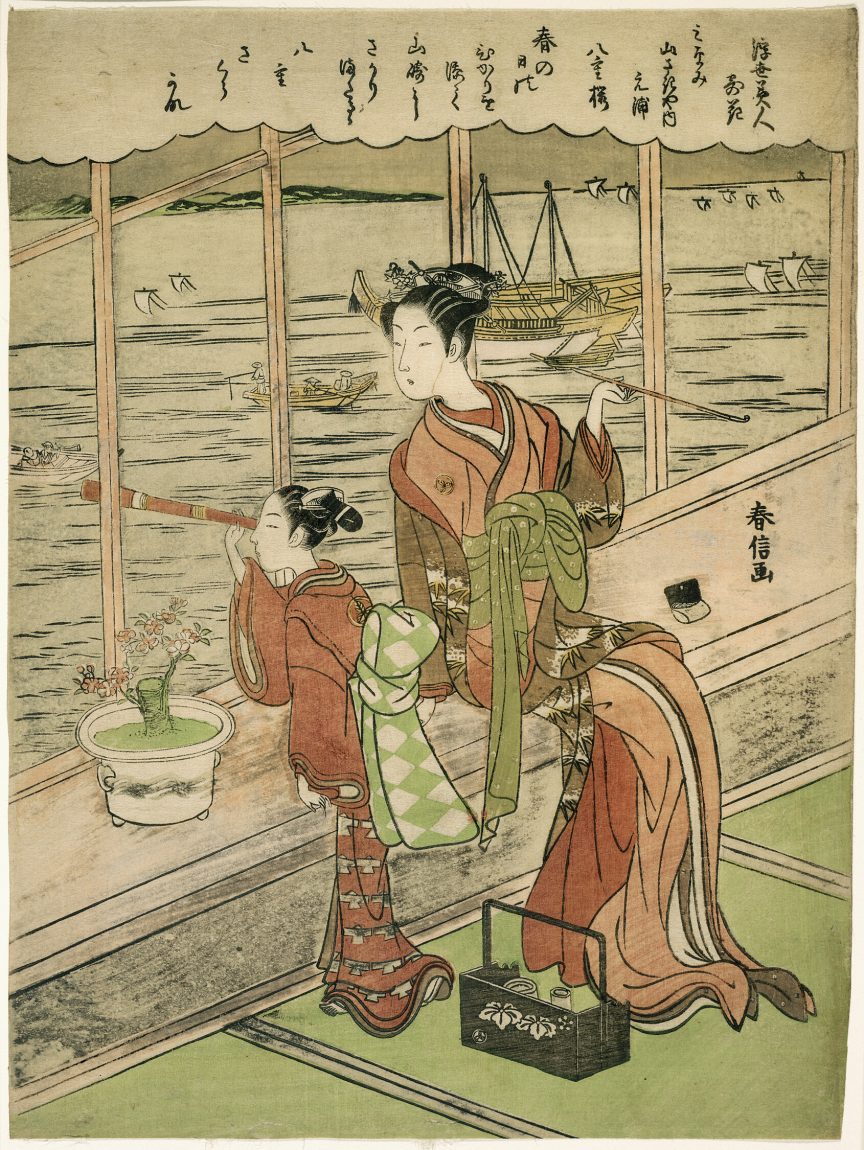
One of my favorite compositions featured Suzuki Harunobu’s 1768 print “Double-Flowered Cherry: Motoura of the Minami Yamasakiya.” Looking back at it now, I realize I might have made an unfortunate choice—the print shows fishermen in boats, which probably wasn’t the most comforting sight for my goldfish companion!
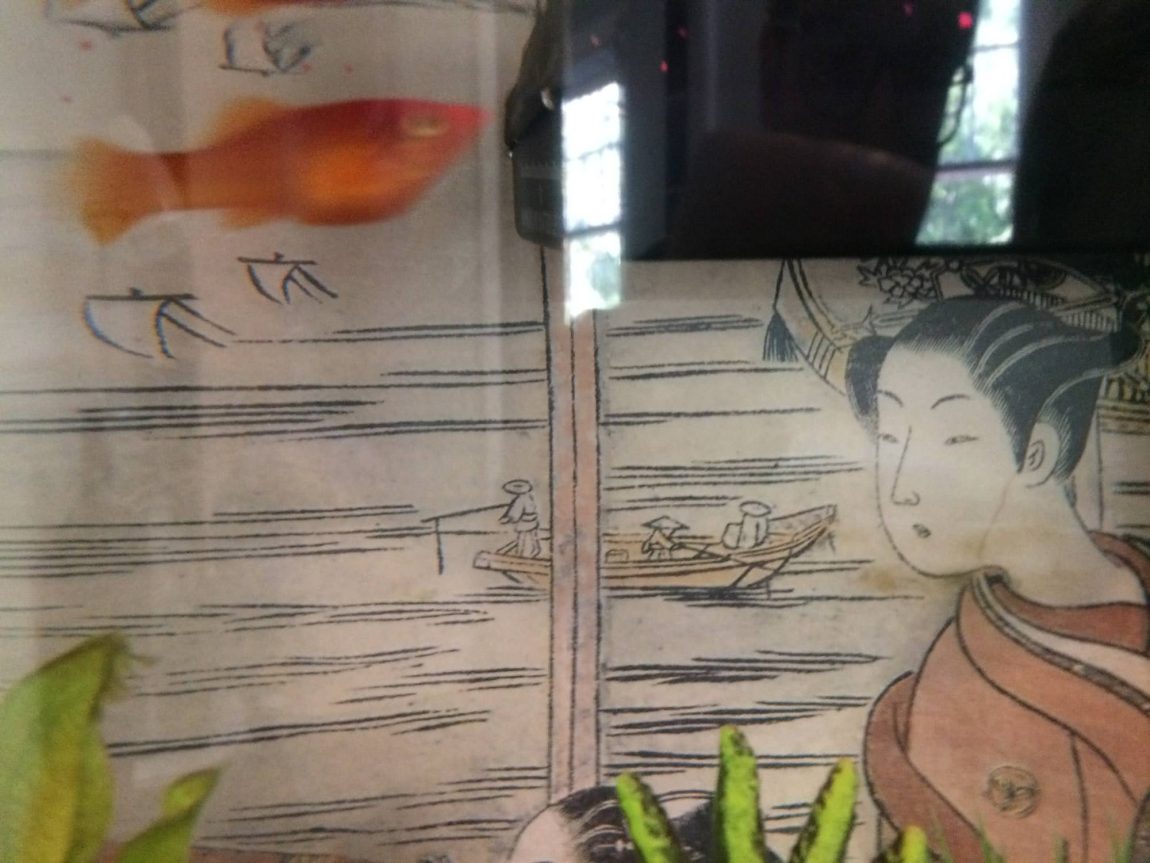
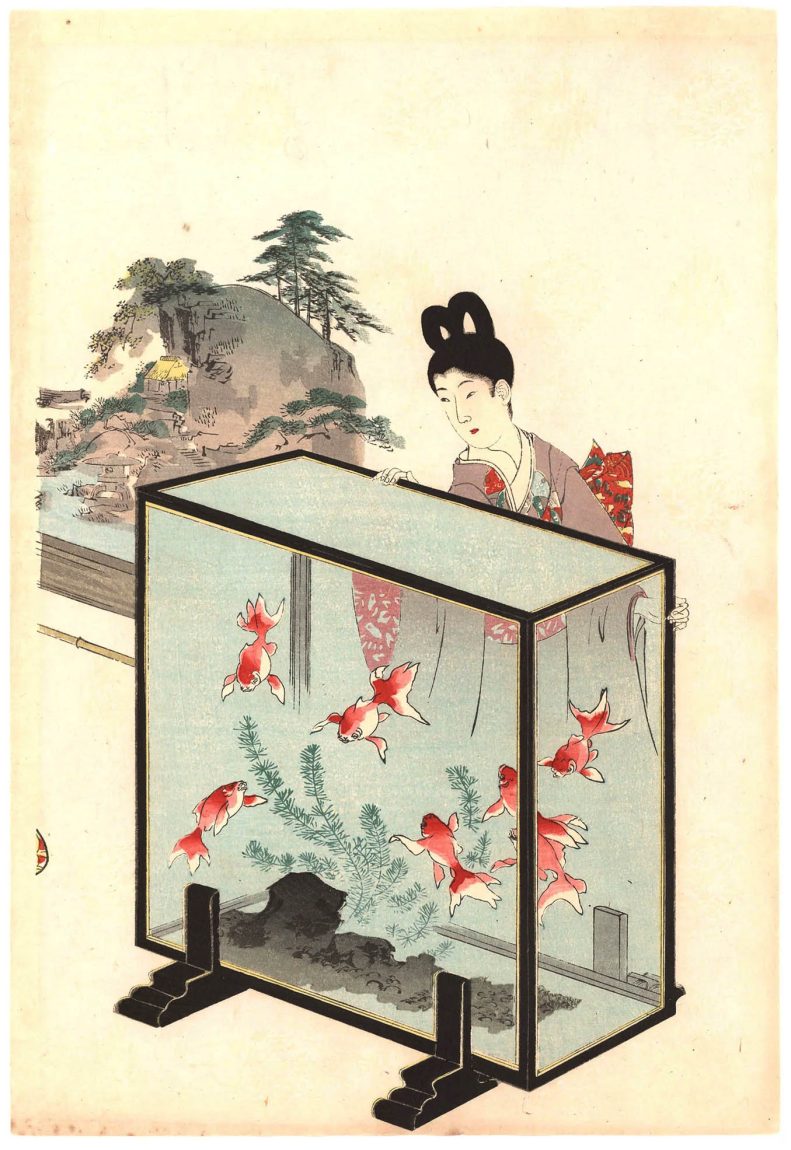
Curiously, when I ran this photo through Google Lens, it led me to a remarkably similar piece: “Goldfish, from the series of Noble ladies of Tokugawa era” by Toyohara Chikanobu (ca. 1897).
In a fascinating coincidence, this artwork also features a woman behind a fish tank, mirroring my own photographic experiment from a century earlier.
Fish enjoy rainy streets in Paris
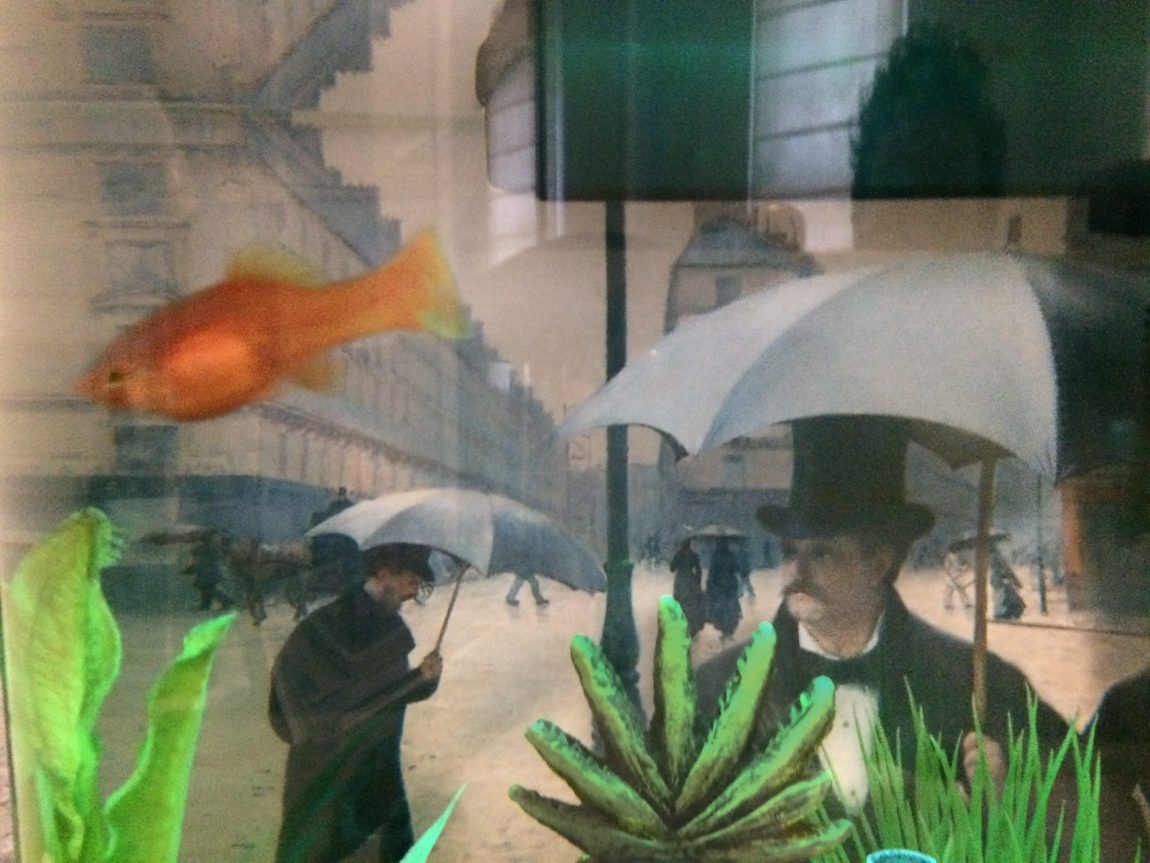
Another memorable setup involved Gustave Caillebotte’s “Paris Street; Rainy Day” (1877).
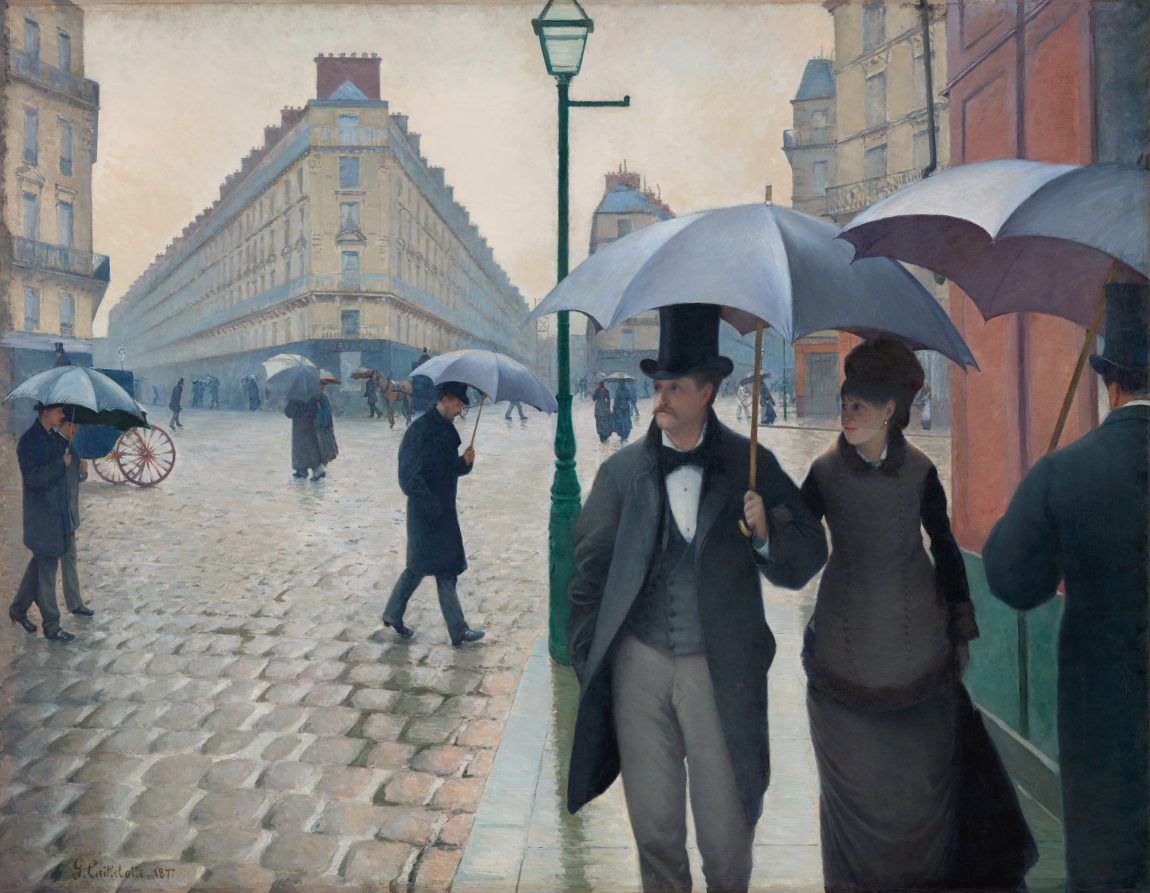
The result was fun—it looked as if the goldfish was swimming through the rainy streets of Paris, making the umbrella-wielding pedestrians seem rather unnecessary. In fact, I almost prefer my remix to the original!
Looking at these photos now, I’m struck by how a simple fish-sitting task transformed into an artistic project. While my Google Photos search for “brackish” might not have turned up anything particularly muddy or unpleasant, it did uncover this delightful memory of turning an aquarium into an ever-changing art gallery for one lucky goldfish.
Love. Love. Love!
Thank you!
This fusion of art and aquatics is mesmerizing! The way light refracts through water to animate static sculptures feels like a living gallery—have you experimented with kinetic elements (like floating pieces) to enhance the movement? The ‘jellyfish’ example particularly captures that dreamy, otherworldly quality. I’d love to know: How do you balance pH levels or algae control without compromising the art’s integrity? Such a brilliant reminder that creativity thrives at the intersection of disciplines. Inspiring work!
Ah, I don’t display the artwork inside the aquarium. The artwork goes behind the aquarium.