

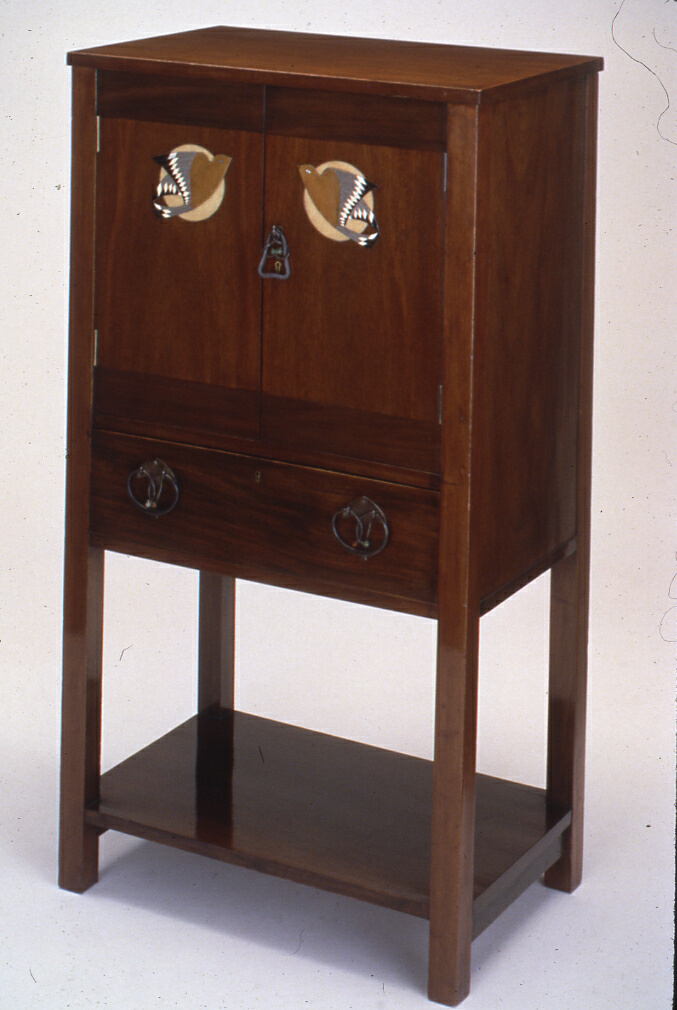
The Art Institute of Chicago has some cool furniture. For instance, what type of birds are on this cabinet? A bird fan on Bluesky posted this very question.
The Art Institute’s collection does not include any information about the birds.
I asked ChatGPT to identify the birds.
The birds on the cabinet are stylized doves, an often-used symbol in the Arts and Crafts movement for peace and harmony. Mackay Hugh Baillie Scott frequently incorporated natural motifs, such as birds, in his designs, emphasizing simplicity and craftsmanship.
The cabinet is a striking example of the Arts and Crafts movement, which sought to merge beauty and functionality while rejecting mass production. Mackay Hugh Baillie Scott, one of the movement’s prominent figures, was known for his meticulous designs that celebrated nature and craftsmanship. Here are some key points about the symbolism and context of this piece:
Symbolism of the Birds
- Doves: The inlaid doves likely symbolize peace, love, and purity, reflecting the ideals of the Arts and Crafts movement, which emphasized moral and spiritual values in art and design.
- Natural Motifs: The movement often drew inspiration from nature, viewing it as a source of beauty and truth. The doves’ curved forms and contrasting inlays are not only decorative but also evoke a sense of harmony and balance.
Historical Context
- Mackay Hugh Baillie Scott: As an architect and designer, Scott believed in total design, where all elements of a space—from furniture to decoration—worked together cohesively. This cabinet would have been a centerpiece in a thoughtfully designed interior.
- Pyghtle Works: The cabinet was constructed by John P. White’s Pyghtle Works, known for producing high-quality furniture that embodied Arts and Crafts principles. The workshop collaborated with many notable designers, ensuring impeccable craftsmanship.
- Arts and Crafts Movement: Originating in the late 19th century in England, this movement was a reaction to the industrial revolution’s mass production. Designers emphasized handmade objects, simplicity, and the integration of art into everyday life.
Design Features
- Materials: The cabinet is made of richly polished wood, showcasing the natural grain, a hallmark of the movement’s respect for raw materials.
- Craftsmanship: The inlay work, likely made of contrasting woods or other materials like ivory or bone, demonstrates the skill and attention to detail characteristic of this era.
This cabinet reflects not only the movement’s aesthetic values but also its philosophical ideals, aiming to enrich everyday life through thoughtful and beautiful design.
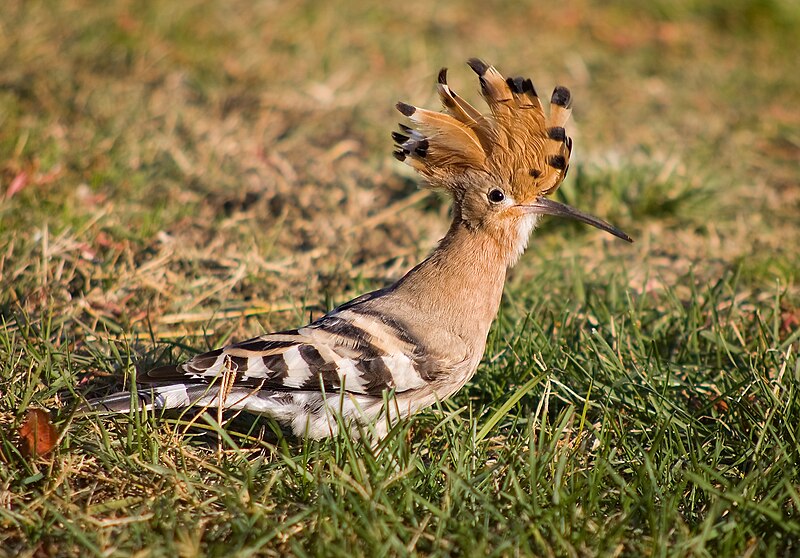
The bird fan on Bluesky suggests they might be modified hoopoes with no crest. What a great suggestion. It does indeed look close.
For reference, here’s what a hoopoe looks like:
Let’s see if ChatGPT thinks it’s a hoopoe:
That’s an interesting suggestion! Hoopoes, with their distinctive crests and striking black-and-white wing patterns, could indeed be a plausible inspiration for the birds on this cabinet. Let’s examine the idea further:
Evidence Supporting Hoopoes:
- Wing Patterns: The bold, alternating black-and-white markings on the birds’ wings resemble the patterns seen on hoopoes in flight.
- Beak Shape: While the inlay doesn’t clearly depict a long, curved beak like a hoopoe’s, the artistic style might have simplified or abstracted this detail.
- Symbolism: Hoopoes have been celebrated in various cultures for their beauty and symbolic meanings, often associated with wisdom, protection, and spiritual significance. This aligns with the Arts and Crafts movement’s use of meaningful natural motifs.
Evidence for Doves:
- Simplified Form: The birds’ plump bodies and gently curved beaks align more with doves, which are common symbols of peace and purity, fitting the movement’s ideals.
- Context: Doves were more frequently used in Arts and Crafts designs, as their symbolism was universally understood and aligned with the movement’s ethos.
Artistic Intent:
The Arts and Crafts movement often favored abstraction and simplification, so the design could deliberately combine elements from multiple bird species. The decision might not have been to depict a specific bird, but rather to evoke general qualities of elegance, nature, and symbolism.
Would you like help investigating further or forming a case for one interpretation over the other? It’s a fascinating discussion!
So there we have it. Most likely a dove. Seeing this online makes me want to go to the Art Institute of Chicago and see it in person. The cabinet is currently on view in the Applied Arts of Europe section, Gallery 246.
When I do go see it in person, I’ll try to get a closer, more detailed photo of the birds.