

Do you ever pick up a leaf and press it into a book? At that moment you think, of course I’ll remember where this leaf is from.
Years later the leaf slides out around page 212. It still looks great. And you have no idea where it came from.
Back in January 2010 I photographed a pressed leaf that fell out of one of my books and posted it to Flickr with the title “I like finding pressed leaves in my books in the middle of January.” I still love finding them. That particular leaf is a complete mystery to me.

The leaf made it through the years just fine, but I forgot the reason why I saved it.
Let’s help remember the intention of our pressed leaves. Before the leaf goes into the book, slide it into a 5×7 envelope. Write the date on the front. Under the date, write a few sentences about how you came across it. Then press the envelope in the book with the leaf inside.
Now the leaf carries its own story. When it falls out fifty years from now, whoever opens that book gets the story.
I invite you to do this too
- You spot a leaf worth picking up.
- Photograph the leaf where you found it. Include the tree, the sidewalk, and whoever is standing there.
- Carry the leaf home in your hand.
- Write the date on an envelope. Do this before the leaf goes in, so your pen tip doesn’t dent it.
- Write a few sentences under the date about how the leaf was found.
- Photograph the leaf next to the finished envelope.
- Slide the leaf inside.
- Press the envelope in one designated book.
- Rediscover it years later.
That’s the whole thing. Ten minutes at home, plus the walk. If you decide to post it online, use the hashtag #pressedleafstories, and let me know.
The 5×7 envelope is the one detail I’d insist on, because letter-sized envelopes are usually too short to hold a big leaf and too long to sit inside a book without poking out the top.
We have been doing this since November 2021. My leaf book has envelopes in it from kindergarten drop-offs, and from the last walk to school Evelyn took as a first grader.
What ends up on the envelope
Here’s one:
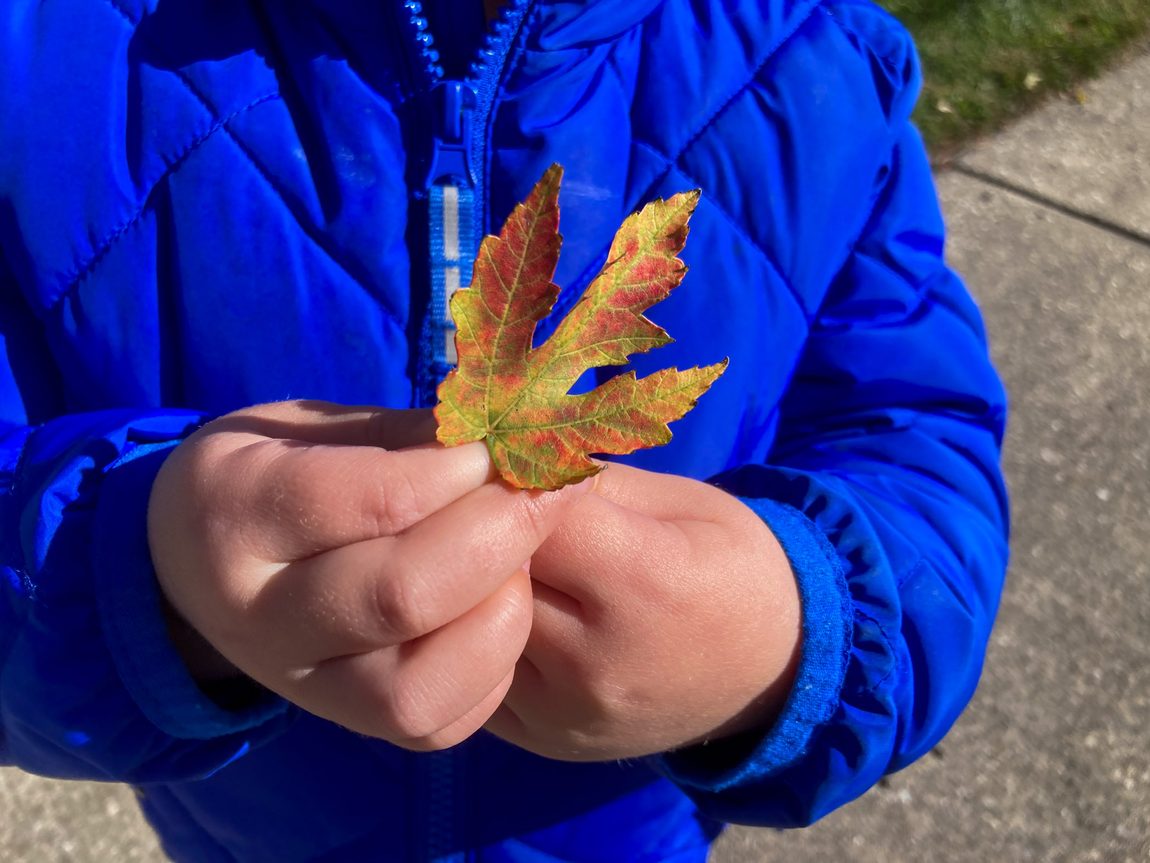
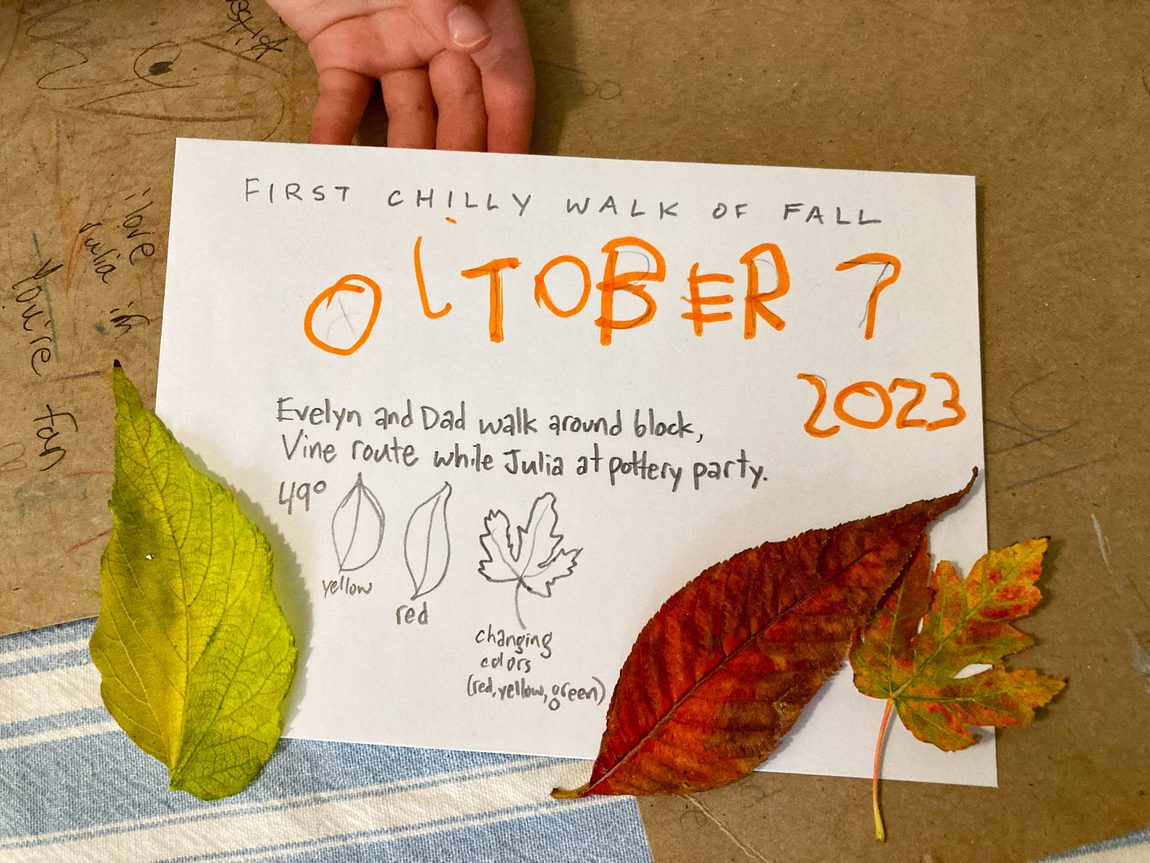
Here’s another:
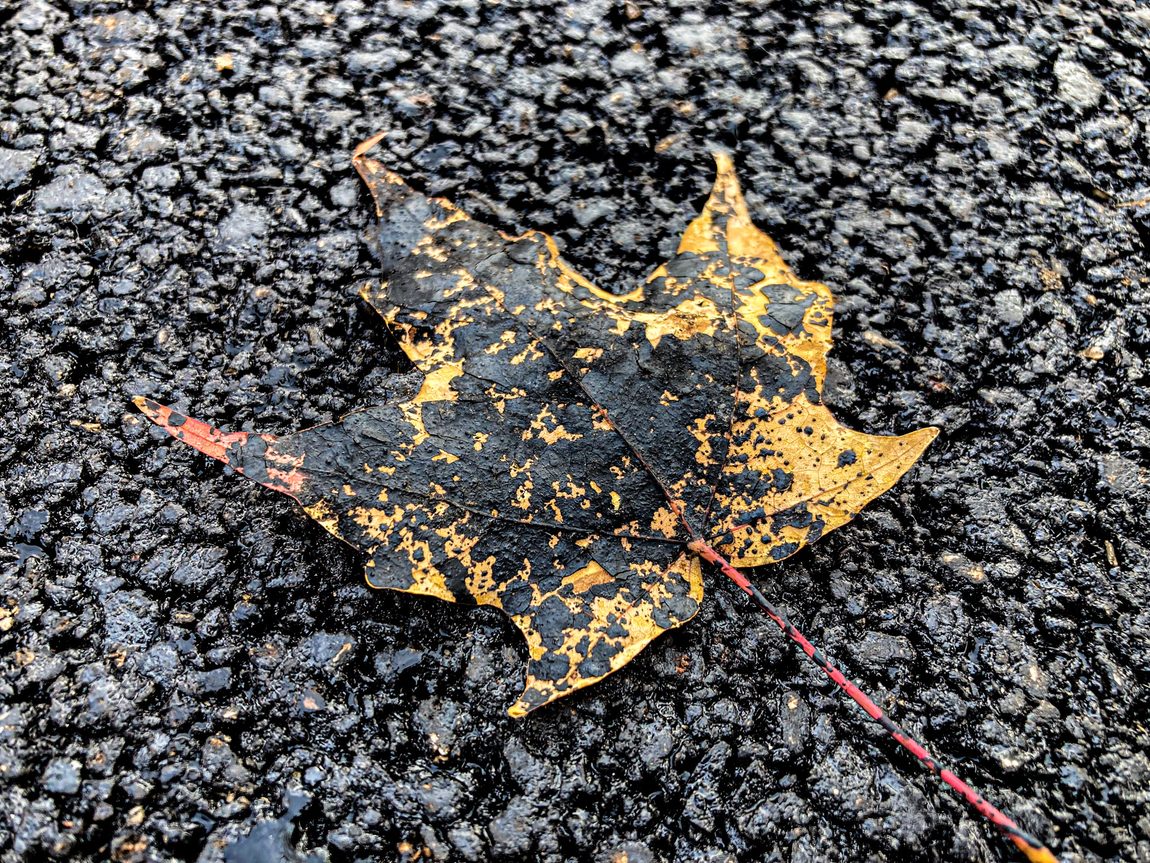
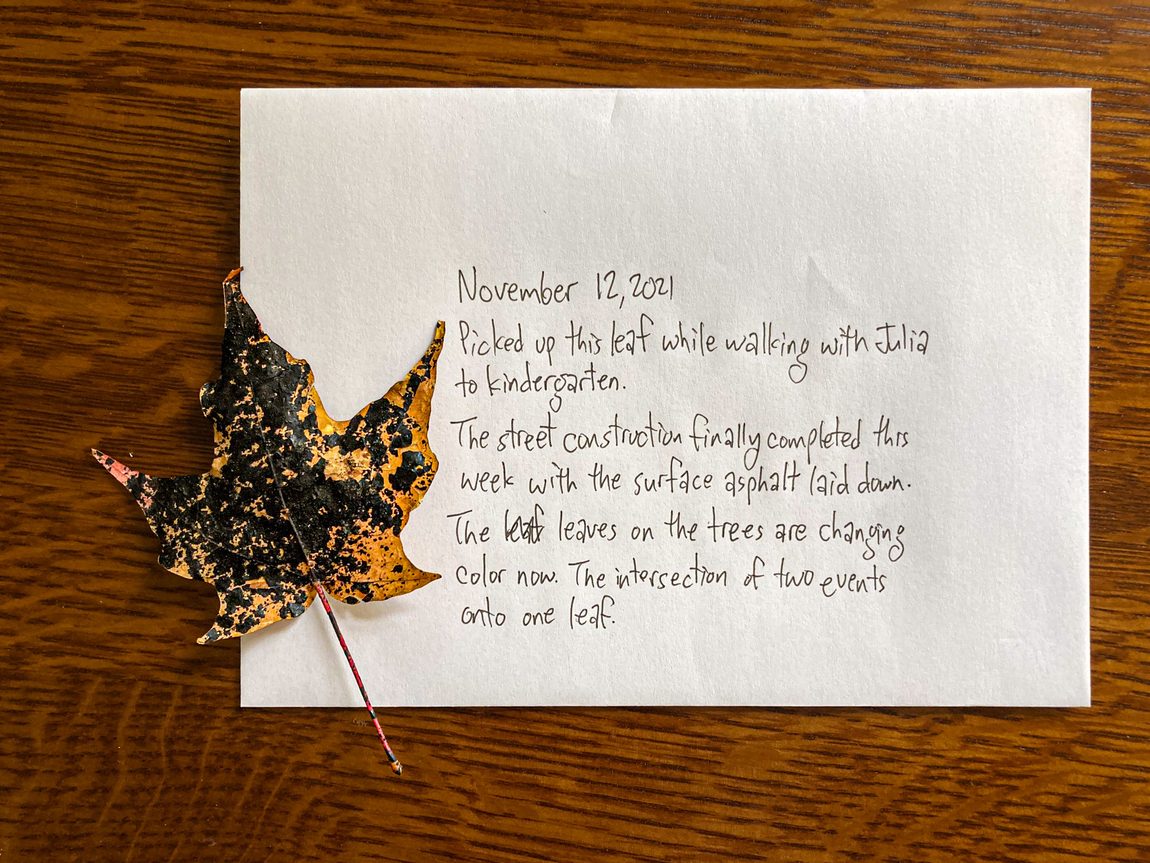
And here’s one my daughter wrote:
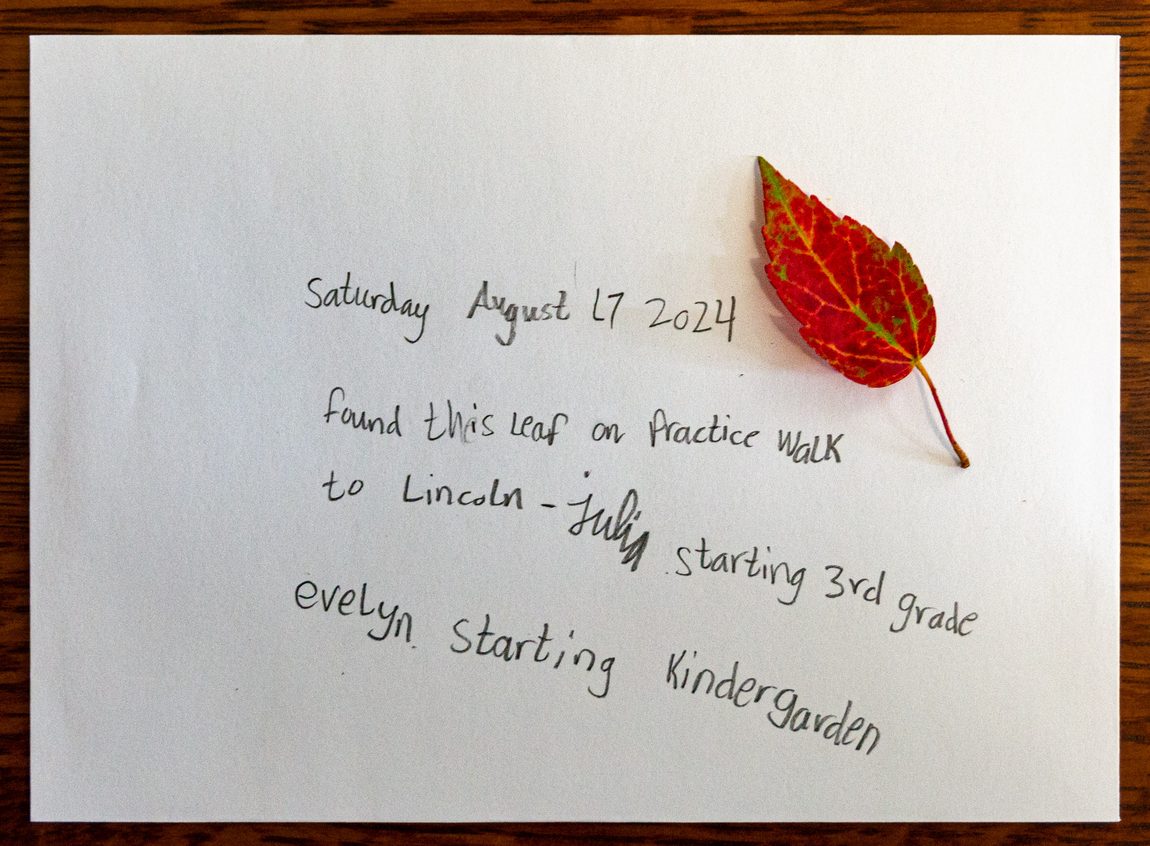
The leaf turns into a specimen with a very unusual label
If I were writing about the project for an exhibition or art-history context, that’s probably the phrase I’d use:
Yeah, doesn’t that sound rad‽ Let’s break that down.
“Vernacular” because this act intentionally exists outside institutional art and scientific collection practices. You are just doing it on your own.
“Herbarium“: A real herbarium takes a living plant and converts it into an archival specimen. Press it, label it with species and date and location, and it becomes a piece of knowledge that somebody can study in a hundred years. Botanical institutions have run that system for centuries.
“Memory“: These envelopes borrow the whole herbarium structure and change what goes on the label. A scientific herbarium preserves information about a plant. This one preserves information about a person’s memory.
We are not just archiving leaves. We are archiving memories.
Following the rule
Look back at those nine steps. Every leaf gets the same treatment, every time, whether it’s a great leaf or an ordinary one.
It begs the question: wouldn’t you rather do something more creative with the leaf? Like, make prints from it? Doing something unique to a single leaf feels like art.
Instead of doing something wacky to the leaf, we instead follow a set of rules for what happens every time you meet a leaf. Following the same nine steps for five years can sound rote. But run a simple procedure for five years, and it becomes a series. A series can develop, accumulate, and start developing patterns.
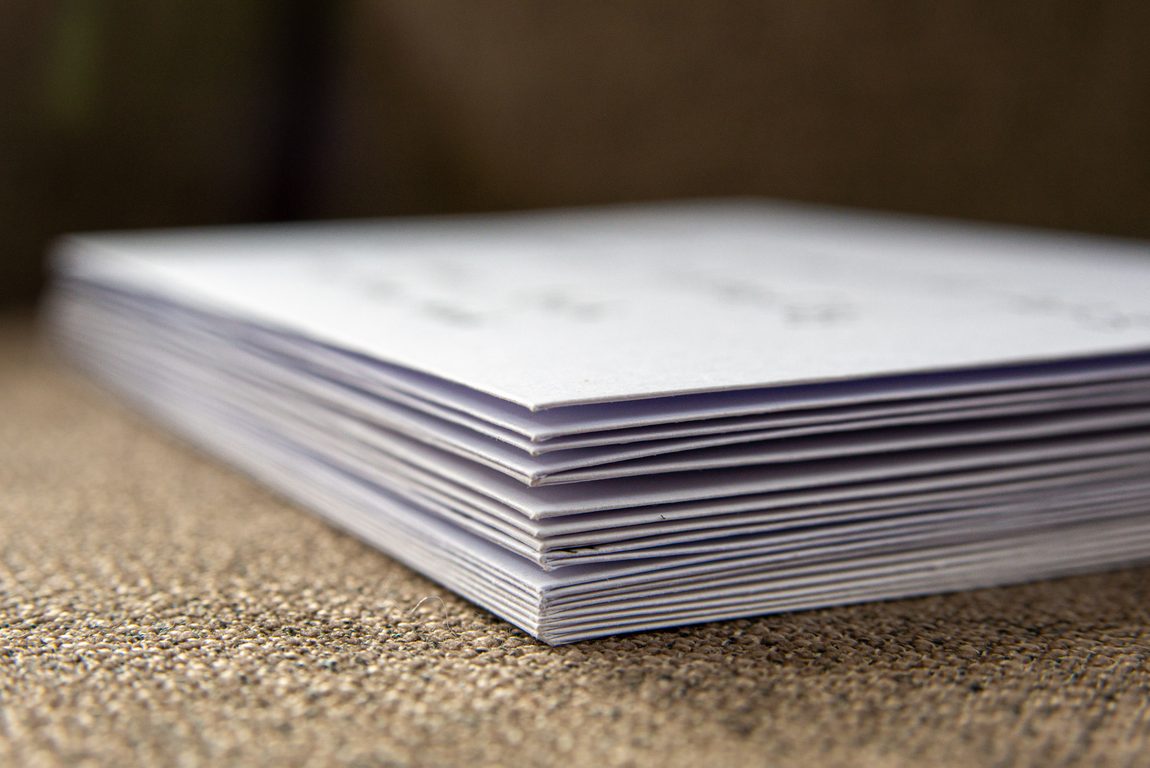
No artistic skill is required at any step. The work here is noticing. (Most everything on spudart.org is about noticing)
The carrying
There’s a step that is a lot of fun. Between finding the leaf and archiving the leaf, you carry it. Sometimes that’s six blocks with the thing in your hand.
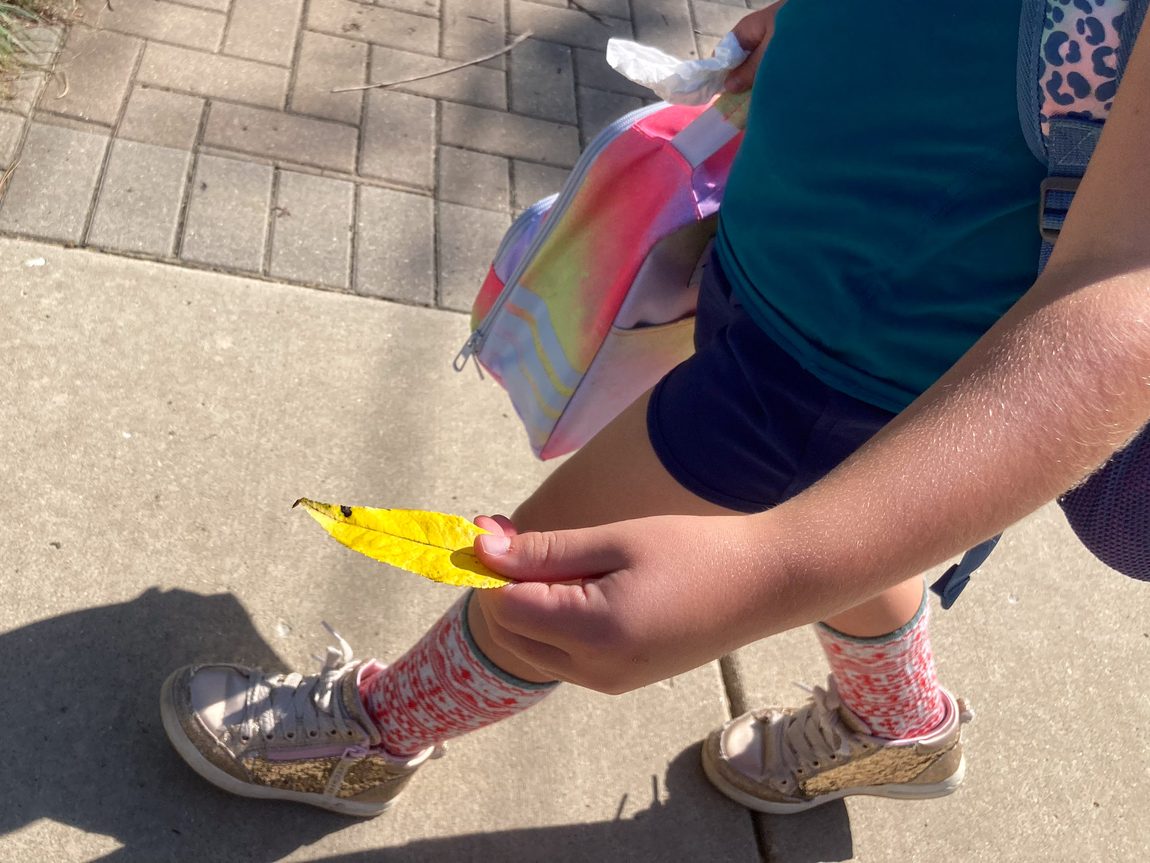
Whatever you have in your hands influences how you think (blog post from 2007). A pencil in your hand and you write something. A camera in your hand and you can’t help taking pictures. A leaf in your hand and you spend the rest of the walk looking at leaves. You feel the texture. You start drafting the caption before you reach the kitchen table.
The leaf works as a portable attention device. So the sequence isn’t as short as find it and file it. There’s a whole stretch of extended attention in the middle, and that’s where most of the actual experience lives.
What’s actually in the envelope
The November 17, 2021 one says I was walking home to get to work, and my two-year-old in the stroller was reaching up at a tree with colorful leaves, and I could have kept walking. But we stopped.
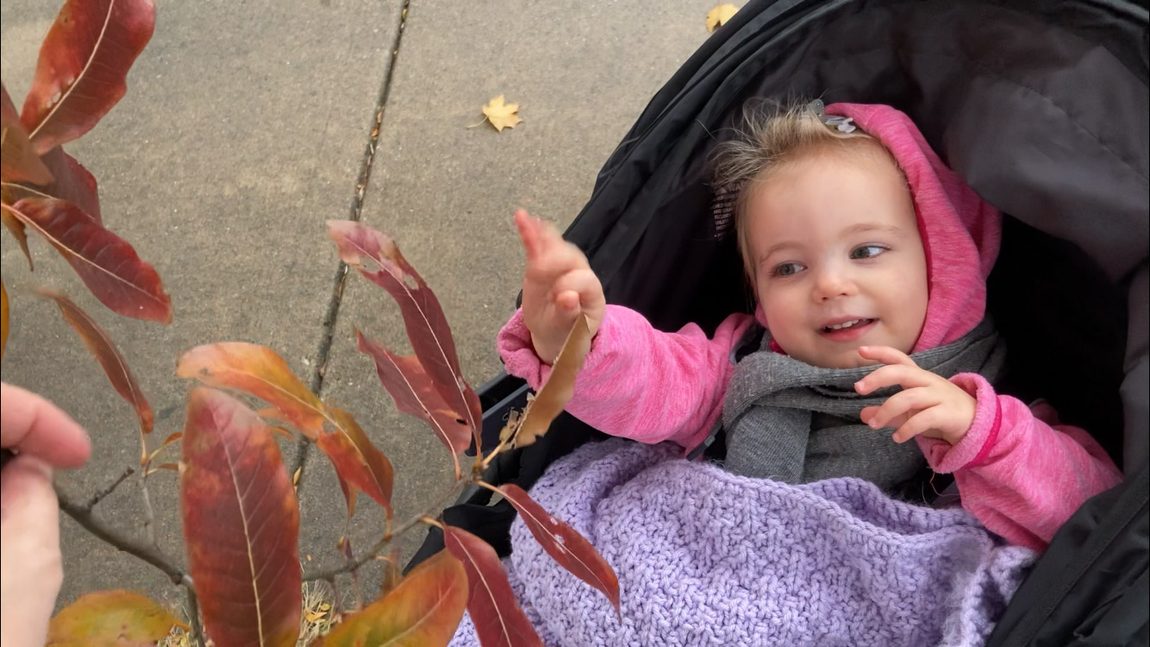
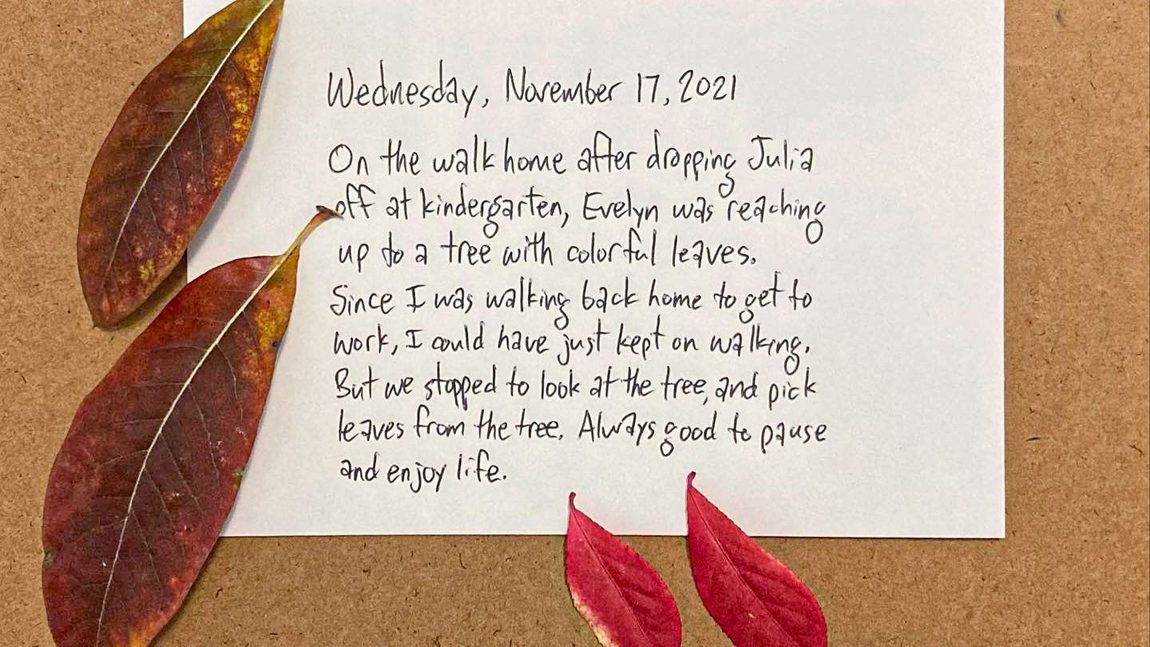
What’s preserved is the decision to stop. Years later, that envelope tells me I used to be the sort of person who stops and looks at things, which makes me want to stop and look at something this week. Past attention producing present attention. Archives can point backward and forward.
Stories that happen to have been pressed into leaves. I like that phrasing for it.
The archive begins when you decide to keep holding the leaf. You could have picked up the leaf, and looked at the nice color, and then dropped it. But instead, keep holding it.
Go find a leaf this week. You need an envelope, a pen, and a book you can spare. If you press any leaves with stories, please let me know.
❤️
Here’s another thought. On someone’s birthday go out and press a leaf. The following year, send that person the pressed leaf with the explanation that you had pressed it on their prior birthday. Super bonus points if you wait five years or longer to send it.