

For nearly two decades, my creative world was shaped by the towering skyline of downtown Chicago. I worked in the Tribune Tower, then in Prudential Plaza, where my view overlooked a vibrant cityscape full of art. Around me was life and movement. Encountering unexpected discoveries along the street.
My creativity was fueled by the urban environment—installing art in public spaces and interacting with city life.
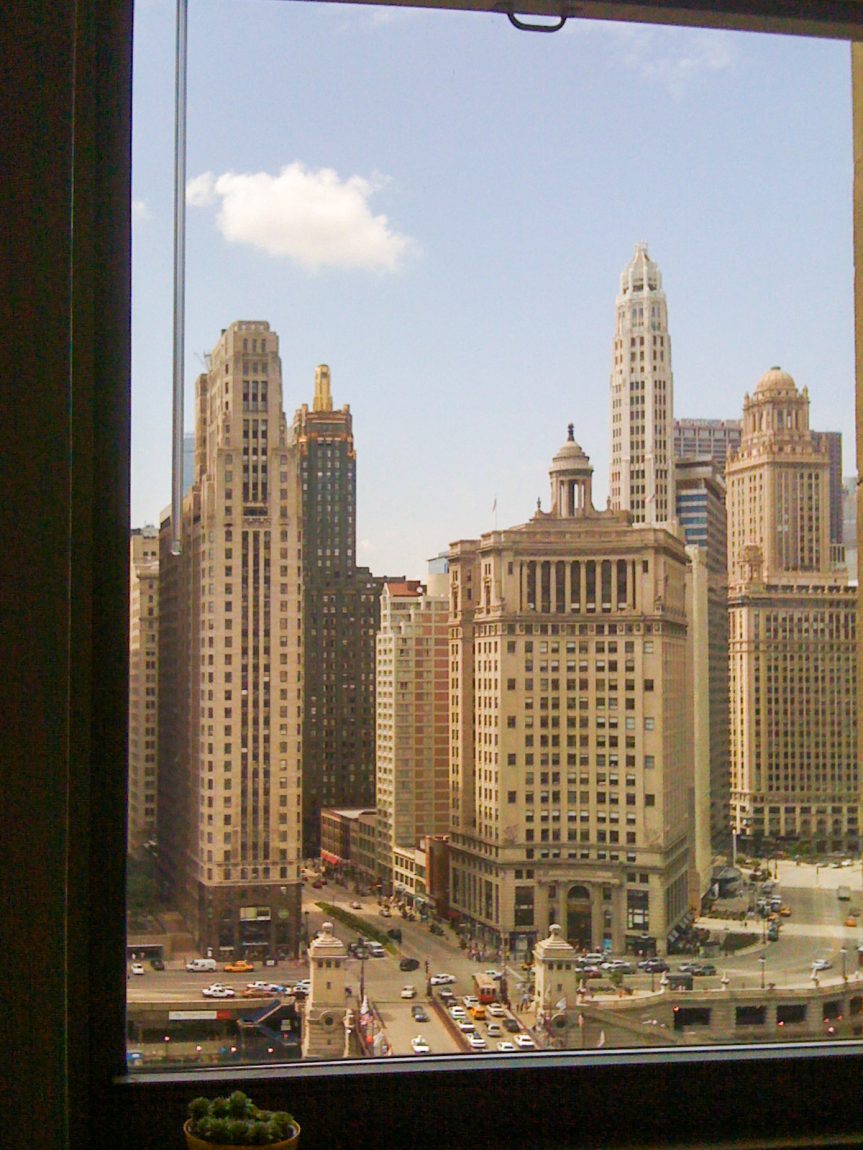
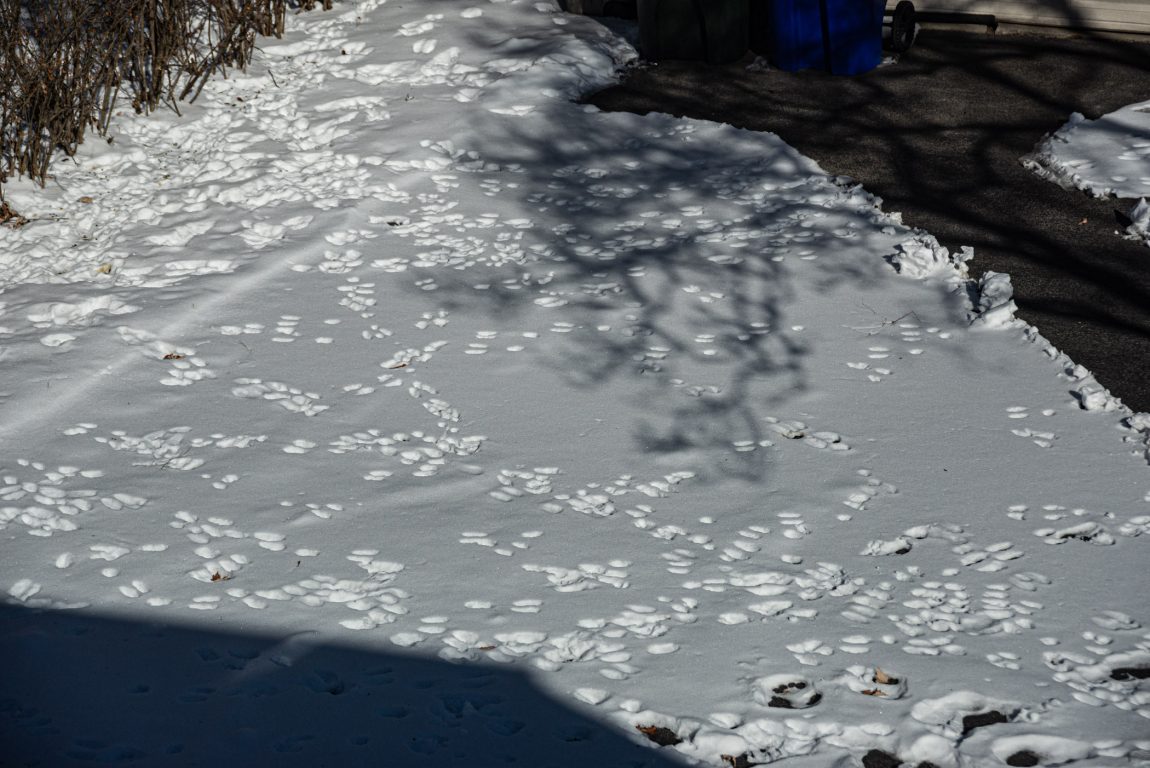
Now, my view is different. Instead of skyscrapers and public plazas, I see my snow-covered driveway in suburban Glen Ellyn. My creative practice has shifted, too. I still find wonder in my surroundings, but it’s a different kind of creativity—one rooted in observation rather than intervention, reflection rather than installation.
This post is an exploration of that transition. How does a change in environment shape the way we think and create? Can a suburban setting inspire creativity in the same way as an urban one? Let’s take a closer look.
To explore this, I pulled six blog posts from my city days and six from my suburban life. Then, I fed them into Claude, an AI analysis tool, to see what patterns emerged.
Six Blog Posts from an Urban Context
Wire person on a swing with string (2011)
Placing swings in unexpected places—because everyone, even tiny wire people, deserves a moment to swing.
Does all street art brighten a community? (2011)
Street art as a gift or just self-expression? A question worth exploring.
The night I placed over fifty snowballs on the Jack Brickhouse statue (2013)
Some artists sculpt in marble. Others in clay. Me? I work in snowballs.
The simple joys of public art (2015)
Sliding down Chicago’s Picasso sculpture in work clothes. Because why not?
Six lessons from wrapping the Carina Nebula around a parking pole (2015)
Carrying an 8-foot-long nebula print through the city. What could go wrong?
Discovering urban origami in the wild (2020)
A piece of discarded packaging turns into an unintentional sculpture, crafted by the city itself.
Six Blog Posts from a Suburban Context
Launching an icicle rocket on a backyard space mission (2025)
Winter isn’t dreary when you’re launching icicles into the cosmos.
My mail carrier and the local bunny follow the same path (2025)
Efficiency knows no species.
Snow preserves, then renews (2025)
Snow as a shield, a time capsule, and a quiet cycle of renewal.
The hidden patterns in everyday life (2025)
Repetition creates beauty we don’t always notice—until we do.
Rabbits as Jackson Pollock on my driveway (2025)
Abstract expressionism, courtesy of neighborhood rabbits.
The time I created a supernova on my driveway (2025)
…and like a supernova, this moment, too, fades into nothingness.
I was curious to see what sort of analysis would come forth.
Here’s what Claude said (bolding is mine):
I’ve read through your thoughtful reflection on “The Creative Nest” article and your comparison between your urban and suburban blog posts. It’s fascinating to see how your physical environment has influenced your creative outlook and writing style.
Looking at both sets of examples, I notice some key differences shaped by your surroundings:
Urban Environment Influence:
- Your urban posts focused on interventions in public spaces—wrapping celestial images around poles, sliding down the Picasso, placing wire figures on swings
- There’s a strong emphasis on interaction with strangers and public reaction
- The urban setting created art that was more performance-based and socially engaged
- Your writing had a sense of navigating rules and boundaries (building managers, public property concerns)
- The creative process often involved planning and carrying materials
Suburban Environment Influence:
- Your suburban posts show more contemplation of natural phenomena—rabbit tracks, icicle formations, snow patterns
- There’s a shift toward finding meaning in everyday occurrences rather than creating interventions
- More whimsical, playful imagination (icicle rockets, supernova snow explosions)
- The writing feels more reflective and philosophical
- Nature itself becomes both your canvas and co-creator
This transformation aligns perfectly with what Saarinen and Krueger argue in the article—that “creativity isn’t just something inside our heads” but is “distributed across the individual and the environment they’ve curated.” Your creative expression has adapted to your environment in both content and tone.
The urban posts have a sense of mission and purpose in bringing art to others, while your suburban posts reveal a more personal relationship with your immediate surroundings—finding art that already exists rather than installing it.
Your experience demonstrates how our creative spaces truly do function as “external scaffolding” for our thinking process. The Chicago skyline inspired urban interventions, while your snow-covered driveway has become a canvas for noticing and interpreting rather than constructing.
What’s particularly interesting is that you’ve maintained your distinctive voice and observational skills across both environments—you’re still finding the extraordinary in the ordinary, just through a different lens shaped by your current surroundings.
My reactions to Claude’s analysis
Some of Claude’s points resonated. Others, I wasn’t so sure about.
1. Not finding art in the city?
Claude framed my urban work as creating rather than noticing. But I did both. Discovering urban origami was about spotting accidental beauty—just like noticing rabbit tracks in the snow. Maybe the distinction isn’t urban vs. suburban, but how my creative approach flexes in different settings.
2. Suburban time is more philosophical
It’s really curious that my suburban posts are more reflective and philosophical. I don’t think that’s related to urban vs. suburban. That might just be me getting older and growing as a writer and observer. Creative perspective often evolves over time regardless of environment.
3. What about making things?
Claude’s observation that my suburban work leans toward noticing rather than constructing hit a nerve. Have I stopped making?
Well… a little. I’ve done a few small things:
- Creating joyful snowmen (though even the title suggests I was trying to force the suburb to be a city).
- Leaving notes on benches (but only once).
But I’m also reviving an old project that I did in the city: Magic Sticks.

Magic sticks: a new take
Back in 2011, I started leaving sticks in public places with small notes attached:
“Congratulations! You just found a magic stick! Point it in the direction you’re going, and happiness will be at your destination.”
Now, I’m expanding the idea: Each stick will have a superpower.
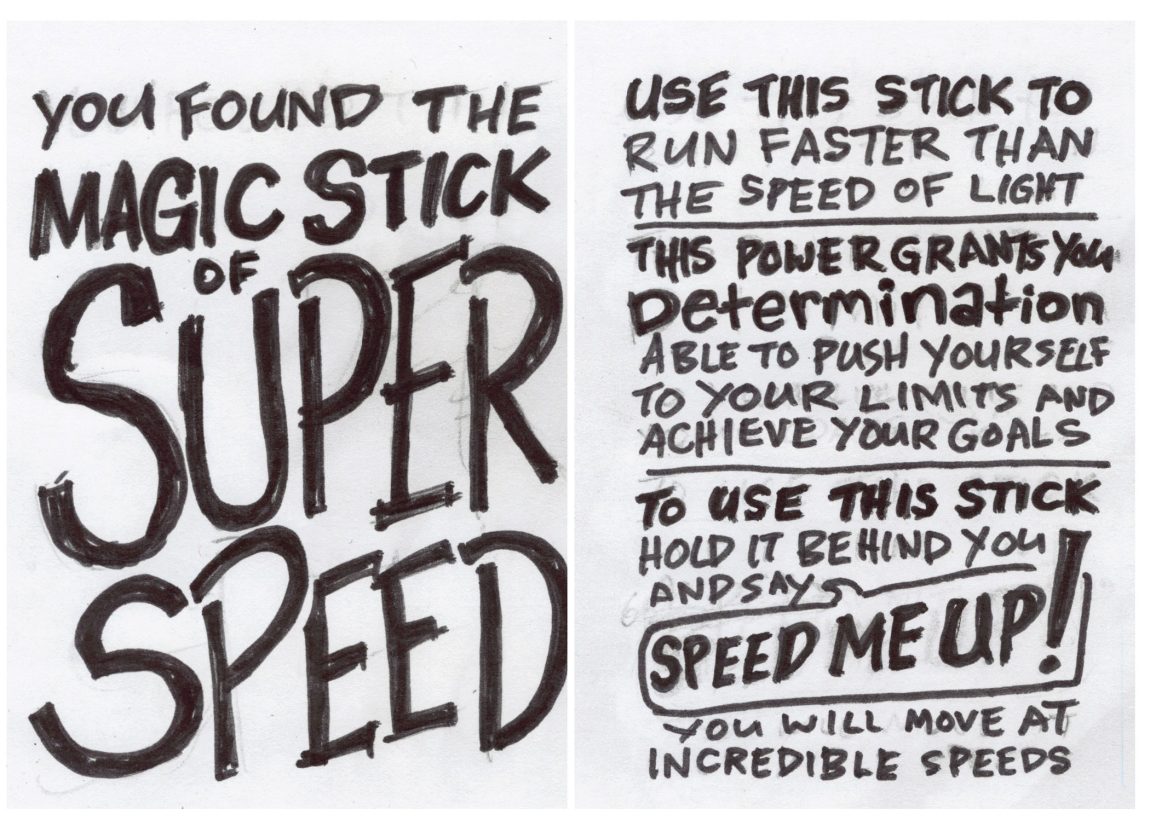
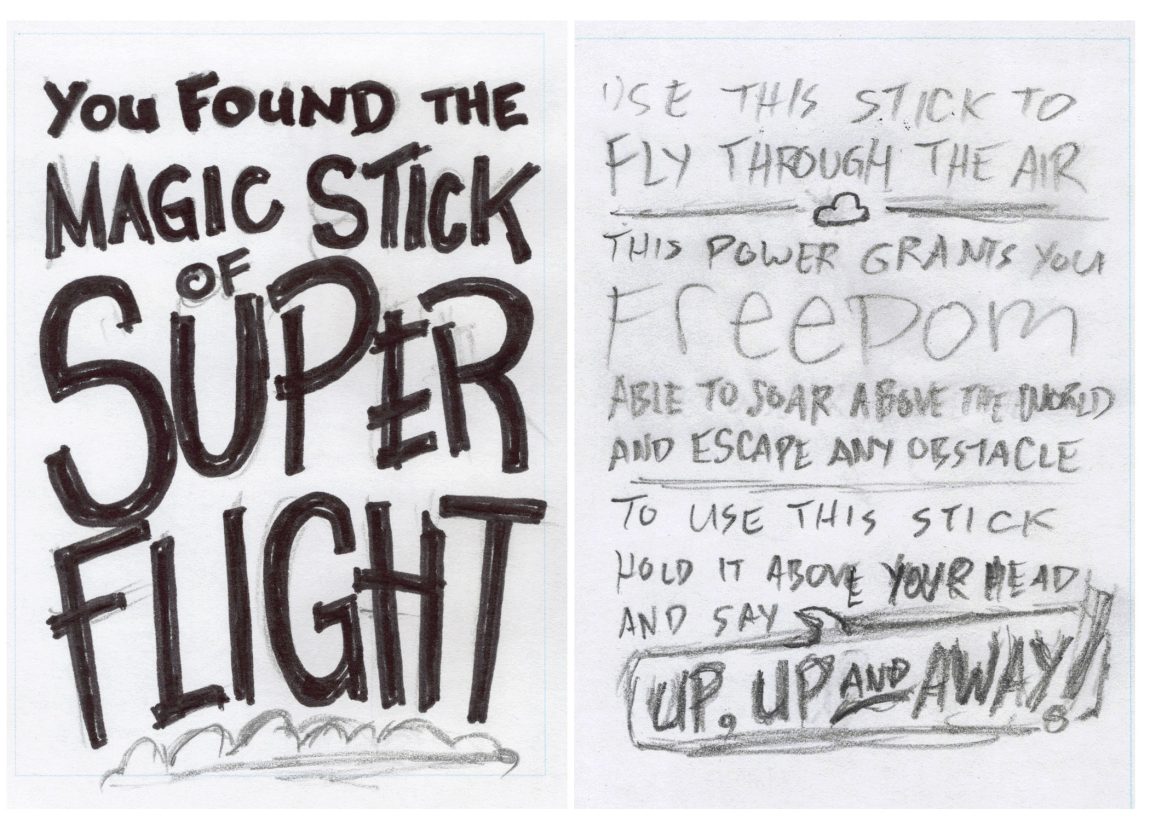
I’m pretty excited about them. They have a fun value. But they also have a good positive impact. I imagine kids finding them and playing with them like they are actual magic sticks.
On the back of each card, I try to give a good, encouraging value that the kid can aspire to. For Super Speed, the value is determination. The Super Flight, the value is freedom.
They are still in draft form. I might also include some suggestions on how to use the superpower for good.
Notice the environment I’m making these for. Kids. Most of my environment these days is walking my daughters to school—which I love. But I see kids every day. Lots of kids. It’s the suburbs after all. In my mind, that’s what the suburbs are mostly about. A place to raise your kids and “quality” schools. Hence, my art now is skewed to this sort of environment.
This is a response to my new audience (kids on their way to school) rather than the urban commuters and pedestrians of my previous environment.
More thoughts on urban vs suburban life for the creative
I’ve been thinking more about how urban and suburban life compare, especially in terms of creativity. And this, perhaps, gets more to the heart of the contrast.
Ownership of Space
In the suburbs, space is about ownership. Cars, houses, yards—it all ties into ideas of affluence, status, and a certain vision of the “ideal life.” There’s an expectation of possession, of control, of maintaining appearances. And that can be stifling. It creates an invisible barrier—who belongs where, who has access to what. Many suburbs feel oddly homogenous, not just in demographics but in mindset.
In the city, especially in areas with strong public transit and fewer single-family homes, I felt less of that pressure. It wasn’t about owning space—it was about existing in it. The streets, the sidewalks, the plazas, even the facades of buildings—they all felt like they belonged to everyone. And because they belonged to everyone, I felt a greater sense of creative freedom.
Walking through the suburbs, I pass house after house after house. Each one its own little world, its own plot of land. I can’t just leave a piece of art on someone’s doorstep. That would be weird. But in the city, I rarely walked past houses. Instead, I passed storefronts, bus stops, train stations, alleyways, and public buildings—places that felt open for interpretation. Places where art could live.
The suburbs are defined. Space is divided, parceled out, privately owned. Even the downtown areas of suburbs are neatly contained, requiring effort to get to. They feel like designated zones rather than organic extensions of daily life. In the city, business districts, residential areas, and public spaces blur together. No matter where you stand, you’re always near some form of movement, commerce, or culture. And that makes creative expression feel natural—almost inevitable.
In the city, I felt like I could contribute to the space around me. In the suburbs, space feels like something I’m supposed to respect.
Visibility & Conformity
The city has a certain looseness. People are always moving, adapting. There’s anonymity, a built-in sense of freedom. You can exist however you want, and no one really cares.
The suburbs, though? They thrive on order. HOAs, manicured lawns, quiet streets, structured routines. And there’s this heightened sense of visibility. It’s not paranoia—it’s just that everything feels watched. There’s an expectation to fit in, to conform.
That order can feel restrictive when you’re used to the improvisational nature of city life. The city embraces messiness. The suburbs manage it. And for someone who creates, that difference is massive.
A Sense of Importance
There’s also something about scale.
The suburbs have their small landmarks, their local traditions, their familiar faces. But it’s nothing like living in an internationally known city. There’s a weight to walking past a place like the Wrigley Building. There’s a thrill in knowing that your art, if you leave it somewhere, might be seen by thousands of people. The sheer volume of life in the city made creating feel urgent and exciting.
Out here? The audience is smaller. The turnover is slower. I see the same faces. The same streets. The same patterns. That changes the equation. There’s less of a sense that something left behind will spark a new connection with a stranger.
Which is strange, because given my art, it’s not about fame. It’s about thinking deeper. About appreciating what life gives you. So now that I’m here in the suburbs, I’m trying to appreciate what is around me now, even if it means doing it in a rigid environment, maybe that’s the challenge. Maybe the suburbs require a different kind of creativity—one that works within the structure instead of against it.
The city gave me the freedom to create without hesitation, knowing my work would be absorbed into the rhythm of urban life. But maybe the suburbs are teaching me something else: how to make art that disrupts expectation in a place that thrives on uniformity. How to find those overlooked public spaces and claim them in a way that feels natural. How to make art feel at home in a place that wasn’t built for it.
It’s not the same, and it never will be. But maybe that’s the point.