

Happy Japanese microseason,
霞始靆 – Kasumi hajimete tanabiku
translation: Mist starts to linger.
It started on Tuesday.
I love the Japanese microseasons. Throughout the year, there are five-day microseasons. Each microseason is about a particular event in nature at that time of year. I’ve made a chart of all the microseasons—and their translations.
Right now, we are in the third day of “Mist starts to linger”. The names of these microseasons are always so poetic.
Is that the REAL translation?
Someone (I don’t know who) translated all the Japanese names of the microseasons. They say 霞始靆 is “Mist starts to linger.” But what happens when we put 霞始靆 into Google Translate?
It’s so weird how Google Translate works.
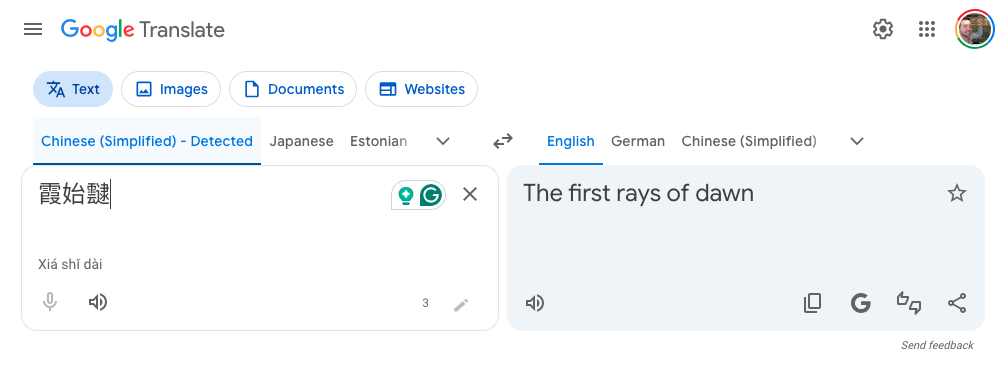
Let’s take the original Japanese: 霞始靆
The Google Translate website says it’s “The first rays of dawn”
But the GOOGLETRANSLATE formula in Google Sheets says it’s “early haze” (and yeah, you can use Google Translate in Google Sheets. I love it!)
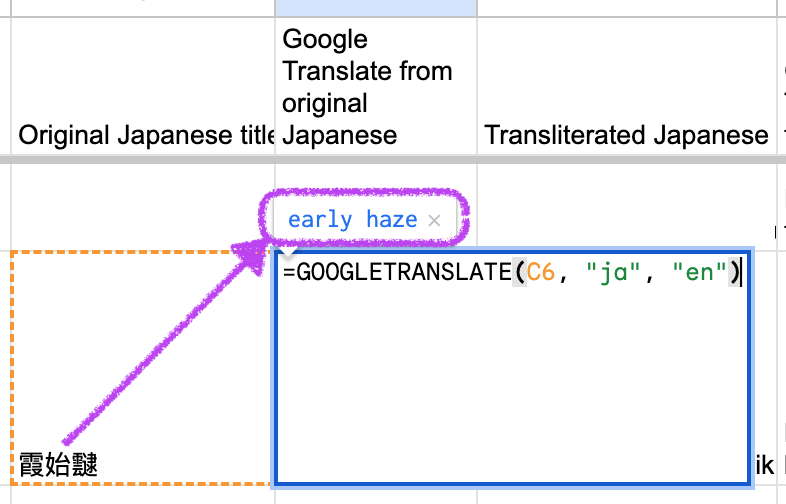
Which is it? “Early haze” or “The first rays of dawn”? I feel like I’ve stumbled into some poetic tension of Google Translate.
But wait.
Problem solved
I had “auto-detect” set for the website. Google thought the phrase was Chinese-traditional! That’s why it gave a different translation.
When I tell Google Translate not to auto-detect, but rather to use Japanese, then we get “Early haze.”
Ahhh, the world of Google Translate is now in sync. I’m no longer in a haze—at least not in a haze in Google Translate land. But in real life, this is the time for an early haze.